






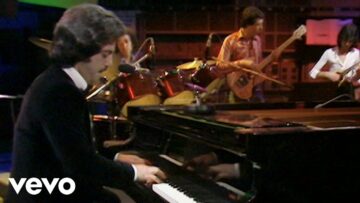
Blood, Sweat & Tears – You’ve Made Me So Very Happy
Brenda Holloway Wrote It at Motown in 1967 to Spite a Boyfriend Who Had Walked Out — and Watched It Go Nowhere. Two Years Later a Nine-Piece Horn Band from New York Took It to Number Two and Made the First Genuine Jazz-Rock Hit in American Pop.
Brenda Holloway wrote it because a man had left her. The Motown singer was twenty in 1967, signed to the label since 1964, frustrated by what she experienced as Berry Gordy’s neglect of his West Coast roster — she was based in Los Angeles while the Detroit operation absorbed most of the label’s promotional energy — and her then-boyfriend had ended their relationship without a great deal of warning. “My boyfriend had quit me,” she explained years later in the liner notes for The Complete Motown Singles Volume 7. “I thought, ‘You know what, I’m gonna write a song about being happy, ’cause this man is crazy. Leaving me? I’ll show him.'” She called Berry Gordy. Gordy assigned Frank Wilson, his most trusted West Coast staff writer, to develop the idea with Holloway and her younger sister Patrice. Gordy added his name to the writing credit when the song was finished. Wilson and Gordy produced the recording. The single was released on Tamla in August 1967, and Holloway performed it on American Bandstand the next month.
It peaked at number thirty-nine on the Billboard Hot 100 in October 1967, her third and final Top 40 single before her departure from Motown a year later. The song would have settled there — a respectable but minor late-period Brenda Holloway record — except that drummer Bobby Colomby of Blood, Sweat & Tears heard it. The band was at the most volatile point in its short history. Founded by keyboardist Al Kooper in 1967 with guitarist Steve Katz and Colomby, the band had released its critically acclaimed but commercially modest debut Child Is Father to the Man in February 1968. The album’s poor sales had triggered an internal revolt that ended with Kooper, the band’s creative leader, being forced out by his own bandmates. Replacing him would prove difficult. Laura Nyro was approached and declined. Stephen Stills was approached and was unavailable. Eventually Colomby and Katz settled on a Canadian singer named David Clayton-Thomas — a powerful, soulful baritone with the lung capacity to ride the band’s nine-piece horn arrangements without disappearing under them.
“They had tried it with Al Kooper and they weren’t happy with the vocals, so they never did record it,” Clayton-Thomas remembered later, of You’ve Made Me So Very Happy. “Then up at Bobby Colomby’s place one day, he was playing me a bunch of stuff that they had been considering, and I heard ‘You’ve Made Me So Very Happy.’ I said, ‘Whoa, who’s that? That’s Brenda Holloway! I know that song!’ So we did the chart and it went into the show, and we played it down at the club, and we ran up in the studio and recorded it.” The session took place at Columbia Studios in New York in October 1968, with James William Guercio producing — Guercio would go on the following year to launch a parallel jazz-rock band called Chicago. The arrangement, by Dick Halligan and Fred Lipsius, kept the bones of the Motown original intact but rebuilt it around the band’s full nine-piece horn section, a string-led intro that gave way to the horn voicings, and Clayton-Thomas’s vocal sitting confidently in front of the entire arrangement.
The Hit That Made the Band
The single was released in February 1969 as the first single from the band’s self-titled second album. It entered the Billboard Hot 100 in March, climbed steadily through that spring, and reached number two the week of April 6, 1969. It stayed at number two for three weeks. The single it could not displace was The 5th Dimension’s Aquarius/Let the Sunshine In, an immovable object at number one for six weeks straight. You’ve Made Me So Very Happy was certified Gold for a million sales. It would be the first of three consecutive number-two singles from the album — followed by Spinning Wheel, also at number two for three weeks, and And When I Die, at number two for one week — and the album itself topped the Billboard 200 for seven non-consecutive weeks and won the 1970 Grammy Award for Album of the Year, beating Abbey Road in one of the more debated outcomes in Grammy history. “All of a sudden we were the band du jour,” Colomby later said. “As big as any band could be.” The band headlined the original Woodstock festival in August 1969.
What the recording established, beyond Blood, Sweat & Tears’ own commercial breakthrough, was a template that the rest of the year would scramble to follow. Chicago Transit Authority — Guercio’s other project, soon to be shortened simply to Chicago — released their debut three months after the BS&T album. Tower of Power formed in California that summer. Cold Blood, Lighthouse, Ides of March, and a wave of other horn-rock acts followed. The integrated brass-and-rock template that BS&T’s second album presented as commercially viable became, for two or three years, one of the dominant sounds of mainstream American pop. Critics later argued — fairly — that the template hardened into formula, that BS&T’s own subsequent albums chased the formula rather than developing the underlying idea, and that the band’s commercial choices through the early seventies (Las Vegas residencies, a State Department-sponsored Eastern European tour) cost them the underground rock audience that had embraced them in 1969. None of that retrospective argument changes what the original recording accomplished. You’ve Made Me So Very Happy was the first horn-rock single to reach the upper reaches of the Hot 100, and it opened the door for everything that followed.
What the Musikladen Footage Catches
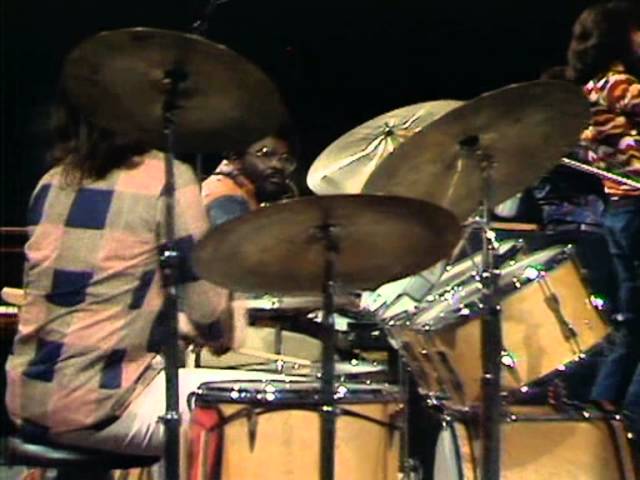
The 1973 Musikladen footage — broadcast on West Germany’s NDR-TV out of the Radio Bremen studios on May 30 of that year — catches the song at a strange moment in its life. David Clayton-Thomas had left the band in January 1972 to pursue a solo career. His replacement was Jerry Fisher, a Texas-born R&B singer with a powerful blues voice who had taken over the lead vocal slot for what would become the group’s transitional middle period. By 1973, the lineup performing You’ve Made Me So Very Happy at Bremen looked very little like the lineup that had recorded it. Fisher was on lead vocals where Clayton-Thomas had been. Lou Marini and Tom Malone had replaced Fred Lipsius and Chuck Winfield in the horn section. Larry Willis had taken over from Dick Halligan on keyboards. Georg Wadenius, the Swedish guitarist, had stepped into Steve Katz’s role. Bobby Colomby on drums and Lew Soloff on trumpet were the only members of the 1969 hit lineup still present on the Musikladen stage. Audiences wanted to hear the big hits, however, and the band performed them — Fisher singing the song he had not made famous, in front of a band that had been substantially rebuilt around him. The footage is, in that sense, a document of the song’s second life: the recording was a 1969 event with Clayton-Thomas; the live performance was an ongoing 1970s event with whoever happened to be in the band that year. Neither belongs to the other entirely. Both belong to Brenda Holloway, who wrote it to spite a man who had left her, and watched it become a standard.
SONG INFORMATION
Related videos
 Watch LaterAdded
03:21
Watch LaterAdded
03:21  Watch LaterAdded
03:05
Watch LaterAdded
03:05  Watch LaterAdded
04:48
Watch LaterAdded
04:48