




![The Manhattan Transfer – Chanson DAmour [Restored]](https://musicvideosclub.com/wp-content/uploads/2025/03/the-manhattan-transfer-chanson-d-360x203.jpg)


![Dead Or Alive – You Spin Me Round (Like a Record) [Live In Japan]](https://musicvideosclub.com/wp-content/uploads/2025/10/dead-or-alive-you-spin-me-round-360x203.jpg)
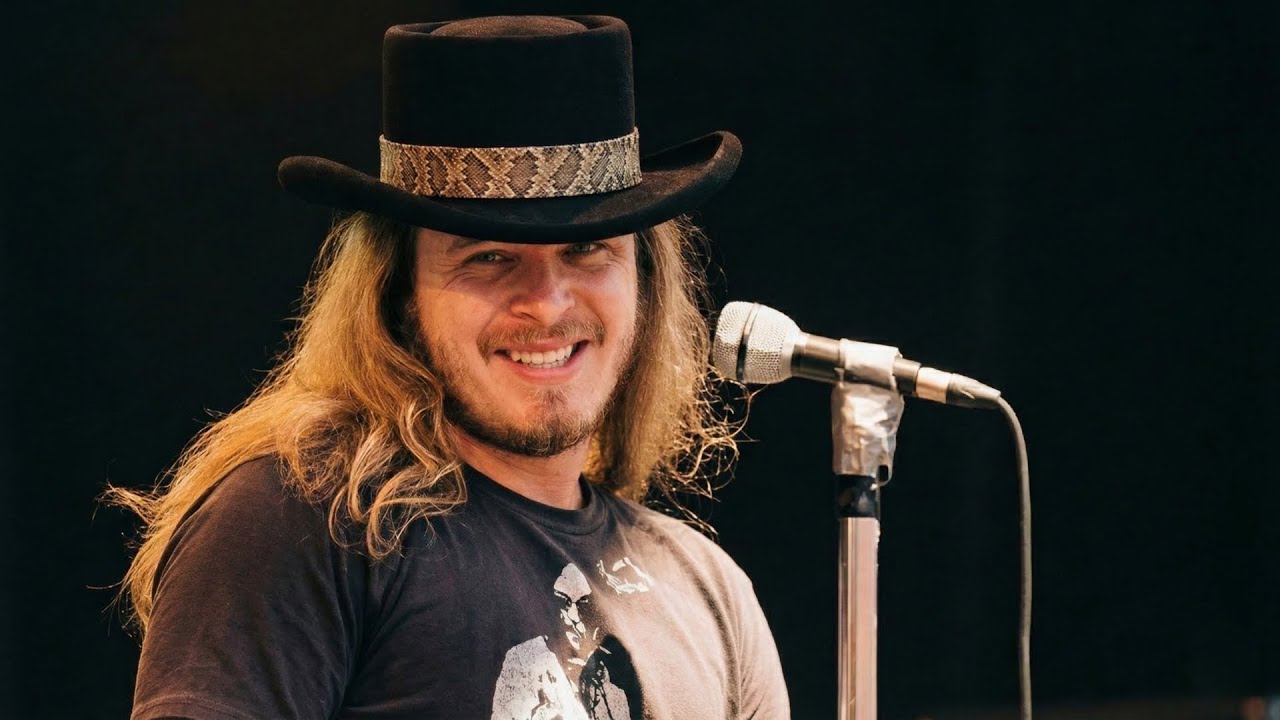
Lynyrd Skynyrd – Sweet Home Alabama (1977 Live)
One Hundred and Ten Days: The Last Summer Lynyrd Skynyrd Were All Here
Oakland Coliseum Stadium, July 2, 1977. The crowd that afternoon was large, loud, and completely unprepared for what Lynyrd Skynyrd delivered. The band that walked onstage was the strongest, most complete version of itself that had ever existed — Ronnie Van Zant, Allen Collins, and Gary Rossington anchored by the additions of Steve Gaines on guitar and the Honkettes — Cassie Gaines, Jo Billingsley, and Leslie Hawkins — providing the backing vocal power that the band’s ambitions had always demanded. When the opening guitar riff of “Sweet Home Alabama” landed, it did so with the full authority of a band that understood, with total certainty, exactly what it had. One hundred and ten days later, on October 20, 1977, the chartered Convair CV-300 carrying the band between Greenville and Baton Rouge ran out of fuel over the forests of Gillsburg, Mississippi, and fell out of the sky. Ronnie Van Zant was dead. Steve Gaines was dead. Cassie Gaines was dead. The band that performed at Oakland on July 2 never performed again as itself. What the Music Vault cameras captured that afternoon is not merely a concert film. It is the last summer.
“Sweet Home Alabama” had reached Number 8 on the Billboard Hot 100 in 1974 — the band’s highest-charting single — and had spent three years becoming one of the most immediately recognizable recordings in rock history by the time this Oakland performance was filmed. Its commercial reception had defied the industry’s expectations for a band it had consistently labelled as album-oriented and radio-resistant. Lynyrd Skynyrd had declined two television rock show offers in the immediate aftermath of the single’s success because they were, as Van Zant had said plainly, not a singles band. Their audience bought albums. “Sweet Home Alabama” was the song that proved a singles audience was out there too, whether they wanted one or not.
The song began from a riff Ed King heard Gary Rossington playing at a rehearsal — a counter-melody that lodged in King’s memory and returned to him that night in a form that he later described as arriving in a dream, note for note. He brought the chords back to the band the following day and Van Zant began shaping a lyric around a question that had been bothering him since Neil Young’s Southern Man and Alabama had landed in the early 1970s. Van Zant’s objection was not to Young’s anti-racism but to what he saw as the blunt instrument of the critique — “shooting all the ducks in order to kill one or two,” as he put it to Rolling Stone. The lyric he wrote named Young directly. What most casual listeners missed entirely was that it also mocked Alabama governor George Wallace — the “boo boo boo” audible in the mix after the Wallace reference, a deliberate signal of the band’s actual sympathies, recorded while Rossington and Collins played their mocking commentary in the background. Van Zant called the whole thing a joke lyric. The degree to which it was misread, for decades afterward, as a straightforward endorsement of Southern segregationism would have horrified him. Three years after the song was released, he was photographed on the cover of Street Survivors — the band’s final album — wearing a Neil Young t-shirt. Young later said his own song Alabama had richly deserved the response.
The recording session at Studio One in Doraville, Georgia produced a track with several details that listeners have spent fifty years unpacking. Producer Al Kooper — who had stumbled into playing organ on “Like a Rolling Stone” when Dylan allowed him into the studio as an observer — caught the ghost vocal audible after “I heard Mister Young sing about her,” a quiet “Southern Man” whispered in the left channel that Kooper himself had sung in a Neil Young impression, originally as a joke between takes that Van Zant insisted be left in. Ed King’s guitar solo was played in the wrong key — a discovery Kooper made in post-production that sent him to California with the tapes to play the problem to guitarist Michael Bloomfield. Bloomfield confirmed the error. Kooper left it in because it sounded right regardless of its technical incorrectness. The three backing vocalists who sang on the recording were Black women — Clydie King, Merry Clayton, and Sherlie Matthews — whose presence on a song called “Sweet Home Alabama” was not without complication. Clayton had initially refused, telling King flatly that she was not singing anything about somebody’s sweet home Alabama. She sang it.
By July 1977 the band had grown into something physically larger than the lineup that had cut the original. Steve Gaines had joined in 1975 following Ed King’s departure, and the addition had electrified everyone who saw the expanded unit live — Van Zant included, who had told Gaines backstage after his first show that he was the best guitarist he had ever seen. The three Honkettes had been in and out of the touring configuration since the Second Helping sessions, and by 1977 their contribution was fully integrated into the live sound. Cassie Gaines was Steve’s sister. They died on the same plane.
Neil Young performed “Sweet Home Alabama” exactly once in his entire life — at a benefit concert in Miami in November 1977, six weeks after the crash, to raise money for a children’s hospital. He played it as a medley with his own “Alabama” as a direct tribute to the band. He has never played “Alabama” again since that night. The mutual respect between the two camps — the Canadian folk-rock poet and the Florida band that had parodied him affectionately enough that he eventually admitted they were right — is the real story underneath the cultural noise the song has generated ever since. Van Zant wore the Neil Young shirt. Young played the song. The argument, to the extent it had ever been a real one, had ended before the plane went down.
This Oakland performance exists in the Music Vault archive as one of the finest live documents of a band at its peak — Gaines and Collins and Rossington trading guitar lines with the easy certainty of musicians who have played together long enough to anticipate each other instinctively, Van Zant commanding a football stadium crowd with the easy authority of a man who has done this thousands of times and still means every syllable. It is worth watching for the music alone. It is impossible to watch it knowing only the music. Somewhere in the frame, 110 days from a Mississippi forest, Ronnie Van Zant is singing about coming home to a place that would outlast him. He sounds like he knows every word will last forever. He was right about that too.
SONG INFORMATION
Related videos
 Watch LaterAdded
 Watch LaterAdded
03:02
Watch LaterAdded
03:02  Watch LaterAdded
04:16
Watch LaterAdded
04:16