




![David Lee Roth – California Girls (Official Video) [HD]](https://musicvideosclub.com/wp-content/uploads/2026/10/david-lee-roth-california-girls-360x203.jpg)


AC/DC – Back In Black
AC/DC asked the new singer for a Bon Scott eulogy that couldn’t sound like one.
Malcolm Young’s instruction came in two halves that did not fit together. The song was about death, he told the singer in the rehearsal room, and it could not be morbid. It was for Bon, and it had to be a celebration. Brian Johnson was not yet sure he had the job. He had been given a riff, a three-word title, and the task of writing a farewell to the man whose microphone he was holding, in a form that man’s closest friends could stand to play every night. Back in Black is what he came back with.
Keep watching: AC/DC – Highway to Hell · explore more →
The riff was older than the grief. Malcolm had it during the Highway to Hell tour in 1979, and by Angus Young’s account his brother turned up one night with a cassette, played it, and asked whether it was any good, because he honestly could not tell. Then, on February 19, 1980, Bon Scott died in London after a night out. He was 33. The band buried him in Fremantle, Western Australia, where his father took Malcolm aside and told him to carry on. Within weeks the brothers were back in a London rehearsal room with two guitars, playing, as Malcolm put it, “just for therapy.” The riff on the cassette now had something to be about.
The Singer Bon Scott Picked
Scott had supplied the name himself, years earlier. Touring England with a previous band, he watched the singer of a Newcastle group called Geordie roll around the stage screaming, and he told the Youngs it was the best Little Richard act he had ever seen. Scott never learned that the man was screaming because his appendix was about to burst. By March 1980 that singer was 32, living at his parents’ house in Gateshead, fitting vinyl roofs and windshields to other people’s cars, and fronting a reformed Geordie for beer money. Their closing number was AC/DC’s Whole Lotta Rosie. When the call came, the woman on the line would not name the band, only its initials, and Johnson agreed to the trip mainly because a vacuum cleaner jingle paying £350 was being recorded in London the same day. He drove down in a borrowed car, sat in a café across from Vanilla Studios in Pimlico too nervous to cross the street, then went in and sang Ike and Tina Turner’s Nutbush City Limits and Whole Lotta Rosie. When Malcolm phoned to offer him the job, Johnson asked him to hang up and call back in ten minutes, to be sure nobody was playing a joke. AC/DC announced him on April 1, 1980.
That left the words. The band flew to Compass Point Studios in Nassau in mid-April, where tropical storms knocked out the power and customs held their gear. Robert John “Mutt” Lange produced, Tony Platt engineered, and the title track was the first song they put on tape, cut live with both guitars, bass and drums in the room together. Johnson wrote in a cinder-block bedroom with a bed, a table and a lamp. What came out, he told Mojo years later, felt at the time like “mumbo jumbo.” The lyric never names Scott and never mourns him. It gives its narrator a cat’s luck with death and no regrets about how he has spent it. The brothers read it and saw their friend.
The Hit That Wasn’t One
None of that made it a big single. Atlantic released the album Back in Black in the United States on July 25, 1980, in an all-black sleeve the band defended against objections inside the label, and led with You Shook Me All Night Long. The title track followed as a US single in December 1980, backed with What Do You Do for Money Honey, and Billboard’s Hot 100 ranked it no higher than No.37 in 1981, two places below its predecessor. Britain’s chart ignored it for three decades. Official Charts first listed the song at No.27 in the chart dated December 1, 2012, the week AC/DC’s catalog finally reached iTunes. The album did the real business: Billboard never placed it above No.4, and the RIAA certified it for 25 million American copies in December 2019.
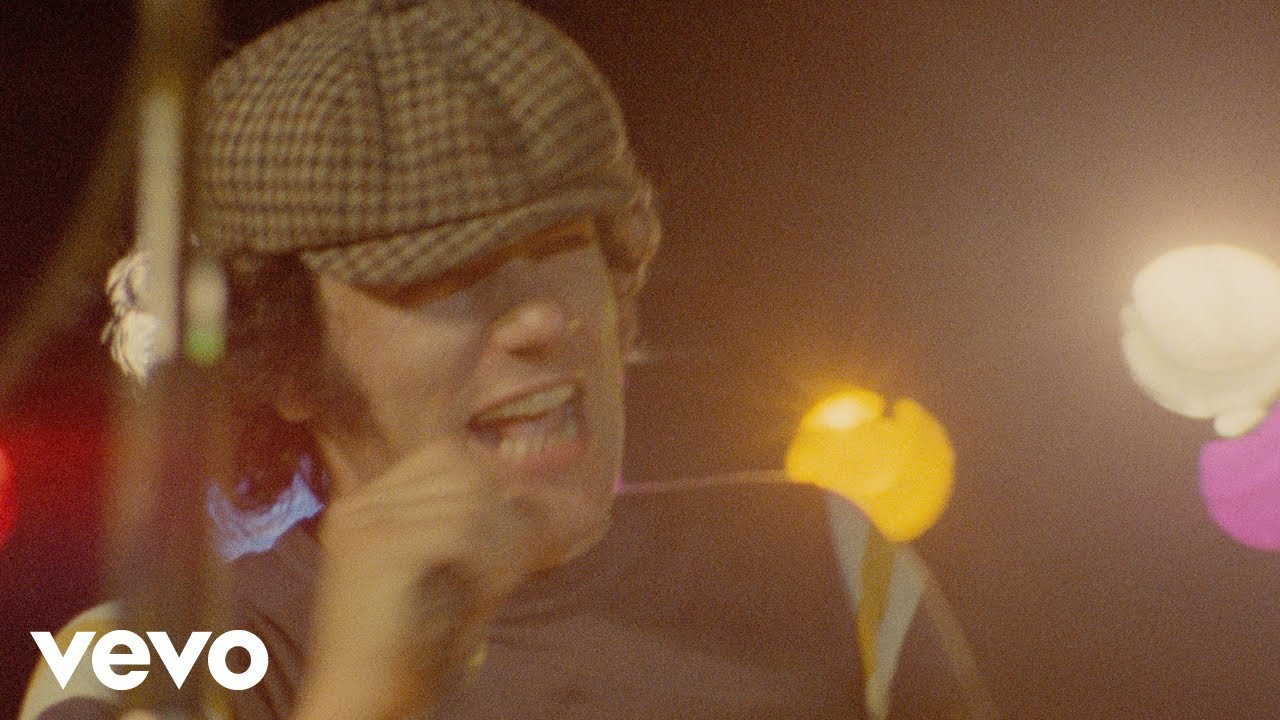
The film most people now know the song by was made before any of that. In early July 1980, during the warm-up dates for Johnson’s first tour, AC/DC shot six promotional clips on the stage of Het Turfschip in Breda, the Netherlands, with directors Eric Dionysius and Eric Mistler. There is no storyline, only the band playing. The negatives were later restored in 4K, and the official upload, on YouTube since November 2012, passed one billion views on January 31, 2024. Marvel opened Iron Man with the song in 2008. The Beastie Boys had less luck: when they asked in 1999 to clear a sample they had used in 1984, Malcolm Young turned them down, explaining that the band did not endorse sampling.
For years a rumor has held that Scott wrote these words before he died. Johnson answered it in his 2022 memoir, The Lives of Brian, saying he wrote every line with only the title to work from, and Angus Young has said Scott never got the chance to contribute. The rumor is wrong, and it is also the best review the lyric ever received. Johnson was asked to write something that sounded like a celebration of Bon Scott instead of a funeral for him, and he did it well enough that people assumed Bon had written it himself. When the tour reached Sydney in February 1981, Scott’s mother, Isa, told Johnson her son would have been proud of him. The song had already said as much.
SONG INFORMATION
Related videos
 Watch LaterAdded
04:50
Watch LaterAdded
04:50  Watch LaterAdded
04:30
Watch LaterAdded
04:30  Watch LaterAdded
03:30
Watch LaterAdded
03:30