




![Big Star – Thirteen [Alternate Mix] (Official Music Video)](https://musicvideosclub.com/wp-content/uploads/2024/12/big-star-thirteen-alternate-mix-360x203.jpg)
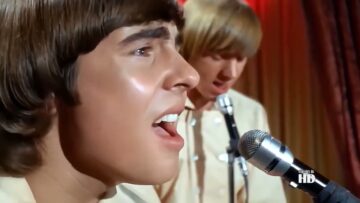
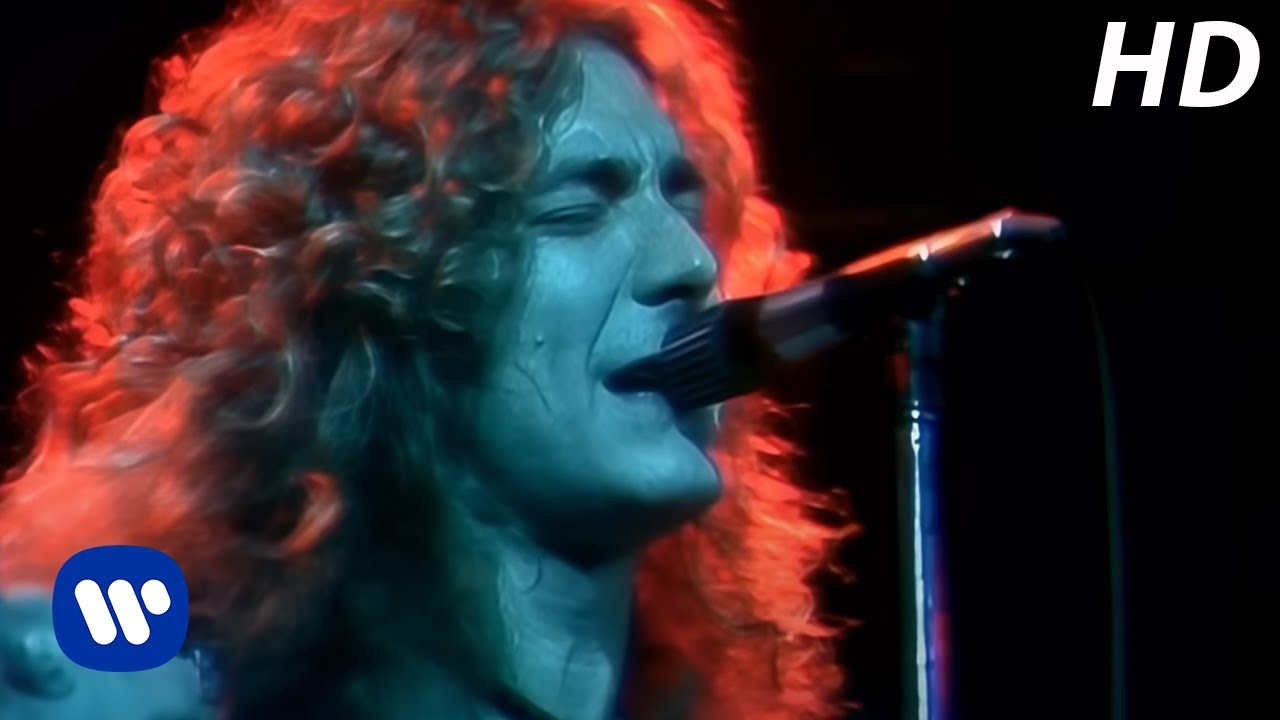
Led Zeppelin – In My Time of Dying (Live at Earls Court 1975)
Eleven Minutes About Dying, Sung Three Months Before the Crash That Almost Made It Prophecy
Robert Plant stood at Earl’s Court on May 24, 1975 and sang about dying for eleven minutes. The lyric he was working from was ancient — a deathbed gospel meditation that had passed through Blind Willie Johnson’s first recording session in 1927, through Josh White’s 1933 adaptation that Jimmy Page cited as the direct inspiration for the arrangement, through Bob Dylan’s 1962 debut, and now through the longest track Led Zeppelin had ever recorded — and Plant delivered it with the full-throated urgency of a man who understood the song as performance rather than premonition. On August 4, 1975, eleven weeks after this Earl’s Court performance, his Jaguar went off a road on the Greek island of Rhodes. His wife Maureen suffered a fractured skull and pelvis. Plant fractured his ankle and elbow and damaged his shoulder so severely that he spent the following year in a wheelchair and on crutches. He later told interviewers that he was reluctant to perform “In My Time of Dying” again after the accident because of its fatalistic lyrical theme. The song had not been a premonition. It had been close enough to feel like one.
The Earl’s Court residency — five nights, May 17, 18, 23, 24, and 25, 1975 — was the largest indoor run in Led Zeppelin’s UK concert history, with each night drawing approximately 17,000 people to the West London arena that had been their home as a venue since 1971. The shows were filmed on 16mm and Super 8 for the band’s own archive and featured a state-of-the-art screen system that projected the stage to the back of the arena — an innovation that had barely been attempted at this scale in British concert production. The band had arrived at these shows on the back of Physical Graffiti, released in February 1975 and immediately the commercial and artistic peak of their catalog — a double album that debuted at Number One on both sides of the Atlantic and pulled every preceding Led Zeppelin record back into the UK chart simultaneously. They were, in May 1975, the most commercially successful and critically untouchable rock band in the world. The Earl’s Court footage captures that certainty as a physical quality: four musicians who know exactly what they are and are not remotely interested in diminishing it.
The song’s journey to Led Zeppelin began with a specific record rather than a general tradition. Page had heard Josh White’s 1933 version and been arrested by the slide guitar technique and by the line “Well, well, well, so I can die easy” — absent from Johnson’s original and present in every subsequent version including Led Zeppelin’s. When Page and Plant were building Physical Graffiti at Headley Grange in Hampshire, the slide work Page brought to the track used an open A tuning that gave the recording its particular droning, relentless quality. John Paul Jones played fretless bass — a choice whose effect Rick Rubin later described with characteristic precision, noting that the bassline’s constant shifting of gears was one of the most interesting and unexpected things in the band’s entire output. John Bonham’s drums were recorded with the same distinctive reverb technique Page had used on “When the Levee Breaks” — cavernous, physical, filling the room before a note of melody had arrived. The ending was not written when recording began. The band jammed to a conclusion. When they finished, Bonham — exhausted, satisfied — was heard on tape saying “That’s gotta be the one, hasn’t it?” It was.
The songwriting credits on Physical Graffiti list all four members of Led Zeppelin as the authors of “In My Time of Dying” — a designation that ignored the preceding half-century of versions with considerable confidence, and that sat within a pattern of attribution the band had developed across their catalog. Johnson’s estate received no royalties. White received no royalties. Dylan, who had placed his adaptation on his 1962 debut with the credit “traditional,” received no royalties. Page had cited White directly as the inspiration. The arrangement Led Zeppelin built was sufficiently distant from any prior version that legal challenge was complicated — the song had passed through so many hands that establishing original ownership was genuinely difficult — but the moral arithmetic was clear enough that the omission has been a consistent point of discussion in critical literature about the band ever since. The music is extraordinary. The credits are not the music.
Robert Plant’s relationship to the lyric changed permanently after Rhodes. He performed the song on the 1977 North American tour — where he dedicated it, with characteristic sarcasm, to Denis Healey, the British Labour Chancellor of the Exchequer who had presided over the tax arrangements that had forced the band into temporary exile — but the ease with which he had inhabited the deathbed imagery at Earl’s Court was gone. He was now a man who had nearly fulfilled the song’s central premise. Jimmy Page performed it with the Black Crowes in 1999 and included it in his Outrider solo tour. Led Zeppelin returned to it at the O2 reunion show on December 10, 2007 — eighteen months after John Bonham’s son Jason had stepped behind his father’s kit to carry the rhythm his father had played on the recording. The band had asked Jason Bonham to play rather than recruit an outside drummer. The choice was not difficult. Some rhythms belong to a family.
John Bonham died on September 25, 1980, at thirty-two, from asphyxiation after consuming forty measures of vodka at Page’s Windsor home. Led Zeppelin disbanded four days later, stating that they could not continue without him. The Earl’s Court footage — released officially on the Led Zeppelin DVD in 2003 and on the Mothership promotional sampler — preserves the lineup intact, at the summit of their powers, performing a song about dying with the full-bodied confidence of people who have not yet had cause to take the subject personally. Plant is singing about dying. The crowd is watching him sing about dying. Nobody in the room on May 24, 1975 knows what August will bring. The camera holds the moment. The moment has been holding ever since.