









Captain & Tennille – Love Will Keep Us Together
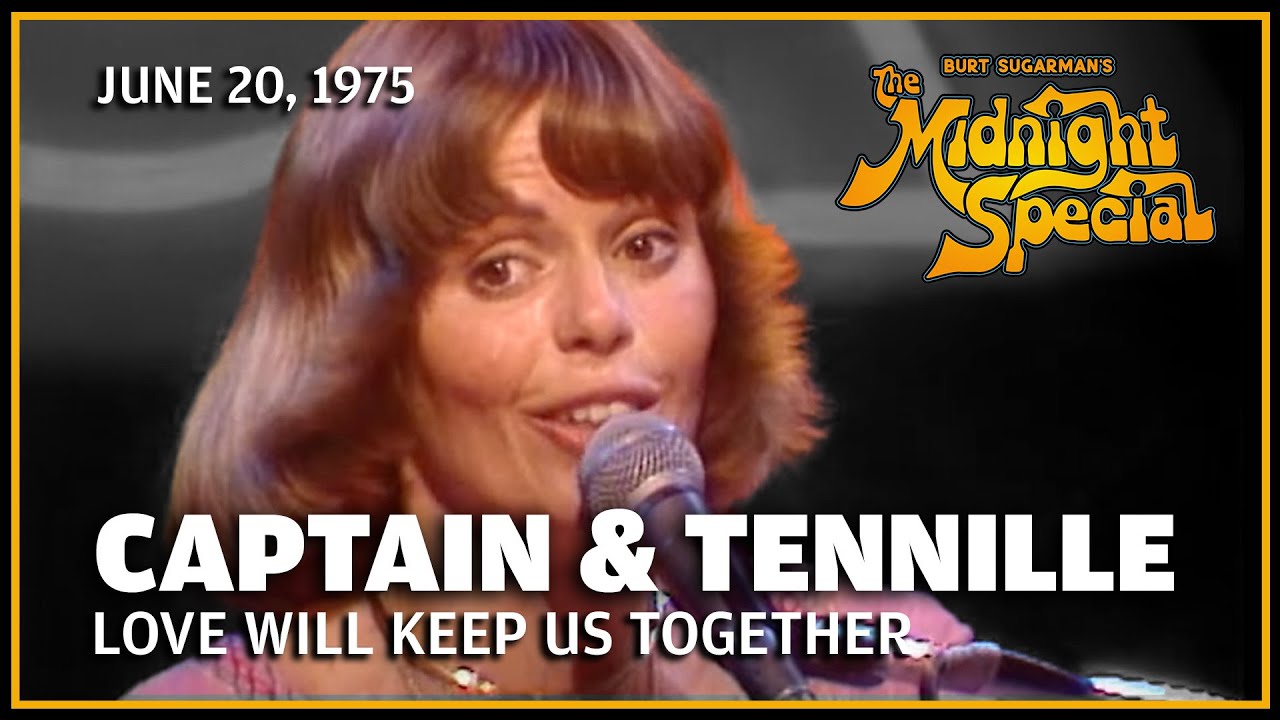
On June 20, 1975, They Performed the Song on NBC’s Midnight Special. The Next Morning, the Single Reached Number One on the Billboard Hot 100, Where It Stayed for Four Weeks and Became the Best-Selling Single of the Year. Hal Blaine, Who Had Played the Drums, Did Not Yet Know He Had Just Cut His Last Number-One Hit.
On the night of June 20, 1975, NBC’s The Midnight Special broadcast a performance of Love Will Keep Us Together by Captain & Tennille — the husband-and-wife duo who had been working clubs in Encino, California, two years earlier. The single had been released by A&M Records six weeks before. It had been climbing the Billboard Hot 100 steadily through May and into June. Twelve hours after the broadcast, on June 21, the song reached number one on the chart and stayed there for four weeks. Captain & Tennille — Daryl Dragon, who wore a captain’s hat onstage from his Beach Boys touring days, and Toni Tennille, the keyboardist-singer he had married in Virginia City, Nevada, in November 1974 — went from a duo whose first single most of America had not heard of to a pop phenomenon almost literally overnight. Hal Blaine, the most-recorded drummer in twentieth-century pop music, had played the drums on the recording. He had no idea, when he showed up to track them, that the session was anything other than a demo for someone named Daryl Dragon. He found out the song had hit number one only when a fan congratulated him on the radio chart later that summer.
The song had been written by Neil Sedaka and Howard Greenfield in 1973. It was one of the last two collaborations the two writers would complete before Greenfield moved to Los Angeles and the partnership that had produced Sedaka’s early-1960s teen-pop catalogue dissolved. Sedaka had borrowed the main chord progression from the Beach Boys’ Do It Again and had added a bridge of augmented chords inspired by Al Green. He had written the melody with Diana Ross in mind. Ross never recorded it. Sedaka cut it himself for his 1973 album The Tra-La Days Are Over — released only in Europe — and then included it on his 1974 American comeback album Sedaka’s Back, where it sat as a deep cut without being released as a single. The song was, by 1974, sitting in the catalogue without a hit version. The brother-sister UK duo Mac & Katie Kissoon had recorded it as a single in September 1973 and watched it fail to chart. Toni Tennille heard the Sedaka recording on a friend’s stereo and recognized the song instantly. She and Dragon went into Dragon’s home studio in late 1974 and recorded their version.
One Drummer, One Keyboardist, One Vocalist, One Hit
What Captain & Tennille’s recording sounds like, fifty years on, is a recording made by a husband-and-wife team whose interlocking instincts had been honed by two years of working together as a club duo in Encino. Daryl Dragon produced the record. Daryl Dragon played all the instruments on the recording except the drums — ARP Odyssey, Minimoog, piano, clavinet, Wurlitzer electric piano, Hammond organ, celesta, ARP Solina, bass, chimes — the kind of multi-tracked one-man arrangement that Stevie Wonder had been pioneering on the same A&M roster three years earlier. Hal Blaine, the Wrecking Crew session drummer who had played on more number-one records than anyone else in the history of American pop music — Phil Spector productions, Beach Boys records, Carpenters singles, the entire 1960s — came in to track drums for what he had been told was a demo. The session was Don Randi’s connection. Blaine remembered nothing about it afterwards. The track he had cut became his last number-one hit. He told the story years later in his memoir of being congratulated by a fan, demanding to know who Captain & Tennille were, getting the same answer twice, and finally hearing the record on the radio and saying he remembered, vaguely, the demo session.
Toni Tennille recorded all the vocals. The lead is doubled tightly. The multiple background harmonies thread in and out of Dragon’s keyboard arrangements. The closing fade includes a vocoded passage and Tennille’s overdubbed tribute to the song’s writer — “Sedaka is back” — sung as the last lyric on the record before the fade-out. Tennille had also altered the original Sedaka lyric to make it appropriate for a woman to sing to a man — Sedaka’s “some sweet-talking guy” became, in her version, a different gendered subject. The recording ran three minutes and twenty seconds. The single was released by A&M in April 1975 with the album following in May. The album cover featured Tennille and Dragon sitting with two of their bulldogs. Daryl Dragon had wanted Bruce Johnston’s I Write the Songs — written by his Beach Boys touring colleague — to be the duo’s first single. Tennille and the label overruled him. Barry Manilow would record his own version of I Write the Songs seven months later and take it to number one. Dragon had been correct about the song. He had been wrong about the order.
Four Weeks at Number One, a Spanish Version on the Same Chart, and a Career
The four-week run at number one on the Billboard Hot 100, beginning June 21, 1975, made Love Will Keep Us Together the biggest single of the year. It topped the year-end Billboard chart for 1975. It also reached number one on the Easy Listening chart, in Canada, and in Australia. It was certified Gold by the RIAA on July 1, 1975 — eleven days after first reaching number one — for one million American sales. It would win the Grammy Award for Record of the Year at the 1976 ceremony. While it was sitting at the top of the Hot 100, Captain & Tennille released a Spanish-language version of the same song, Por Amor Viviremos, as a separate single. It entered the Billboard Hot 100 in August 1975 and peaked at number forty-nine. It was the first time in chart history that any act had had two versions of the same song — in different languages, on different singles, not as A-side and B-side — appearing simultaneously on the Hot 100. A Chicago radio station, WLS-AM, mixed the two versions live on air to create a Spanglish hybrid for their own broadcasts. Captain & Tennille re-recorded their entire debut album in Spanish and released it as Por Amor Viviremos in May 1976.
The duo went on to a second number-one single (Do That to Me One More Time, January 1980), a string of further Top Tens (Lonely Night (Angel Face), Shop Around, Muskrat Love, The Way I Want to Touch You), an ABC variety television series that ran from September 1976 to March 1977, and a 1976 East Room performance for President Gerald Ford and Queen Elizabeth II during the American bicentennial. They remained married for thirty-nine years before divorcing in 2014, citing Daryl Dragon’s deteriorating neurological health. Dragon died of complications from kidney failure on January 2, 2019, in Prescott, Arizona, at age seventy-six. Toni Tennille was at his side. The song that had given them their entire career — that had been written for Diana Ross by a songwriting partnership about to break up, that had failed twice as a single before they recorded it, that had been cut by Hal Blaine as what he thought was a demo, that had been broadcast on The Midnight Special on the night before it reached number one — outlasted both the marriage and the writers’ reluctant decision to keep working together. Love Will Keep Us Together remains, as of 2026, one of the most-streamed pop singles of the 1970s on every major streaming platform. The math, on a song everybody had nearly given up on by 1974, has been generous beyond what any of them imagined.