








Rita Coolidge – We’re All Alone
Jerry Moss Told Her the Song Was Perfect for a Woman — Boz Scaggs Wasn’t Planning to Release It as a Single and the Label Chief Knew It
The meeting that produced “We’re All Alone” as a Rita Coolidge recording took place in an office at A&M Records. Coolidge recalled it in detail: she would visit Jerry Moss, the label’s co-founder and president, and the atmosphere was collegial in the way A&M had always been. On this occasion, Moss told her that Boz Scaggs’ Silk Degrees was in a million homes and that there was a song on it that was perfect for a woman to sing. The song was “We’re All Alone.” Scaggs was not releasing it as a single — it had been tucked away as a closing track and as the B-side of “Lido Shuffle.” Moss thought Coolidge should record it. What made the recommendation particularly well-grounded was that Coolidge already knew Scaggs’ work from the inside: she had sung backing vocals on his albums Moments and Boz Scaggs & Band, both from 1971, arranging and directing the other backing singers. This was not a label chief pitching a stranger a song by another stranger. It was the product of a specific musical network, and it would become the foundation of the most commercially successful period of Coolidge’s career.
The path to Anytime…Anywhere had not been straightforward. Coolidge had released five solo albums since signing with A&M in 1971 — each one critically noted, none of them commercially transformative. She had won two Grammy Awards with then-husband Kris Kristofferson for their country duet recordings, but her own chart presence had remained more promise than arrival. When she and producer David Anderle submitted the album that would eventually become Anytime…Anywhere, its first draft was called Southern Lady. Moss declined to release it. He told her directly that it would sell 150,000 copies automatically but that he wanted something more targeted at the adult rock crowd, something with AM radio traction. They kept half the Southern Lady recordings and built five new ones around them. “We’re All Alone” was among the additions. In a 2015 interview, Coolidge reflected on the experience: she had lost a child that year, and the album came at a moment when she needed a lift. She had not seen its scale coming. It was, she said, over the moon for her.
The recording sessions for “We’re All Alone” took place across Sunset Sound Studios, A&M Recording Studios, and Studio 55 in Los Angeles. Booker T. Jones — Coolidge’s brother-in-law — arranged and directed the track’s strings and played organ. The session players around him included pianist Mike Utley, guitarists Jerry McGee and Dean Parks, bassist Leland “Lee” Sklar, and drummer Mike Baird. Booker T.’s string arrangement gave the song its characteristic swell in the chorus: spare in the verses, opening to something larger at the emotional peak. Coolidge stayed close to Scaggs’ version in structure while reshaping it through her own vocal approach. Where Scaggs had sung it with the particular intimacy of a writer performing his own material, Coolidge brought a warmth and directness that carried differently on radio. The original lyric contains the line “Close your eyes ami” — Coolidge sang it as “Close your eyes and dream,” a small adjustment that widened the song’s accessibility without changing its weight.
Two Hits at Once, On Two Continents
The sequencing of singles from Anytime…Anywhere was handled differently in the US and UK. In America, “(Your Love Has Lifted Me) Higher and Higher” was released first and began climbing the Hot 100 in the spring of 1977, built on Booker T. Jones’s arrangement of Jackie Wilson’s 1967 recording. While it was still ascending, A&M issued “We’re All Alone” as the lead single in the UK, where it reached number six in August 1977 — the same month it hit number six in Ireland. By September, the US version had reached number seven on the Billboard Hot 100. The concurrent availability of both the Coolidge recording and the original Scaggs version at radio stations — the two versions sharing the same key and tempo — reportedly prompted some disc jockeys to splice them into an unofficial duet, a practice that had begun with the two versions of “You Don’t Have to Say You Love Me” two years earlier. “We’re All Alone” reached number one on the US Billboard Adult Contemporary chart, Coolidge’s first number one on that listing. The single was certified gold.
Anytime…Anywhere peaked at number six on the Billboard 200 and was certified platinum in the United States — a commercial level Coolidge had not previously reached on her own. The album spawned three Billboard top-twenty hits, with a third single, “The Way You Do the Things You Do,” peaking at number 20. Critics at the time recognised the shift the album represented: one reviewer called it “a nearly perfect album”; another noted that Coolidge was showing off her many talents as well as she ever had. A Memphis critic’s phrase was particularly apt given where Coolidge had started her career — in Memphis, singing commercial jingles and radio station IDs while finding her way into a scene that would eventually include Joe Cocker’s Mad Dogs and Englishmen tour, backing sessions for Leon Russell, Eric Clapton, and Boz Scaggs himself. The woman who had directed backing singers on Scaggs’ 1971 records had, six years later, taken one of his songs to places he had not taken it himself.
The Song That Keeps Being Rediscovered
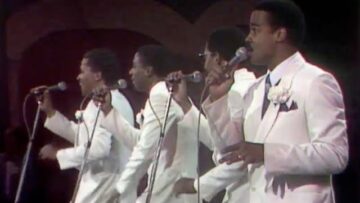
The song’s life beyond 1977 has been long and varied. The Walker Brothers released it in the UK in October 1976. Frankie Valli’s version reached number 78 in the US. In the Netherlands, some radio stations were simultaneously playing both the Walker Brothers’ version and Coolidge’s, one month apart. Jazz pianist Bob James released an instrumental version in 1977. Coolidge herself returned to it for her 2005 jazz album And So Is Love, and USA Today’s Elysa Gardner wrote that she brought a new wistfulness and knowing to her own hit of years past — evidence that good interpretive singers, like fine wine, improve with age. What Moss had recognised in his office at A&M in the mid-1970s — that the song was structurally perfect for a woman to sing, that Scaggs was sitting on something he had no current plans to release — translated into one of the defining recordings of the adult contemporary genre in 1977, and one of the most enduring entries in a catalogue that spans more than fifty years of recorded music.