



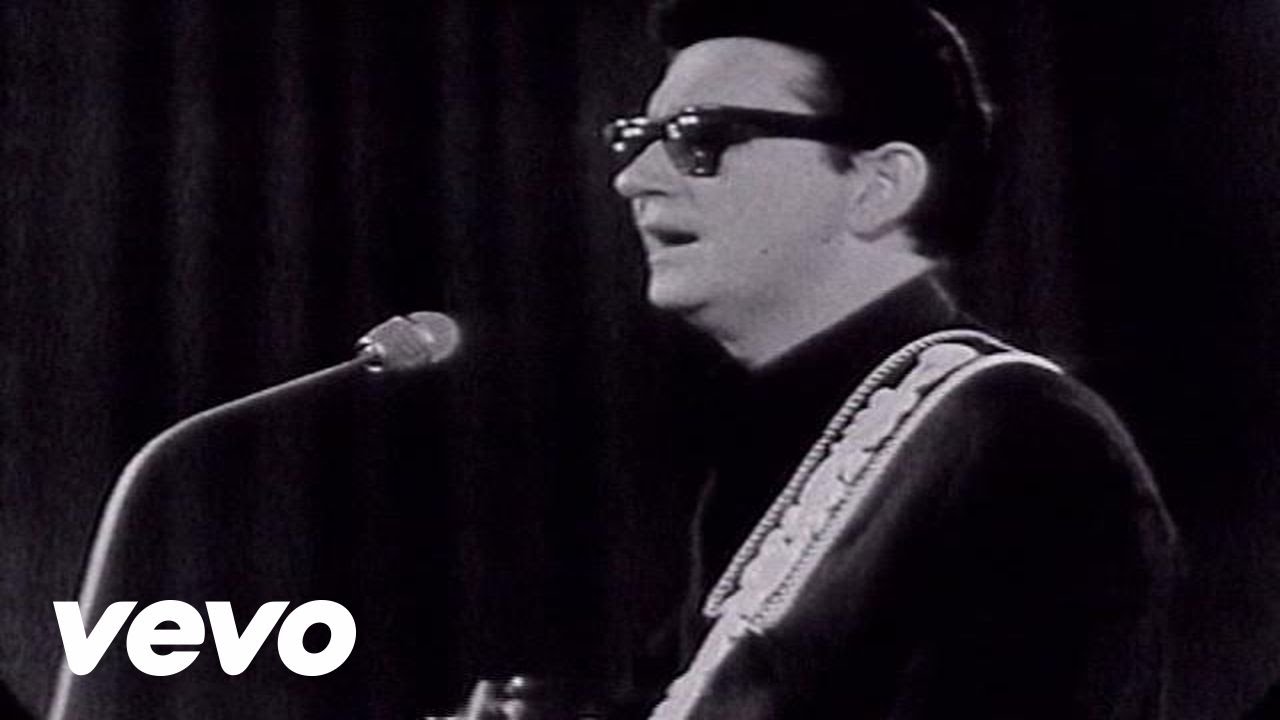




Roy Orbison – Oh, Pretty Woman
They Wrote It Before His Wife Got Back From the Shop — Three Fridays Later It Was Number One. Radio Censors Called the Opening Guitar Riff Lascivious. The Supreme Court Called It the Foundation of American Parody Law.
Claudette Orbison walked into the room to say she was going out shopping. Roy Orbison, sitting with his songwriting partner Bill Dees in the middle of a session that hadn’t yet produced anything, asked if she needed money. Dees — without pausing — said: “A pretty woman never needs any money.” Orbison started singing. He sang it while Dees banged his hand on the table to keep time. By the time Claudette came back from the shops, they had “Oh, Pretty Woman” written. Dees later recalled the timeline with remarkable precision: “We wrote it on a Friday. The next Friday we recorded it. And the next Friday, it was out.” Three weeks in a row. From offhand remark to released single in twenty-one days. The resulting record spent three weeks at number one on the Billboard Hot 100, three weeks at number one in the UK, went to number one in Canada, sold seven million copies, and became one of the most covered, sampled, litigated, and cinematically deployed songs in the history of American popular music.
The session that turned the quip into a recording took place on August 1, 1964, at Fred Foster Sound Studio in Nashville, Tennessee, with Foster producing and engineer Bill Porter running the board. Orbison was surrounded by a cast of Nashville’s finest session players: Billy Sanford, Jerry Kennedy, and Wayne Moss on guitars alongside Orbison himself, with Floyd Cramer at the piano, Henry Strzelecki on bass, Boots Randolph and Charlie McCoy on saxophones, Buddy Harman on drums, Paul Garrison on percussion, and Dees himself singing harmony vocals as he did on many Orbison recordings. Sanford, who would later play sessions for Elvis Presley and Don Williams, played the introductory guitar riff — the five-note ascending figure that opens the song and that radio censors immediately identified as a problem. The riff was considered lascivious. The drums were considered too aggressive. The line “come with me baby” was changed to “come to me baby” before the single was released, on the grounds that the original was too risqué. Orbison would later have to change the line again for television appearances, in the same way the Rolling Stones would be asked to alter their lyrics for Ed Sullivan two years later.
What the Censors Missed
What the censors were responding to was the song’s fundamental structural energy — not its lyric, which is essentially innocent, but its rhythmic insistence and the way Orbison’s voice rides the riff rather than floating above it. Orbison had built his reputation on operatic ballads of solitude and heartbreak — “Only the Lonely,” “Running Scared,” “Crying,” “In Dreams” — songs that treated the interior landscape of loneliness as worthy of the same grandeur that classical composers brought to tragedy. His voice, which music scholars have estimated at three or four octaves of range, moved between baritone and tenor with a control that consistently unsettled listeners who expected rock and roll to occupy a narrower emotional register. Bruce Springsteen, inducting Orbison into the Rock and Roll Hall of Fame in 1987, said that his arrangements were complex and operatic, that they had rhythm and movement, and that they addressed the underside of pop romance. On “Oh, Pretty Woman” — which Springsteen elsewhere called the best girl-watching rock and roll song ever written — Orbison applied that operatic weight to a scenario that is, on its surface, pure comic deflation: a man watching a woman walk down the street, knowing she won’t stop, reduced to hoping. When she turns back at the end, it reads as an almost absurd reprieve — a happy ending that the song’s own emotional logic has spent two and a half minutes making feel impossible.
The promotional film for the song was shot on October 19, 1964, on the rooftop garden of the Derry and Toms department store in Kensington, London, directed by Stanley Dorfman. It was made because Orbison was unable to attend the live taping of Top of the Pops, and it aired on October 22, October 29, November 12, and November 19 — four separate broadcasts of the same clip, which gives some sense of how thoroughly the song dominated British airwaves in the autumn of 1964. The single had already been certified Gold by the RIAA that same October. Billboard ranked it the number four song of the entire year. It was Orbison’s second and final single to reach number one in the United States, following “Running Scared” in 1961, and his third to top the UK chart, following “Only the Lonely” and “It’s Over.”
The Song That Changed American Law
In 1989, Miami bass group 2 Live Crew recorded a parody of “Oh, Pretty Woman” — retaining the distinctive bassline but replacing the lyric with comic material about a hairy woman and her bald-headed friend. Orbison’s publisher Acuff-Rose Music sued, arguing that commercial use of copyrighted material could not qualify as fair use regardless of its parodic intent. The case went to the United States Supreme Court, which ruled unanimously in 2 Live Crew’s favour in 1994, in what became known as Campbell v. Acuff-Rose Music, Inc. The decision greatly expanded the doctrine of fair use, establishing that commercial parody could qualify for its protection — a ruling that has shaped copyright law and creative culture ever since. A song written in an afternoon, in a house in Hendersonville, Tennessee, while a woman went out to buy something, became the legal foundation of American parody jurisprudence. The song had also given its name to the 1990 Garry Marshall film Pretty Woman, starring Richard Gere and Julia Roberts, which used it to anchor one of the most commercially successful romantic comedies of the decade. Van Halen had covered it in 1982, reaching number twelve, and the resulting pressure from Warner Bros. to capitalize on the single’s success led directly to the entire Diver Down album being recorded and released.
Roy Orbison died of a heart attack on December 6, 1988, at the age of fifty-two, six weeks after appearing alongside George Harrison, Bob Dylan, Tom Petty, and Jeff Lynne as a member of the Traveling Wilburys. He was posthumously awarded the Grammy for Best Male Pop Vocal Performance in 1991 for his live recording of “Oh, Pretty Woman” from the 1988 HBO special Roy Orbison and Friends: A Black and White Night. The song was inducted into the Grammy Hall of Fame in 1999, named to the Rock and Roll Hall of Fame’s 500 Songs that Shaped Rock and Roll the same year, ranked at number 224 on Rolling Stone’s 500 Greatest Songs of All Time in 2004, and added to the National Recording Registry of the Library of Congress in 2008. Bill Dees quipped a line. Claudette had not yet returned from the shops. And the rest, as they always say, is history — though this particular history turns out to involve the Supreme Court, several hundred cover versions, a Julia Roberts film, and one of the most recognisable guitar riffs in the history of recorded sound.
SONG INFORMATION
Related videos
 Watch LaterAdded
04:05
Watch LaterAdded
04:05 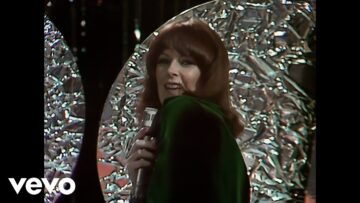 Watch LaterAdded
02:57
Watch LaterAdded
02:57  Watch LaterAdded
03:04
Watch LaterAdded
03:04