








The Rolling Stones – Can’t You Hear Me Knocking
The Band Thought They Had Finished the Song. Mick Taylor Kept Playing Anyway. The Tape Was Still Rolling. Five Decades Later, the Accident That Resulted Has Become One of the Most Celebrated Jams in Rock — and Took the Band Thirty-One Years to Work Up the Nerve to Play Live.
The Rolling Stones thought they had finished. The Sticky Fingers session at Olympic Studios in London had run through the song the band had been calling Can’t You Hear Me Knocking — Keith Richards’ open-G riff, Mick Jagger’s vocal, two minutes and forty-three seconds of song. At the close of the vocal, instruments started coming down. Players began moving toward the control room. Then Mick Taylor, the twenty-two-year-old lead guitarist who had replaced Brian Jones eighteen months earlier, kept playing. He had no particular reason. He felt like carrying on. Bobby Keys, the Texan saxophone player who had been added to the band’s working circle that year, picked his instrument back up and played a solo against the figure Taylor was developing. Rocky Dijon, the percussionist, returned to his congas. Charlie Watts had not stopped. Bill Wyman shifted back into the bass groove. Billy Preston, on organ, found his place. Producer Jimmy Miller had tape rolling because nobody had thought to call cut. By the time the take collapsed, four and a half minutes of unscripted music sat on the master that had not been there at the start of the day.
“Everybody was putting their instruments down, but the tape was still rolling and it sounded good,” Mick Taylor said in 1979, “so everybody quickly picked up their instruments again and carried on playing. It just happened, and it was a one-take thing. A lot of people seem to really like that part.” Taylor’s restraint was characteristic. The closing four and a half minutes of Can’t You Hear Me Knocking are widely regarded as one of the great extended improvisations in rock and roll — Bobby Keys’ tenor-saxophone solo riding over Richards’ rhythm work, Taylor stepping in to take over for the song’s final passage, Latin and jazz inflections that no Stones recording before this one had carried. The Carlos Santana comparisons came almost immediately on the album’s release. Taylor and Richards both, in subsequent interviews, denied that Santana had been an influence — the resemblance was the result of a four-piece-band-plus-percussion jam, not a deliberate stylistic borrowing.
The Song That Sat in the Vault for Thirty-One Years
The album Sticky Fingers was released on April 23, 1971, the first studio LP on the Stones’ newly-formed Rolling Stones Records label, and the first to feature the John Pasche tongue-and-lips logo on its sleeve. Can’t You Hear Me Knocking was the fourth track. Critics and listeners responded immediately. By the end of the year, the song had become a fan favourite. By the end of the decade, it was widely regarded as one of the high points of the entire Sticky Fingers album, and one of the band’s finest studio achievements. None of which moved the band any closer to performing it on stage.
The song had been played in shortened form at a handful of British dates during the band’s 1971 farewell-to-the-UK tour, the eleven shows the Stones had played before fleeing the country for France to avoid bankruptcy under British tax law. After that, it disappeared from the live repertoire entirely. Through the 1972 American tour, the 1973 European tour, the 1975 Tour of the Americas, the 1978 Some Girls tour, the 1981 American tour, the 1982 European tour, the 1989 Steel Wheels tour, the 1994 Voodoo Lounge tour, the 1997 Bridges to Babylon tour — through nine major tours and twenty-eight years — the Stones did not play Can’t You Hear Me Knocking in concert. The reasons given by the band’s musicians in interviews were consistent. Rehearsals either produced stale attempts to duplicate the album version, or sloppy improvisations that lacked the original’s spontaneity. The band lacked the supporting personnel — particularly the percussion section — to bring the arrangement off live. And the song, by its nature, depended on a captured-in-the-moment quality that no rehearsed live arrangement could be guaranteed to replicate.
The 2002 Licks Tour and the Live OFFICIAL Recording
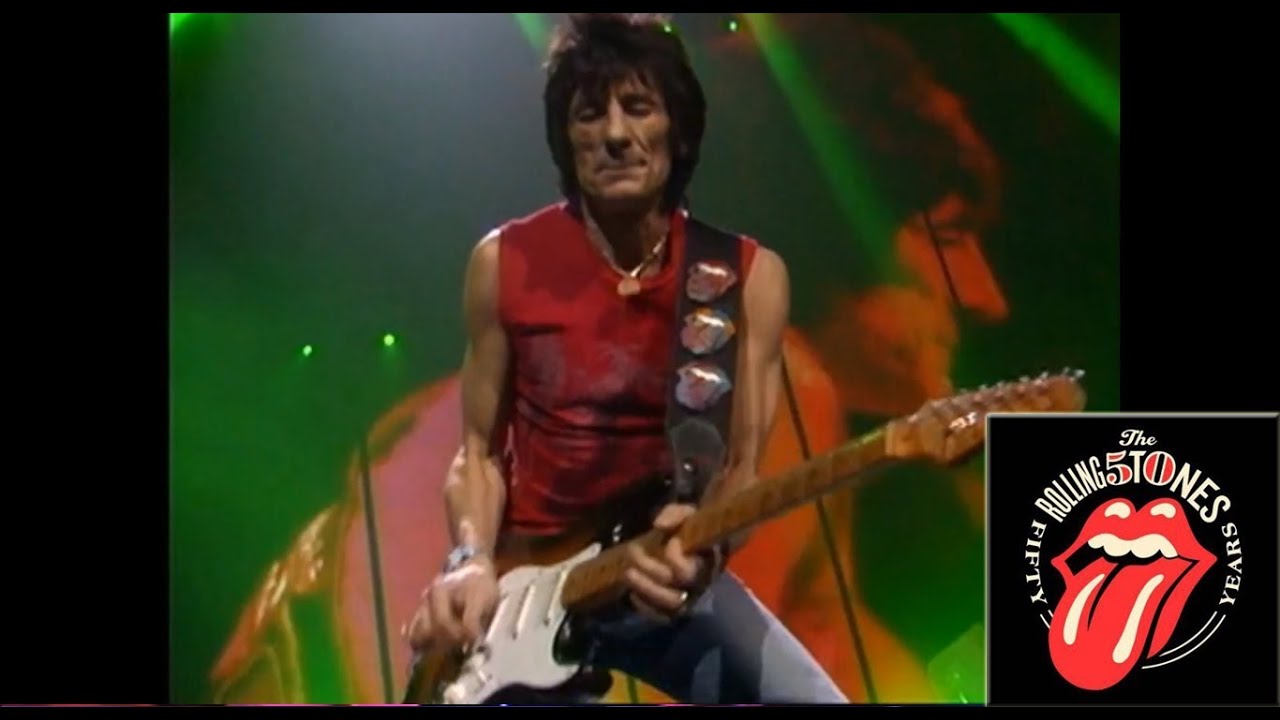
The 2002 Licks Tour was the band’s fortieth-anniversary world tour, supporting the compilation Forty Licks. By that point, the Stones’ live operation had become one of the largest touring productions in popular music — a full horn section, percussion, backing vocalists, and the resources to attempt material the band had previously regarded as too complex or too fragile to bring to the stage. Can’t You Hear Me Knocking entered the setlist for the first time in over three decades. Bobby Keys, who had played the original 1970 saxophone solo, was still touring with the band and reprised the part. Ronnie Wood — who had replaced Mick Taylor in late 1974 — took on Taylor’s extended guitar solo. Mick Jagger added a harmonica solo after the saxophone passage, the only significant arrangement change from the original. The song became a high point of the tour and was carried over into the following A Bigger Bang Tour of 2005-2007.
The live recording from the Licks Tour was released on the 2003 DVD set Four Flicks and on the 2004 live album Live Licks. The “Live OFFICIAL” video that the band has since posted on their official channel is one of those Licks Tour performances — the band, with twenty-eight more years of road experience and the supporting cast they had needed in 1971, finally finding a way to perform on stage the song that had been an accident in the studio. The footage is, in that sense, a quiet vindication of the studio recording. What had begun as a happy accident in late 1970 — a band that had thought it was done playing, picking its instruments back up because the tape was still running and Mick Taylor had not yet stopped — turned out to be a piece of music the Rolling Stones spent thirty-one years preparing themselves to be able to play. The song was the song. The band, eventually, became equal to it.