


![The Rolling Stones – Brown Sugar [Live] HD Marquee Club 1971 NEW](https://musicvideosclub.com/wp-content/uploads/2025/12/the-rolling-stones-brown-sugar-l-360x203.jpg)
![George Benson – Give Me The Night (Official Music Video) [HD Remaster]](https://musicvideosclub.com/wp-content/uploads/2026/02/george-benson-give-me-the-night-360x203.jpg)
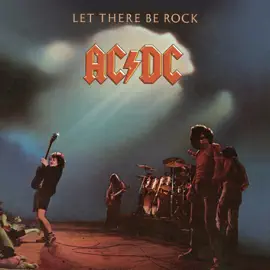
AC/DC – Let There Be Rock | The Song Recorded on a Burning Amp
Angus’s Amp Exploded Halfway Through — They Used the Take Anyway
The sessions for “Let There Be Rock” were running on adrenaline from the moment AC/DC walked into Albert Studios in Sydney in January 1977. The band had just come off a gruelling Australian tour that had been dogged by cancellations — local authorities in regional centres had grown nervous about the perceived association between AC/DC and the punk rock scene tearing through Britain, and had pulled shows accordingly. By the time the band entered the studio for two weeks of night sessions with producers Harry Vanda and George Young, the frustration of the road and the fury of the tour were still running through them like a live current. Angus Young set the tone from the first session. Halfway through recording the title track, his amplifier exploded. They used the take anyway. If you listen carefully, you can hear exactly where it happened.
“Let There Be Rock” was released as a single in 1977 with “Problem Child” as its B-side, lifted from the album of the same name — AC/DC’s fourth studio record and their first to see simultaneous international release. The album debuted in Australia in March 1977 on Albert Productions, followed by the Atlantic Records international edition in July. In the UK it reached number 75 on the albums chart — AC/DC’s first UK charting album — and in the United States it became the bridgehead for what would eventually become one of the most successful campaigns in the history of hard rock. Two million copies sold in the US alone. The Guardian later ranked the title track at number four on their list of the 40 greatest AC/DC songs. Kerrang! placed it at number three on their equivalent list. Both were being conservative.
The lyric that Bon Scott, Angus Young, and Malcolm Young built for the title track is one of the most audacious pieces of rock mythology ever set to tape. It constructs a mock-biblical creation story in which Tchaikovsky receives the message Chuck Berry had sent him in “Roll Over Beethoven” and shares it with the masses, setting off a chain of events that leads — inevitably, cosmically — to a six-piece band playing at 42 decibels in an establishment called The Shaking Hand. The song moves through three verses of escalating noise: first the birth of rock, then the rise of the rock band as institution, then the specific, sweat-soaked reality of a group playing loud music in a room full of people who needed it. Scott delivers the line “Letthereberock” — run together into a single syllable, a command from on high — with a blood-curdling conviction that makes the joke feel like scripture. In the studio recording, he also sings the pre-chorus out of sequence, introducing “sound” before “light.” Nobody corrected it. In live performances, he fixed it himself.
Vanda and Young — the same Harry Vanda and George Young who had fronted The Easybeats a decade earlier — had been producing AC/DC since the beginning, and their instinct for the band’s particular brand of stripped-back ferocity was by 1977 fully calibrated. The Albert Studios operation was famously lean: no excess, no reverb, no studio trickery to pad out what was essentially a live band playing in a room. The result is a recording that sounds like it was made at maximum velocity in the minimum possible time. George Young was Angus and Malcolm’s older brother, which gave the production dynamic a family-business quality that every session seemed to benefit from — when Mutt Lange told Angus years later that of all the AC/DC records he wished he’d produced, it was Let There Be Rock, he was identifying something about the relationship between the band and their producers that no outside hand could have replicated.
The album arrived at a precise turning point in AC/DC’s trajectory. It was the last record to feature bassist Mark Evans, who was replaced by Cliff Williams for Powerage the following year. It was also the album that, according to biographer Murray Engleheart, elevated them to the status of a genuine album band — placing them in the company of The Rolling Stones, The Who, and Led Zeppelin in terms of how seriously the rock press and radio were beginning to take them. The international cover featured the band’s now-iconic lightning bolt logo, designed by Gerard Huerta and appearing for the first time in July 1977. The photograph used was shot on March 19, 1977, at the Kursaal Ballroom in Southend, Essex — a venue so perfectly unglamorous it could only have been the right choice.
The song’s live life has been as important as its recorded one. It has appeared on four official AC/DC live albums, featured as the closing number in the 1980 concert film AC/DC: Let There Be Rock — shot at the Pavillon de Paris on December 9, 1979, in what would prove to be Bon Scott’s final major filmed performance — and has anchored set closers across five decades of touring. The film ends with the words “To Bon” on screen, a dedication placed there after Scott’s death in February 1980, two months after the footage was captured. Dave Grohl has spoken about seeing the film as a teenager: “It was the first time I’d felt that energy; like, I just wanna break something. It was dirty and sweaty. Fucking beautiful.” In recent tours, the song has closed the main set before the band returns for encores. The extended guitar solo Angus performs live — far beyond anything on the studio version, sometimes stretching past ten minutes — is a ritual that audiences attend as much as they attend the song itself.
Bon Scott died on February 19, 1980. What he left behind, at its most compressed and most furious, is six minutes of rock history being told from the inside by someone who understood exactly what it was and exactly what it was for. “Let There Be Rock” is not a song about the past. It is a command about the present — an instruction delivered from a stage in Sydney in January 1977, through an amplifier that was already on fire, to anyone in earshot who needed to hear it. The amp exploded. They used the take. Of course they did.
SONG INFORMATION