



![Eric Clapton – I Shot The Sheriff [Crossroads 2010] (Official Live Video)](https://musicvideosclub.com/wp-content/uploads/2026/09/eric-clapton-i-shot-the-sheriff-360x203.jpg)

Mike Oldfield – Tubular Bells
Mike Oldfield Was Nineteen When He Made “Tubular Bells” in a Country House Studio in Oxfordshire in 1972 — the First Album Ever Released on Richard Branson’s Virgin Records. Six Years Later He Performed It at Wembley.
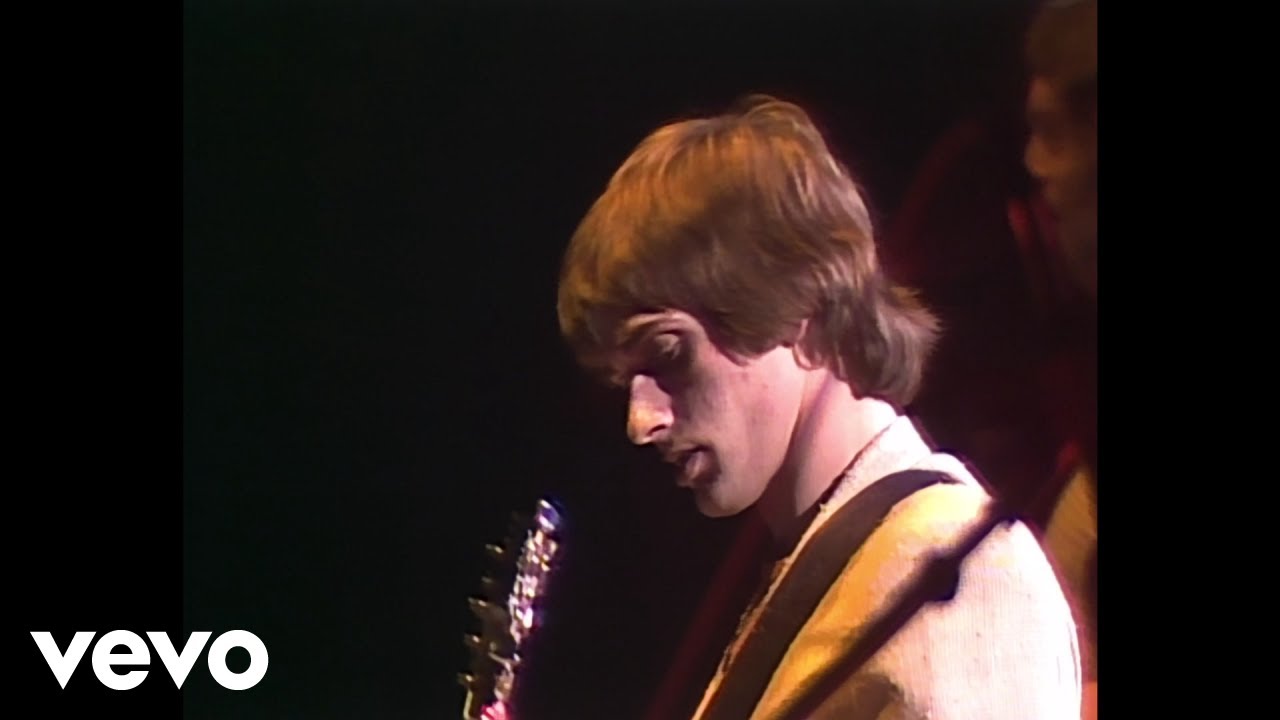
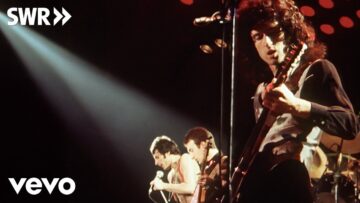
The performance featured here was filmed at the Wembley Conference Centre in west London on the evening of April 25 or April 26, 1979 — Mike Oldfield’s first solo concert tour, six years after the studio recording of Tubular Bells had been released as the first-ever album on Richard Branson’s Virgin Records. The footage was incorporated into the Exposed concert film and double live album released by Virgin three months later, on July 27, 1979. It captures Oldfield at twenty-five — five years past the global commercial breakthrough that had been triggered, in late 1973, by the use of the album’s opening theme in William Friedkin’s The Exorcist, and one year past Incantations, the fourth studio album that had finally pulled him out of the touring reclusion he had spent the post-Exorcist period in. The official Mike Oldfield YouTube channel uploaded this footage on April 27, 2023, to mark the fiftieth anniversary of the original studio recording. The unedited Wembley take runs four minutes and forty-four seconds. It is the main theme — the opening piano figure, the famous 7/8 ostinato in A minor that William Peter Blatty’s novel and William Friedkin’s film built their soundtrack around, the figure that has become, in the half-century since the recording was made, one of the most immediately recognisable instrumental motifs in popular music.
The story of the original studio recording has been told many times. Oldfield was nineteen years old. He had been working since the age of fifteen, first as the guitarist in the Sallyangie folk duo with his sister Sally Oldfield, then as a sideman in Kevin Ayers’ band the Whole World, where he had played bass and guitar on the 1970 album Shooting at the Moon. During those Whole World sessions at Abbey Road Studios he had spent his off-hours teaching himself to play every percussion instrument in the building — including a set of tubular bells he could not stop thinking about. By the end of 1971 he had assembled, on a domestic Bang & Olufsen reel-to-reel tape recorder in a London flat, a forty-minute multi-instrumental demo of what he would later call “Opus One.” He took the tape to every major British label. Every label turned him down. Then, in autumn 1971, while playing on Arthur Louis demos at a newly converted residential recording studio in a converted manor house in Shipton-on-Cherwell, Oxfordshire — a property purchased by a twenty-one-year-old entrepreneur named Richard Branson, whose Virgin mail-order record business and Virgin record-shop chain had not yet expanded into a record label — Oldfield struck up a friendship with the studio’s two in-house producers, Tom Newman and Simon Heyworth. Newman and Heyworth heard the demo. They passed it to Branson. Branson decided to use Oldfield’s record as the launch release for the record label he was just then constructing around the studio.
The Manor, the Bells, and the Vivian Stanshall Moment
Oldfield was given one week of studio time at The Manor in November 1972. He recorded the first side of the album — what would be released as Tubular Bells (Part One), twenty-five minutes and thirty seconds of through-composed instrumental music — during that week. He played every part on it himself: acoustic guitar, electric guitar, bass guitar, Farfisa organ, Lowrey organ, glockenspiel, mandolin, timpani, piano, Spanish guitar, taped motor drive of a prepared piano, and the bell-like instrument the album took its name from. The exact provenance of the tubular bells themselves has been told two different ways. In 2001 Oldfield said he had asked Branson and the producers to hire the bells in along with the other percussion. In 2013 he revised the story: he had walked into the studio one morning and seen a set of tubular bells being wheeled out, having been left there by John Cale’s session the week before, and asked Newman to leave them behind. Whichever version is true, the bells became the album’s signature sonic identifier — the second-to-last track of Part One, after Vivian Stanshall of the Bonzo Dog Doo-Dah Band (recruited at the last minute through a Branson connection) intones, in his unmistakable theatrical baritone, the call-out of each instrument as it enters the closing crescendo: “Grand piano! Reed and pipe organ! Glockenspiel! Tubular bells!” Oldfield was permitted, on the strength of the recorded Part One, to stay on at The Manor and complete Part Two during sessions in the spring of 1973. The full forty-nine-minute album was finished in April 1973. The Ampex sixteen-track tape recorder used to make it was The Manor’s standard machine. A nearby British Royal Navy long-wave radio transmitter at GBR Rugby leaked Morse code carrier-wave signal into the master tape at very low audible frequency, where it remains, on pressings of the record clean enough to reveal it, to this day.
Virgin Records released Tubular Bells on May 25, 1973, with cover artwork by Trevor Key — a chrome photograph of a bent tubular bell sculpture hanging over the sea, which would become as recognisable as the music itself. Initial sales were modest. The record built slowly through the British rock press across the summer of 1973. The decisive commercial moment came on December 26, 1973, when William Friedkin’s adaptation of William Peter Blatty’s novel The Exorcist opened in American cinemas with the opening figure of Tubular Bells playing under the film’s most quoted scenes. The film was the highest-grossing horror picture of all time on first release. The soundtrack license for the Oldfield piece transformed an underperforming British art-rock instrumental into a global commercial phenomenon within weeks. By autumn 1974 the album was number one on the UK Albums Chart, where it remained for the better part of seven consecutive weeks, and number three on the US Billboard 200. A 1974 edit of the main theme, released in January 1974 in the United States as a single, reached number seven on the Billboard Hot 100 — the first instrumental record to enter the American Top Ten since Henry Mancini’s Love Theme from Romeo and Juliet in 1969. The full album won the 1975 Grammy for Best Instrumental Composition. It has since sold over seventeen million copies worldwide and made Richard Branson, on the strength of one record, the founder of a label that would within a decade sign the Sex Pistols, the Rolling Stones, Phil Collins, Genesis, Culture Club, and Janet Jackson. “Tubular Bells transformed Mike’s and my life and kickstarted the Virgin brand,” Branson wrote on the album’s fiftieth anniversary in May 2023. “What a ride.”
The Wembley Stage, the Tour That Almost Bankrupted Him, and What the Footage Captures
By the time of the Wembley filming six years later, Oldfield was a different working musician. He had spent most of the post-Exorcist period in retreat from the music industry — refusing to tour, declining interviews, recording at his own home studio in Hergest Ridge on the Welsh border. He had released three further studio albums of the same long-form instrumental shape — Hergest Ridge in 1974 (which actually displaced Tubular Bells at number one on the UK Albums Chart in September 1974, making Oldfield one of the few artists in chart history to be replaced at the top by themselves), Ommadawn in 1975, and Incantations in 1978. The Exposed tour of 1979 was the first time he had taken the music on the road. The production was extravagant by any standard. Eleven core musicians. A sixteen-girl choir from Queen’s College, London. A string section drawn from the London Symphony Orchestra, arranged by David Bedford and conducted by Dick Studt. Animated films projected over the band. The full tour cost Mike Oldfield and Virgin Records, in combination, approximately five hundred thousand pounds in losses — a sum from which neither would recover financially without the next round of releases. The tour opened in Barcelona on March 31, 1979, moved through Madrid, Paris, Dusseldorf, Berlin, Brussels, Rotterdam, Denmark, Bremen, Hamburg, Munich, and Frankfurt, and returned to England for the Royal Festival Hall on April 21, the Wembley Conference Centre on April 25 and 26, the larger Wembley Arena on April 28 and 29, and finishing at Belle Vue in Manchester on May 7.
The Wembley Conference Centre footage that survives — captured by the camera crew Oldfield’s production hired to film the two London concerts — is the only complete video document of the original concert configuration. The four-minute-forty-four-second main theme excerpt uploaded to Oldfield’s YouTube channel in April 2023, on the fiftieth anniversary of the studio album, captures Oldfield in the centre of his stage performing the central piano figure of Tubular Bells in front of his eleven-piece backing band and supporting orchestra. He retired from recording in 2023, with his label announcing his withdrawal from the music industry that year. The album he made in a converted Oxfordshire country house with two friends at age nineteen has now been in continuous catalogue distribution for fifty-three years. The Wembley footage is the only document of the only tour he ever performed it on in its original configuration.