











Milli Vanilli – Girl I’m Gonna Miss You
The Grammy-Winning Ballad That Reached #1 on the Hot 100 in September 1989 Was Sung by Two Men Whose Voices Were Nowhere on the Record — and Fourteen Months Later the Whole Apparatus Came Apart.
By the time Girl I’m Gonna Miss You reached number one on Billboard’s Hot 100 on the chart dated September 23, 1989, the lie was already starting to crack. Frank Farian — the German producer who had created Milli Vanilli in Munich the year before, the man who had built Boney M out of session vocalists in the late seventies — had recorded the song with two American singers named Brad Howell and John Davis, both of whom were living in Germany and both of whom had been Farian’s go-to vocal session men since the Boney M years. Charles Shaw, Jodie Rocco, and Linda Rocco filled out the backing vocals. The two men whose faces were on the single’s picture sleeve and in the music video — Rob Pilatus, twenty-four, from Munich, and Fab Morvan, twenty-three, from Paris — were not present at any of the recording sessions. They had been recruited by Farian in early 1988 to be the visible, marketable, on-camera version of a record that had already been made. They signed contracts that gave Farian total control of the recordings. By July 1989, when Hansa released Girl I’m Gonna Miss You as the fourth single from the album the Europeans called All or Nothing and the Americans called Girl You Know It’s True, Pilatus and Morvan had been touring as Milli Vanilli for almost eighteen months without ever singing a note of the music on any of the records.
The song was, on its own terms, a deliberate departure for the project. The first three Milli Vanilli singles — Girl You Know It’s True, Baby Don’t Forget My Number, and Blame It on the Rain (this last one written by Diane Warren) — had been club-friendly dance-pop records built on the same heavy breakbeat Farian had been reusing across the album. Girl I’m Gonna Miss You was a heartbroken ballad. Farian co-wrote it with two German collaborators, Peter Bischof-Fallenstein and Dietmar Kawohl, who had been part of his production team since the Boney M years. The arrangement built on a softer drum pattern with woodblock punctuation, gentle synthesizer pads, a tasteful tenor-saxophone solo at the bridge, and a lead vocal from Howell and Davis that carried the weight of the lyric — a direct address to a former lover, expressing regret and longing after a break-up, structured around the central refrain “Girl, I’m gonna miss you.” The Smash Hits reviewer Richard Lowe wrote, on hearing the record in the summer of 1989: “The Nilli’s song is quite sweet. It’s got a nice melody, gently plopping synths and a tasteful horn solo. Why, one could almost forgive them their trousers.”
The Climb, the Chart Peak, and the Cracks Already Showing
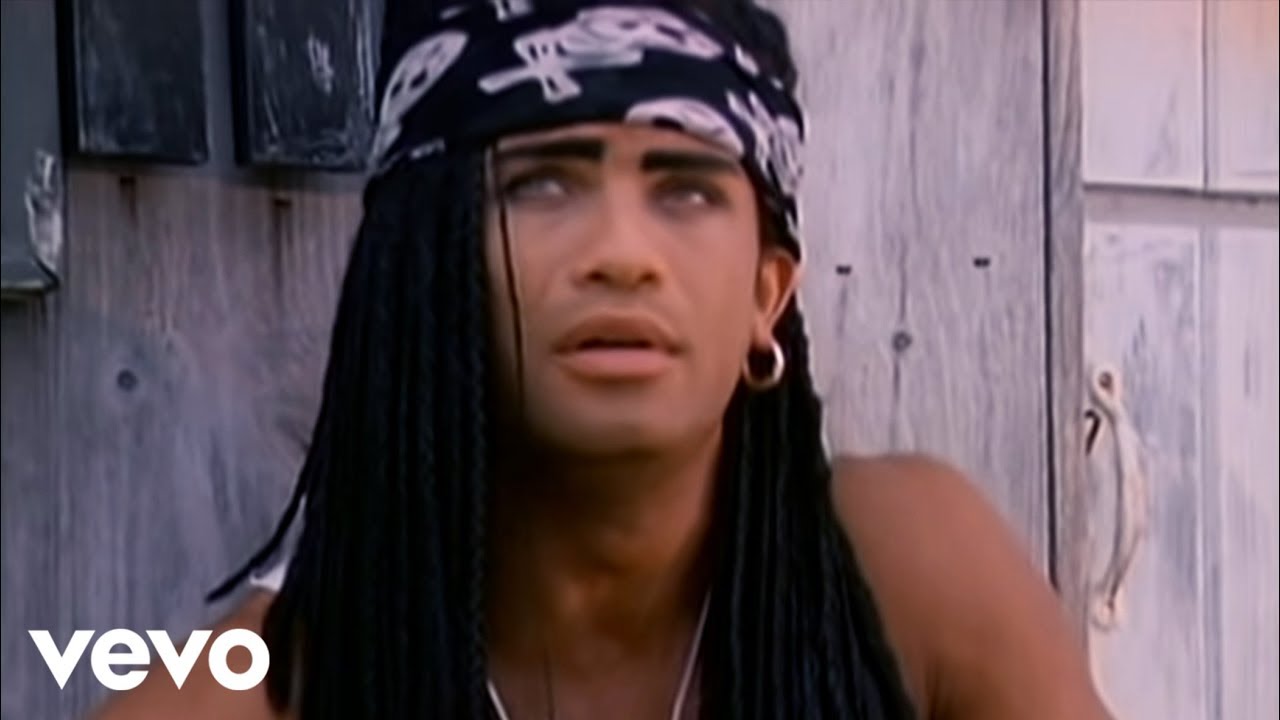
The single entered the Billboard Hot 100 on August 5, 1989, at number fifty-three. It climbed quickly. On September 23, 1989, it reached number one, where it stayed for two non-consecutive weeks. The same week it topped the Hot 100, the parent album Girl You Know It’s True finally reached number one on the Billboard 200, where it would spend a total of seven non-consecutive weeks at the summit before being certified six-times platinum by the RIAA in January 1990. Girl I’m Gonna Miss You also topped the singles charts in Austria, Belgium, Canada, the Netherlands, and Switzerland. It reached number two in the United Kingdom, Ireland, and West Germany — held off the top spot in Britain by Black Box’s Ride on Time, the Italian house record built around an uncredited Loleatta Holloway vocal sample, a different kind of musical fraud running simultaneously in the same chart. It went Platinum in Germany, Austria, the Netherlands, and Australia, and Gold in the US, Canada, France, and Sweden. The music video — directed in a contemplative two-location style, with Fab Morvan filmed alone on a sailboat in open water and Rob Pilatus filmed alone painting in a sunlit studio — was placed in heavy MTV rotation through autumn 1989. Two months before the song reached number one, however, the apparatus had begun to fail. On July 21, 1989, during a live MTV broadcast from the Lake Compounce theme park in Bristol, Connecticut, the prerecorded backing tape of Girl You Know It’s True had glitched and looped on the phrase “Girl, you know it’s …” — and Pilatus and Morvan, miming on stage in front of the cameras, had eventually run off. The rumours had been circulating before that moment. After Bristol they accelerated.
By December 1989, Charles Shaw — one of the actual vocalists — had told Newsday that he was the real voice on the records. He retracted within days; Farian later admitted he had paid Shaw a $155,000 settlement to recant. Through the first ten months of 1990, the rumours kept building. Pilatus and Morvan had begun, in private, to pressure Farian to let them sing on the planned second album. Farian refused. On February 21, 1990, Milli Vanilli won the Grammy Award for Best New Artist at the 32nd Annual Grammy Awards in Los Angeles. Morvan said later that he and Pilatus had not wanted to win, because the criteria required the artist to have actually sung on the record. “When they called out our name,” Morvan recalled in subsequent interviews, “something exploded in the pit of my stomach.” On November 15, 1990, with Pilatus and Morvan increasingly unwilling to continue the deception, Frank Farian held a press conference in Munich and admitted publicly that the two visible members of Milli Vanilli had not sung a note on any of the records. Four days later, on November 19, 1990, the Recording Academy revoked the Grammy — the first and still only time in the history of the award that a Grammy has been formally rescinded. Arista Records deleted Girl You Know It’s True from its catalogue. A US federal class-action lawsuit settled in August 1991 entitled an estimated ten million record buyers and concert ticket holders to refunds. Approximately fifty people filed claims.
The Singers, the Faces, and What Survived
What happened next has been told with increasing clarity in the thirty-six years since the scandal broke. Brad Howell and John Davis recorded a 1991 album, The Moment of Truth, under the name The Real Milli Vanilli — a record built on the songs Farian had been preparing for the Milli Vanilli follow-up. The album reached the top twenty in Germany but was never released in the United States. Pilatus and Morvan released a self-financed album, Rob & Fab, in 1993 on the independent label Taj Records, featuring their own voices. It sold approximately two thousand copies and bankrupted the label. Pilatus, by then living in Los Angeles, fell into addiction. He was sentenced to three months in jail and six months of mandated drug treatment in 1996 after a series of assaults and break-ins. Frank Farian had been planning a Milli Vanilli comeback album titled Back and in Attack for 1998. On April 3, 1998, on the eve of the promotional tour for that record, Rob Pilatus was found dead in a hotel room in Friedrichsdorf, near Frankfurt, of an accidental alcohol and prescription-drug overdose. He was thirty-two years old. The album was never released. John Davis — the man whose voice American audiences had been listening to all along on Girl I’m Gonna Miss You and the other Milli Vanilli singles — died from complications of a Covid-19 infection in Nuremberg on May 24, 2021, at sixty-six. Frank Farian died in January 2024.
The official Milli Vanilli YouTube channel posted the original Girl I’m Gonna Miss You music video on June 27, 2013, and it has accumulated tens of millions of views in the streaming era. The song’s strange afterlife has continued. In 2024, Netflix’s drama series Monsters: The Lyle and Erik Menendez Story placed Girl I’m Gonna Miss You in a memorial-service scene for José and Kitty Menendez — a reference to the song that Lyle and Erik Menendez actually played at the real-life memorial service for their parents in 1989. The Netflix placement sent the record back onto the TikTok Billboard Top 50 thirty-five years after its original chart run. Fab Morvan, who has now sung professionally for thirty-three years as the surviving public face of Milli Vanilli, was nominated for a 2026 Grammy in the Best Audio Book, Narration and Storytelling category for the audiobook version of his 2024 memoir You Know It’s True. The Recording Academy has never returned the Best New Artist Grammy. What got revealed in November 1990 was not exactly the record industry’s secret about session vocalists and image manufacture — that secret had been visible since at least the 1960s — but rather the specific commercial scale at which the industry was willing to deny it. Girl I’m Gonna Miss You is the record at the centre of that history.