





![Sonny & Cher – I Got You Babe (Official Video) [From ‘Top of the Pops’]](https://musicvideosclub.com/wp-content/uploads/2025/02/sonny-cher-i-got-you-babe-offici-360x203.jpg)

![George Benson – Give Me The Night (Official Music Video) [HD Remaster]](https://musicvideosclub.com/wp-content/uploads/2026/02/george-benson-give-me-the-night-360x203.jpg)
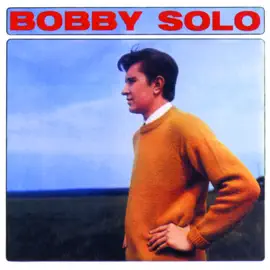
Bobby Solo – Una lacrima sul viso
Disqualified, Scandalous, and Still Number One for Nine Weeks: The Most Dramatic Debut in Sanremo History
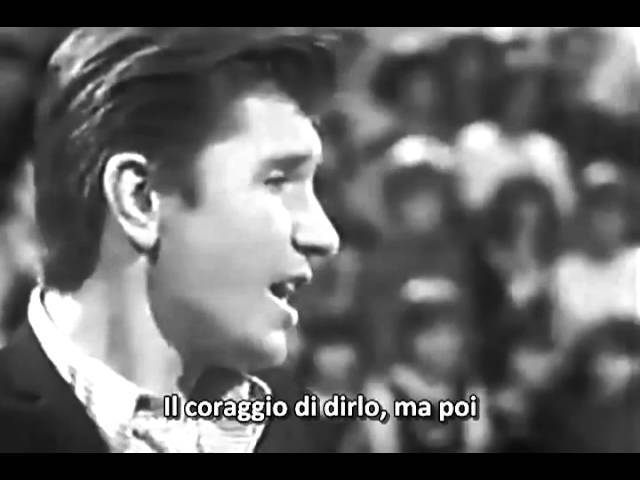
When Bobby Solo walked onto the Sanremo stage on the night of the 1964 festival finals, he was already in trouble. A brutal bout of laryngitis had stripped his voice entirely — and rather than withdraw from the competition, he and his management made a decision that would have been unthinkable at any previous Sanremo: he would sing to a backing track. The judges heard the performance, heard the crowd erupt, watched the nineteen-year-old Roman kid with the Elvis Presley cheekbones and the impossibly sad song work an Italian television audience into a state of collective emotion — and then they disqualified him. The song finished twelfth in the official rankings. Within days it was Number One across Italy. It would hold the top position for nine consecutive weeks and become the first record in Italian chart history to sell over one million copies domestically. The festival had thrown him out. The public had other ideas.
Released on Dischi Ricordi in 1964, “Una lacrima sul viso” sold over three million copies worldwide and earned a gold disc — a figure that placed it among the most commercially successful Italian pop records of the decade. Its success was not confined to Italy: the song crossed borders through radio play, European television broadcasts, and the specific gravitational pull of Sanremo’s international profile at a time when the festival commanded genuine continent-wide attention. Frankie Laine, Solo’s official Sanremo partner, had performed an English-language version titled “For Your Love” on the same stage the same night — the standard festival format requiring each entry to be sung by one Italian and one international artist — but it was Solo’s Italian performance, phonetic, suspended, emotionally raw from a voice that was barely there, that the audience remembered.
The song was written by Bobby Solo — born Roberto Satti — in collaboration with Mogol, who would go on to become the most important lyricist in Italian pop history, eventually co-writing dozens of defining records with Lucio Battisti. The writing credit on the original release listed the pseudonym “Lunero” rather than Solo’s real name or Mogol’s, a common practice in Italian popular music publishing of the era. The lyric describes a man who reads the truth of a woman’s feelings from a single tear on her face — the understanding that arrives not from words but from an involuntary physical revelation, the moment when the body confesses what the mouth has been too careful to say. That kind of precision in a pop song was unusual in 1964, and it is why the record aged so much better than most of its contemporaries.
Solo had grown up in Rome, the son of an airline executive with roots in Friuli and Istria. His love for American rock and roll came directly from an American brother-in-law — a US serviceman who had married his sister and settled in Verona, and who introduced the teenage Roberto Satti to the music of Elvis Presley with a thoroughness that would shape everything that followed. The physical resemblance was not manufactured: same jaw structure, same dark eyes, same quality of coiled stillness before the performance began. Italian audiences in 1964 were encountering something that felt simultaneously foreign and native — a boy from Rome who moved and sounded like Memphis, singing about tears and love in perfect Italian. The combination was, as the sales figures confirmed, irresistible.
The success of “Una lacrima sul viso” generated a musicarello film of the same name within months, a genre of lightweight Italian musical comedy built specifically around chart hits and the pop stars who performed them. Directed by Ettore Maria Fizzarotti — who specialized in exactly this format — the film starred Solo alongside Laura Efrikian, who would later marry singer Gianni Morandi, and gave Italian cinemas a vehicle for the song that reinforced the record’s commercial run throughout 1964. Fizzarotti understood the musicarello as a promotional tool before anyone had invented the term “promotional tool.” The film kept the song in public consciousness long enough for it to define Solo’s entire identity, a designation he carried comfortably for the next six decades.
Bobby Solo returned to Sanremo in 1965 with “Se piangi, se ridi” — and this time he won. He represented Italy at the Eurovision Song Contest the same year, finishing fifth in Naples. In 1966 his Sanremo partner was The Yardbirds. In 1969 he won a third time with “Zingara,” alongside Iva Zanicchi. Across twelve Sanremo appearances between 1964 and 2003, a recording career of over forty singles and thirty albums, and total worldwide sales conservatively estimated above five million, his position in Italian music history was established beyond argument. And yet the story always begins the same way: the nineteen-year-old with laryngitis who stood on a stage, sang to a backing track, broke the rules, got disqualified, and promptly had the biggest hit of the year anyway. In Italy they still tell it as a parable about what happens when a voice is good enough that the rules simply stop applying.
SONG INFORMATION
Related videos
 Watch LaterAdded
04:14
Watch LaterAdded
04:14  Watch LaterAdded
03:28
Watch LaterAdded
03:28 ![Stevie Nicks – Talk To Me (Official Music Video) [HD Remaster]](https://musicvideosclub.com/wp-content/uploads/2025/12/stevie-nicks-talk-to-me-official-360x203.jpg) Watch LaterAdded
Watch LaterAdded