


![Eric Clapton – I Shot The Sheriff [Crossroads 2010] (Official Live Video)](https://musicvideosclub.com/wp-content/uploads/2026/09/eric-clapton-i-shot-the-sheriff-360x203.jpg)
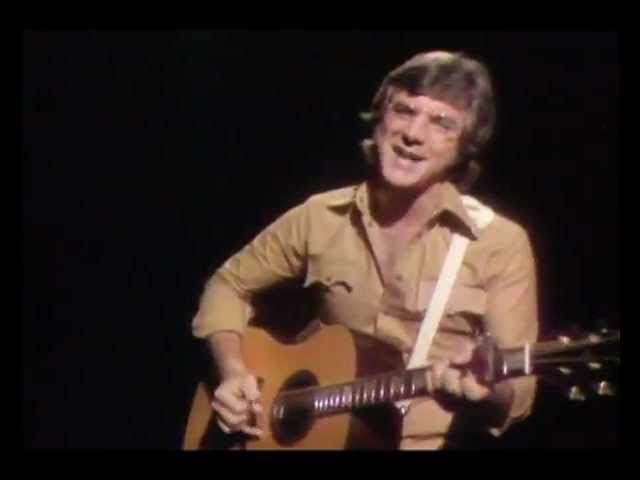
John Sebastian – Welcome Back
He Couldn’t Rhyme “Kotter” — So He Changed the Name of the Show Instead
John Sebastian’s first instinct when given the commission was entirely reasonable: write a song with the word “Kotter” in the title. He tried. He sat with it. The only rhyme he could find was “otter,” and a television theme built around aquatic mammals was not going to serve anyone well. So he abandoned the title entirely, wrote a song about returning to the place where you grew up and finding it was still there waiting for you, handed it to producer Alan Sacks — and Sacks liked it so much that he renamed the show to fit the song rather than the other way around. The show became Welcome Back, Kotter. The song became “Welcome Back.” One of the strangest commercial comebacks in 1970s pop was already in motion.
Released as a single in March 1976, “Welcome Back” debuted on the Billboard Hot 100 on March 21 at Number 84 and climbed to Number One on May 8 — reaching the top in just five weeks, spending one week there, and going on to spend seven of its fourteen total chart weeks inside the Top 10. It also topped the Adult Contemporary chart and the Canadian RPM chart simultaneously. The first pressings of the single were labelled “Welcome Back, Kotter” to ensure listeners connected the record to the show — a label concession that was quietly dropped on subsequent pressings once the song was clearly standing on its own.
The song existed in two distinct forms before it became a hit. Sebastian’s original demo, produced the same day he received the show’s pilot scripts and early drafts, ran to 53 seconds — a sketch rather than a song, a proof of concept with a chorus hook strong enough to make the producers immediately enthusiastic. Sebastian wrote a second verse overnight and had a complete two-and-a-half minute track finished the following day. When the decision was made to release it commercially, he expanded it further. The original television version — under a minute long — had been running over the opening credits of every episode since September 9, 1975. Viewers had already been absorbing the chorus for months before the single arrived. The producers at ABC understood that and pushed for the single release precisely because they knew the audience was primed. They were right.
Producer Steve Barri, who had co-produced the instrumental “Theme From S.W.A.T.” — the Number One hit that vacated the top of the Hot 100 just ten weeks before “Welcome Back” arrived — shaped Sebastian’s characteristically loose, acoustic delivery into something radio-friendly without stripping the intimacy that made the song work. Sebastian played his own harmonica solo, as he had done throughout his Lovin’ Spoonful years. His guitar work throughout is similarly unfussy — the song has the texture of something written in an afternoon because it essentially was. What Barri added was structure and clarity around a performance that could easily have drifted. The connection to Sebastian’s own history was part of the fabric: he had described himself to the producers as someone who had felt like a Sweathog at school — a dyslexic outsider in a remedial class — and that personal identification ran directly into the lyric’s warmth.
Sebastian had last charted consistently as the frontman of the Lovin’ Spoonful, whose run of hits between 1965 and 1968 — “Do You Believe in Magic,” “Summer in the City,” “Daydream,” “Did You Ever Have to Make Up Your Mind” — had made him one of the most visible figures in mid-1960s American pop. The decade that followed was considerably quieter. A solo career on Reprise Records produced modest returns; his 1974 album Tarzana Kid had underperformed badly, leaving him with one final contractual album to deliver. “Welcome Back” gave Reprise exactly what they needed to close out that obligation profitably. The label released the full Welcome Back LP, watched it reach Number 79 on the Billboard 200, and then quietly dropped Sebastian from the roster. It would be seventeen years before his next studio album appeared.
The show that gave Sebastian his second career peak was simultaneously launching someone else’s first one: a young actor playing Sweathog Vinnie Barbarino named John Travolta, whose trajectory from the Kotter ensemble to Saturday Night Fever and Grease would reshape pop culture before the decade ended. Mase sampled “Welcome Back” for his own comeback single in 2004 — using Sebastian’s melody to announce his own return after a five-year absence, the self-referential logic so neat it barely needed explaining. The song also appears twice in the Marvel Cinematic Universe’s Ant-Man and the Wasp: Quantumania in 2023, a deployment that introduced it to an audience born long after Welcome Back, Kotter left the air. Sebastian once said he wrote the song because he understood the feeling the lyric describes — walking back into a place that shaped you and finding it unchanged. He had been that kid. The song knew it. That is why it traveled.