



![Sisters Are Doin’ It For Themselves [Ft. Aretha Franklin] (Official Video)](https://musicvideosclub.com/wp-content/uploads/2025/05/sisters-are-doin-it-for-themselv-360x203.jpg)

Bay City Rollers – I Only Want To Be With You (1976)
The Day the Sun Went Dark and Nobody Outside the Studio Noticed
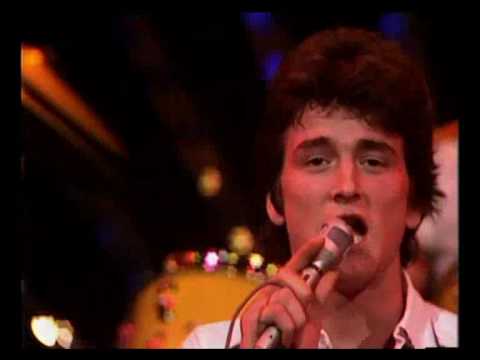
On October 23, 1976, a total eclipse of the sun passed directly over Melbourne, Australia. Outside the studios where the Bay City Rollers were taping their appearance on Countdown, thousands of fans pressed against the glass, straining for a glimpse of Les McKeown and the band making their way through the corridors inside. The flowers closed up. The automatic street lighting came on in the middle of the afternoon. The sky went dark. Not one of the fans turned around to look. They were watching for the Rollers. The eclipse could wait. This is the performance they were there for — the one that became the defining Australian television moment of the band’s entire career — and the song they performed was “I Only Want to Be with You,” their tenth and final UK Top 10 hit, and perhaps the most purely joyful three minutes they ever committed to tape.
Released as a single in August 1976, “I Only Want to Be with You” reached Number Four on the UK Singles Chart — matching, position for position, the peak of Dusty Springfield’s original twelve years earlier, which had launched Springfield’s solo career in November 1963. In the United States it reached Number 12 on the Billboard Hot 100, again precisely mirroring Springfield’s American chart peak. The symmetry was either a remarkable coincidence or a piece of very careful A&R strategy, depending on how generously you read Arista Records president Clive Davis, who had specifically suggested the Rollers record it. Either way the result was the same: a song that had defined one era of British pop was handed to the band that was defining another, and it arrived with the same chart co-ordinates it had carried the first time around.
The song’s origins sit in one of the more romantically uncomplicated origin stories in pop history. Mike Hawker wrote the melody shortly after marrying Jean Ryder on December 1, 1961 — the lyric a direct expression of the dazed, consuming quality of new love, the feeling that the world outside the relationship had ceased to be particularly relevant. Ivor Raymonde wrote the arrangement for Springfield’s debut single. Johnny Franz produced it. The record entered the UK chart on November 7, 1963, the same week the Beatles were beginning their conquest of everything. Springfield held her own. The song was built to last, which is why it kept finding new artists willing to carry it forward — the Rollers in 1976, the Tourists with Annie Lennox in 1979, Samantha Fox in 1989 — each version matching or approaching the Number 4 UK peak of the original with an accuracy that suggested the song itself had strong opinions about where it belonged on charts.
The Bay City Rollers recorded their version in June and July 1976 at Soundstage Studio in Toronto, with producer Jimmy Ienner — chosen by Clive Davis on the strength of Ienner’s work with the Raspberries, a power pop outfit whose understanding of hook construction and energy management made him the right person for a band whose entire commercial proposition rested on exactly those qualities. The lineup in the studio that summer was not the classic Rollers configuration: Alan Longmuir, founding bassist and elder statesman of the band, had left in early 1976, exhausted by the pressures of Rollermania and increasingly uncomfortable about being a man in his late twenties performing for audiences of twelve-year-olds. His replacement was seventeen-year-old Ian Mitchell from Northern Ireland — the first member of the Bay City Rollers ever born outside Edinburgh — who slotted into rhythm guitar while Stuart Wood moved to bass. It is Mitchell’s voice that sings the lead on the album track “Dedication.” It is Les McKeown’s voice, controlled and warm, that carries “I Only Want to Be with You” across the line.
The year that produced this recording was also the most turbulent twelve months in the band’s internal history. Guitarist Eric Faulkner had nearly died of a drug overdose of Seconal and Valium at manager Tam Paton’s house earlier in 1976. Lead singer McKeown had been charged with reckless driving following an incident in Edinburgh in which a seventy-five-year-old woman had been killed — a charge from which he was eventually acquitted, but which hung over the band throughout their peak commercial period. Paton himself, whose grip on the band’s finances and personal lives was absolute, would eventually be exposed as a predatory abuser who had spent years exploiting his position of control over young men who trusted him entirely. From the outside, in October 1976, standing in Melbourne in the path of a solar eclipse, the Bay City Rollers looked like the biggest pop phenomenon on the planet. What was happening inside the frame was considerably more complicated.
The Countdown program — Australia’s long-running weekly music television show, which ran from 1974 to 1987 and functioned as the primary visual platform for pop music across the country — gave the Rollers a stage at the precise peak of their Australian popularity. The band had established a particularly devoted following on the continent, where their tartan-trimmed aesthetic and melodic directness translated as cleanly as anywhere outside Scotland. The performance that aired from that October 23 taping has the quality of a document from a very specific cultural moment: a band at the summit of a commercial run that was already quietly beginning its descent, performing a song they hadn’t written for fans who didn’t care about that distinction at all. Outside the studio, the sun had briefly disappeared. Nobody turned around.
“I Only Want to Be with You” was the tenth and last Top 10 hit the Bay City Rollers would ever place in the UK. Within two years Les McKeown had left, the tartan had been quietly retired, and the band’s commercial run was over. But the song itself kept going — three more major chart covers across the following thirteen years, and a legacy as one of the most reliably successful pieces of pop writing in the history of the British single. Mike Hawker, who wrote it in a rush of feeling after his wedding, died in 1987 with the knowledge that his melody had outlived every version anyone had tried to put it in. Ivor Raymonde, who arranged the original, died in 1990. The song survived them both without difficulty, as good songs do. In Melbourne, the fans eventually went home. The sun came back. The Rollers did not return.
SONG INFORMATION
Related videos
 Watch LaterAdded
02:14
Watch LaterAdded
02:14  Watch LaterAdded
 Watch LaterAdded