





![David Lee Roth – California Girls (Official Video) [HD]](https://musicvideosclub.com/wp-content/uploads/2026/10/david-lee-roth-california-girls-360x203.jpg)




Blondie – The Tide Is High
Blondie almost never covered anyone — but they heard a forgotten Jamaican rocksteady record on a cassette in London, tried to get a famous ska band to cut it with them, and turned it into a global No. 1 when that fell through.
Blondie built their reputation on originals — Debbie Harry and Chris Stein wrote almost everything the band recorded. So The Tide Is High, the sun-drunk reggae number that gave them their third American No. 1, is a genuine outlier: not their song, and not even close. It was written in 1967 by a Jamaican singer named John Holt, first recorded by his rocksteady vocal trio The Paragons, and all but forgotten outside Kingston until Harry heard it on a compilation cassette during a trip to London and decided it was too good to leave alone.
Keep watching: Blondie – Rapture · more Blondie →
The original is a small, aching gem. Cut at Duke Reid’s Treasure Isle studio with backing from Tommy McCook and the Supersonics and a violin line from a player known as “White Rum” Raymond, The Paragons’ The Tide Is High was a modest Jamaican single — tucked away, in fact, as a B-side. It drifted on sound systems and among reggae fans in Britain for over a decade, kept alive by a 1971 deejay version from U-Roy, before Harry picked up that tape and heard a hit hiding inside it. Holt’s lyric is a patient vow: he’s willing to wait out the high tide to win back the one he wants.
The cover that almost wasn’t Blondie’s
Harry’s first instinct wasn’t to record it herself at all. According to Chris Stein, she wanted to cut The Tide Is High with The Specials — the British ska revivalists then riding a huge run of UK hits — pairing Blondie’s cool with a band steeped in the real thing. The Specials passed. So Blondie, who loved reggae but rarely borrowed anyone else’s material, took it into the studio themselves. Working with producer Mike Chapman at United Western Studios in Los Angeles during the 1980 sessions for their fifth album, Autoamerican, they built the song outward rather than trying to copy the Paragons’ lo-fi charm. Where the original was intimate, Blondie went symphonic: a fat drum-roll intro, a horn section, sweeping strings that deliberately echoed White Rum Raymond’s violin, and layers of percussion under Harry’s unhurried vocal. They flipped the lyric’s gender, too, casting Harry as the one who won’t give up: “I’m not the kind of girl who gives up just like that.”
What makes the record work is its restraint. Harry never reaches for a fake patois — a trap plenty of American singers fell into when they tried reggae — and the band treats the source with real respect, making a big, warm studio version of the genre without turning it into caricature. Clem Burke lightens his touch to a feathered backbeat, Nigel Harrison’s bass supplies the gentle undertow, and Chris Stein’s guitar works in economical flickers of color. It sways rather than drives. On the fade-out you can hear someone let out a delighted whoop, the sound of a band that knows it just nailed something.
A No. 1 and a strange, wonderful video
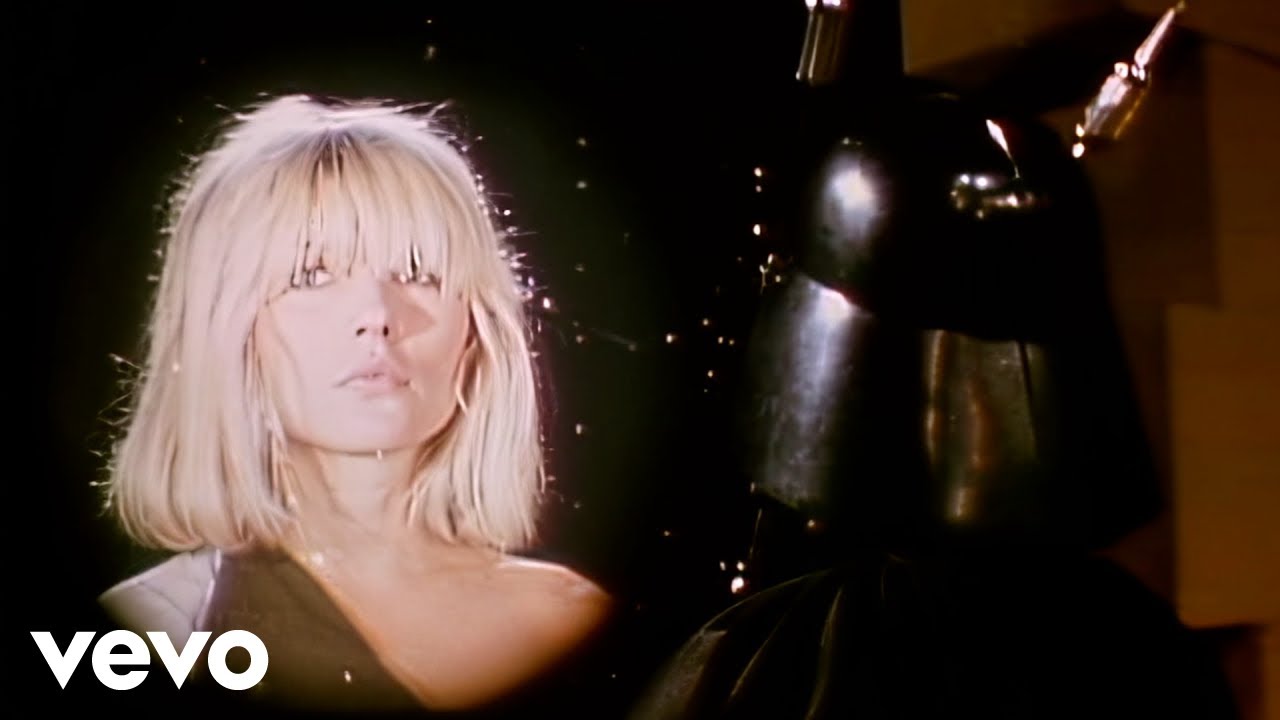
Released as the lead single from Autoamerican in October 1980, The Tide Is High went to No. 1 on the US Billboard Hot 100 in the week of January 31, 1981, giving Blondie their third American chart-topper, and hit No. 1 in the UK for two weeks in November 1980 — their fifth British No. 1 and their last until Maria in 1999. It also topped the charts in Canada and New Zealand. The accompanying video, directed by Hart Perry, leaned into full pop-surreal comedy: Harry apparently trapped in a flooding apartment, the male band members waiting patiently on the curb below, a rocket launch, and a closing gag involving a masked figure whose face resolves into something absurd. It was knowing and camp, and it anticipated the narrative spectacle MTV would soon demand.
The song’s reach ran far beyond the charts. John Lennon, in the last stretch of his life, reportedly played Blondie’s The Tide Is High constantly at home — his son Sean later recalled watching his father dance to it in a worn pair of denim shorts. It’s a fitting afterlife for a record that was itself an act of loving rediscovery: a Jamaican song a New York band pulled off a forgotten tape and handed to the world, careful the whole time to honor where it came from. Holt’s quiet vow outlasted its own obscurity twice over.
SONG INFORMATION
Related videos
 Watch LaterAdded
04:50
Watch LaterAdded
04:50  Watch LaterAdded
04:30
Watch LaterAdded
04:30  Watch LaterAdded
03:30
Watch LaterAdded
03:30