



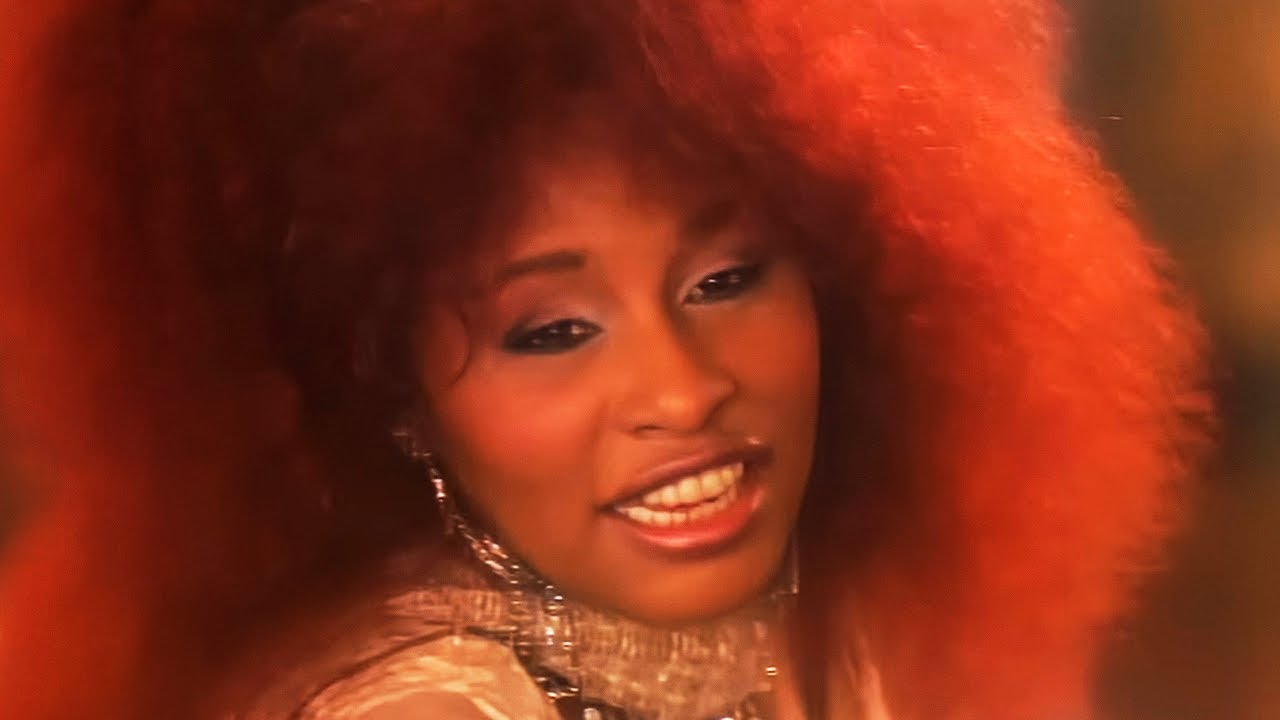



Chaka Khan – Through the Fire
He Named the Instrumental After Her Before She’d Heard a Single Note of It
David Foster had a habit of writing instrumentals and sitting on them until the right voice materialized. He had done it with “Mornin'” for Al Jarreau and with “Whatever We Imagine” for James Ingram — composing the melody first, finding the words later, trusting that the right singer would eventually arrive. When he wrote the piano piece that would become “Through the Fire,” he did something he had never done before and has never done since: he named it after the singer he intended to record it before she had any idea the song existed. The working title was simply “Chaka.” Not because he had spoken to her, not because a deal was in place, but because Foster was so certain the melody belonged to Chaka Khan’s voice and no other that naming it anything else would have felt dishonest. He filed it away on his 1982 solo debut and waited. Two years later, producing her I Feel for You album, he played it for her. She agreed immediately. The certainty had been correct all along.
“Through the Fire” was released in early 1985 as the third single from I Feel for You and reached Number 60 on the Billboard Hot 100, Number 15 on the R&B chart, and Number 16 on the Adult Contemporary chart — the last of those being a notable first, since it was one of the very few Khan recordings to cross over into that format. The album it closed out had already delivered the title track — Prince’s composition, featuring Melle Mel’s rap and Stevie Wonder’s harmonica, which had gone to Number Three on the Hot 100 — and the single “I Feel for You” had won Khan her first Grammy for Best R&B Vocal Performance, Female. In that commercial context, “Through the Fire” arrived as the quiet, long-burning final statement of a remarkable album campaign rather than its centrepiece. Chart positions did not capture what it actually was. Time took care of that instead.
The lyric came from Cynthia Weil — whose writing partner Barry Mann had contributed to some of the most enduring Brill Building catalog — working alongside Tom Keane, a musician whose professional story has its own peculiar footnote: Keane had recorded his first album at the age of twelve as one half of the Keane Brothers, a child duo that had placed two singles on the UK chart in 1977 before both brothers aged past the concept’s commercial utility. By 1984 he was a professional songwriter and session musician in Los Angeles. Weil and Keane shaped the melody Foster had composed into a declaration of love as unconditional statement rather than romantic promise — the narrator not saying what she hopes will happen but what she is prepared to do regardless of outcome. That distinction is why the song has been covered by both male and female singers without losing anything in translation. The commitment the lyric describes is not gendered. It is absolute.
Foster produced the session with Humberto Gatica engineering, and assembled a studio lineup of considerable distinction: Nathan East on bass, John Robinson on drums, Mike Landau on guitar, and Foster himself covering all keyboards and synthesizers. The vocal production was handled by Arif Mardin — one of the most respected producers in Atlantic Records history, a man whose career ran from Aretha Franklin to the Bee Gees to Bette Midler — who brought a different ear to Khan’s performance than Foster’s pop instincts alone might have produced. Together they captured a vocal that sits deliberately apart from the funk energy of the I Feel for You title track — controlled, sustained, warm rather than incendiary. Khan has said in interviews that she was never particularly fond of the song. Her voice on the recording disagrees with her at length and in considerable detail. The music video, directed by Marty Callner, was shot entirely at Union Station in Los Angeles — the marble and tile of the terminal giving the clip a scale that matched the song’s emotional architecture without trying to compete with it.
I Feel for You represented the point at which Chaka Khan’s decade of balancing dual careers — fronting Rufus while simultaneously building a solo catalog — finally resolved itself into a single, fully focused artistic identity. The album had been produced with an ambition that matched her voice: Prince contributing a song because he was reportedly one of her most devoted admirers; Stevie Wonder playing harmonica without being asked twice; Foster writing an instrumental and naming it after her three years before they were in the same room. The company the record kept said everything about where Khan stood in 1984. She had been the most powerful female voice in funk since 1974. I Feel for You simply made sure the rest of the world’s filing systems caught up.
The song’s second life arrived in 2003 when Kanye West sampled it for “Through the Wire,” his debut single — recorded while his jaw was wired shut following a near-fatal car accident, his voice pitch-shifted upward because the wire prevented normal articulation. West had asked his close friend’s son — Khan’s son — to help clear the sample, and it went through. Khan’s initial response to the pitch-shifted treatment was irritation, which she documented in subsequent interviews with some directness. She later reconsidered. In a 2022 Rolling Stone conversation she acknowledged that if she had understood the rap context more completely at the time, she would not have been bothered by it. West’s debut single, built on the spine of Foster’s piano melody and Khan’s vocal, introduced “Through the Fire” to a generation that had not yet been born when it was recorded. Foster named the song after her because he was certain her voice was the only one for it. Kanye built his career on that same certainty, twenty years later, at a different tempo.
SONG INFORMATION
Related videos
![Golden Earring – Radar Love (Official Music Video [HD])](https://musicvideosclub.com/wp-content/uploads/2026/03/golden-earring-radar-love-offici-360x203.jpg) Watch LaterAdded
Watch LaterAdded
 Watch LaterAdded
 Watch LaterAdded
03:25
Watch LaterAdded
03:25