



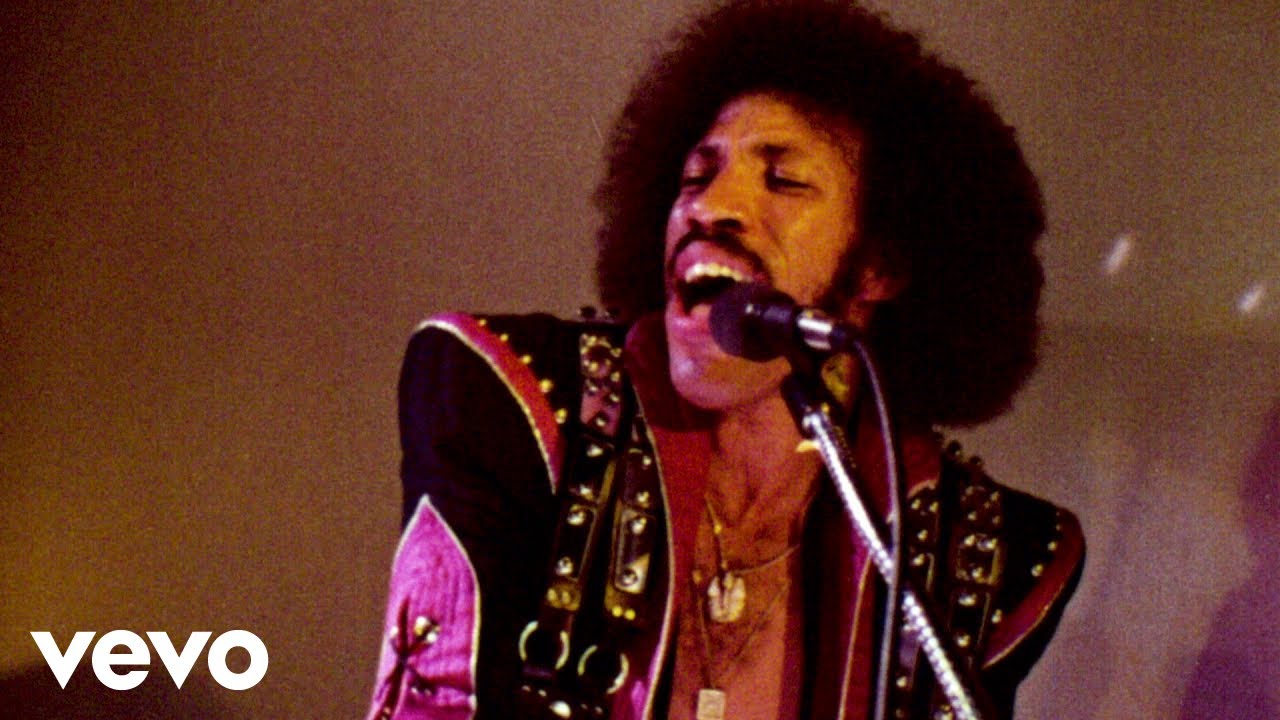


Commodores – Easy
Lionel Richie was writing a country song. It came out on a Motown record, with a rock guitar solo in the middle of it.
The most admired thing on this record is not the voice. It is ninety seconds of electric guitar in the middle of a Motown ballad, played by Thomas McClary, which the writer Dave Thompson later called one of the best solo guitar performances ever recorded and which earned McClary his first write-up in Rolling Stone. It sits inside a slow, unhurried song about a man walking away from someone, on an album whose other hit single was Brick House.
Keep watching: Commodores – Three Times a Lady · Commodores – Brick House (live)
The Commodores were a funk band, and had been since McClary met Lionel Richie in a registration line at Tuskegee Institute in 1967 and asked him whether he played anything. They formed as the Mystics, changed the name, opened for the Jackson 5, and signed to Motown in November 1972. What they were known for was Machine Gun and Slippery When Wet — instrumental muscle and hard rhythm. Then Richie started writing ballads. Sweet Love reached No. 5 on the Hot 100 in 1976 and Just to Be Close to You topped the soul chart for two weeks that same year, which is what set him looking for another crossover.
He wrote this one to do exactly that. James Anthony Carmichael produced it with the band at Motown Recording Studios in Hollywood across 1976 and 1977, and Motown released the single on March 18, 1977, twelve days ahead of the album. The album itself carries both this and Brick House, which is a strange pairing on one piece of vinyl and tells you most of what was happening inside the group.
The song is not from where it sounds like it’s from
What Richie had actually written was a country song. The chorus reaches for a Sunday morning, and he has explained that image as belonging to small Southern towns that die at 11:30pm on a Saturday night — meaning Tuskegee, meaning where he grew up. The lyric is not a romance. It is a man ending something and finding he feels lighter for it, which is a country subject handled in a country way, sung by a soul band on a label built in Detroit. Audiences have been hearing it as a love song for nearly fifty years, and it plays at weddings constantly.
McClary’s solo pulls in a third direction again. He has described the problem as matching the intensity of a lyric about paying dues and being chained to something — the sound had to carry the same weight the words did. What he brought to it came from listening to Santana, Hendrix, Albert King, James Taylor and Crosby, Stills, Nash and Young during the years the band was working college campuses for money, and wanting to mesh them into something raw. So the finished record holds a country lyric, a soul vocal and a rock solo, and none of the three is what the label on the sleeve promises.
It worked. Billboard’s Hot 100 took it to No. 4, Adult Contemporary to No. 14, and the Hot Soul Singles chart put it at No. 1 for a single week, on July 16, 1977. Britain and New Zealand both reached No. 9. The album spent eight weeks on top of the R&B and soul albums chart and became the band’s first Top 5 pop album. It also split the group’s identity permanently: the ballads kept coming, Three Times a Lady and Still followed, and Richie was gone to a solo career by 1982.
Faith No More recorded it in 1992 and took it to No. 3 in Britain and No. 1 in Australia, playing it almost straight, which surprised everyone including their own audience. Then in 2012 Richie recut it himself for an album he named Tuskegee, in a duet with Willie Nelson. That is the detail that settles the argument. Thirty-five years after a funk band from Alabama put it out on Motown, the man who wrote it filed it where it had always belonged, and nobody hearing the Nelson version thinks for a second that it doesn’t fit.
SONG INFORMATION
Enjoyed this one? New forgotten gems every day — tap Music Videos Club below to visit and follow us on Facebook:
Related videos
 Watch LaterAdded
04:03
Watch LaterAdded
04:03  Watch LaterAdded
05:29
Watch LaterAdded
05:29  Watch LaterAdded
02:58
Watch LaterAdded
02:58