





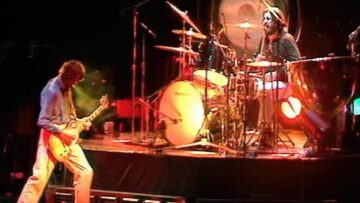
David Cassidy – Rock Me Baby
The Album Was His Deliberate Attempt to Escape the Teen Idol Box — Recorded With Larry Carlton, Tom Scott and Kim Carnes, and Released the Same Week He Posed Nude for Rolling Stone
By the spring of 1972, David Cassidy was arguably the most famous entertainer in the world and one of the most frustrated. The Partridge Family had made him a phenomenon at an age when most musicians are still finding their sound — 56,000 fans per night at the Houston Astrodome, Madison Square Garden sold out in a day, a fan club correspondence operation that rivalled a small business. But the records being made to service that machine were being shaped by other people’s calculations about what a 22-year-old on a family TV show should sound like, and Cassidy was acutely aware of it. His solution, in the summer of 1972, was to pursue two things simultaneously: a Rolling Stone cover shot by Annie Leibovitz that announced, in terms no editor could misread, that he was no longer interested in being anyone’s idea of a wholesome adolescent; and a new album that replaced the Wrecking Crew arrangement with something rawer, more soulful, and considerably further from bubblegum pop. The two projects arrived together. The album was called Rock Me Baby. Its opening title track was the most direct statement of both intentions.
“Rock Me Baby” was written by Johnny Cymbal and Peggy Clinger — Cymbal being the songwriter and recording artist who had scored with “Mr. Bass Man” a decade earlier. It was produced by Wes Farrell at Western Recorders in Los Angeles, and the session musicians assembled for the album were not Partridge Family backing players. Larry Carlton played guitar. Tom Scott played woodwind. Kim Carnes — who would later become famous in her own right, most memorably with “Bette Davis Eyes” in 1981 — sang backing vocals. These were musicians who worked at a different level of ambition to what Cassidy had been given before, and what they recorded together was a piece of glam-tinged blue-eyed soul with a heavier backbeat than anything released under his name to that point. One critic later wrote that had the song carried a different name on the label it would have been regarded as one of the genuine rock records of the early 1970s. That assessment is accurate and also explains precisely why Cassidy made it.
Different Charts, Different Countries, Same Song
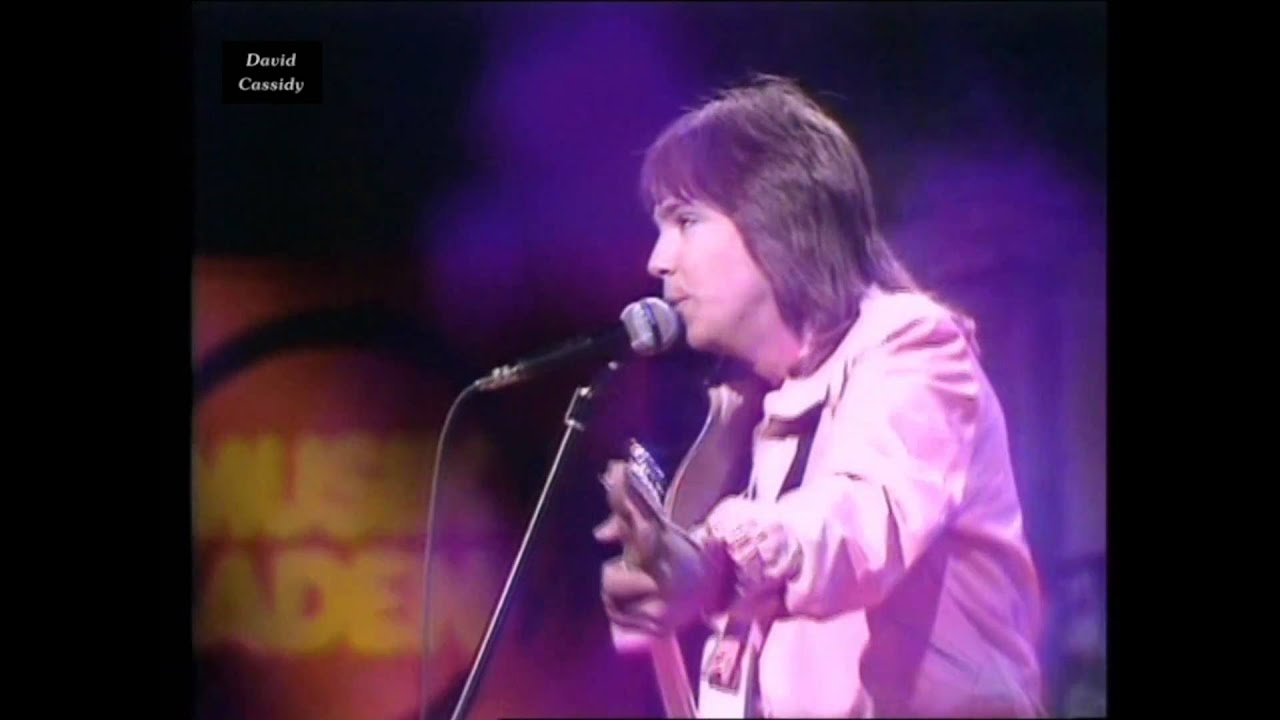
The commercial results of “Rock Me Baby” divided along the same line that would define Cassidy’s entire solo career: substantially different in the US and the UK, for reasons that had everything to do with how each country processed his image. In America, where the Partridge Family audience remained his primary constituency and where the song’s departure from the expected formula worked against it, the single peaked at number 38 on the Billboard Hot 100. In Britain, where Cassidy had developed a following that was keener than his American fanbase to hear him do something other than wholesome pop, it climbed to number 11 — enough to make it a Top 20 hit and extend a UK chart run that had already produced “How Can I Be Sure” at number one. The album fared similarly: number 41 in the US, number 2 in Britain. The British audience was, in a very real sense, the audience for this version of David Cassidy, and the live performance footage in this video — from a 1972 TV appearance before a studio audience — captures him at the exact moment that relationship was being established.
Cassidy’s discomfort with the machinery of teen idol fame was articulate and consistent throughout this period. In his Rolling Stone interview published that May, he described a life of enforced recording schedules and concert obligations that left him feeling “drained” and controlled, and spoke with unusual candour about the industrial dimension of his own celebrity. He had been photographed on the back of cereal boxes without his knowledge. His face had become a brand operated by people he had not authorised. The music was the one area where he had some purchase on the direction, and Rock Me Baby represented the clearest exercise of it. The song about a self-described “midnight man” who is upfront about his intentions and indifferent to commitment was, on the most obvious level, the opposite of Keith Partridge — and that was entirely the point.
The musicians who made the record, the image context in which it was released, and the audience that received it most warmly all point to a version of Cassidy’s career that the sheer scale of the teen idol phenomenon consistently obscured. He was, under the circumstances, a better and more seriously intentioned musician than the market he was sold to required. “Rock Me Baby” is the most direct evidence of that — a track that holds up not as a curio from a teen idol’s attempt at credibility but as a piece of early 1970s hard pop with a genuinely good session behind it. The live performance in this video, with the audience audibly present, documents how the song landed in the moment — and how far it was from what anyone expected of the boy on the lunchbox.
SONG INFORMATION
Related videos
 Watch LaterAdded
04:43
Watch LaterAdded
04:43  Watch LaterAdded
 Watch LaterAdded
04:51
Watch LaterAdded
04:51