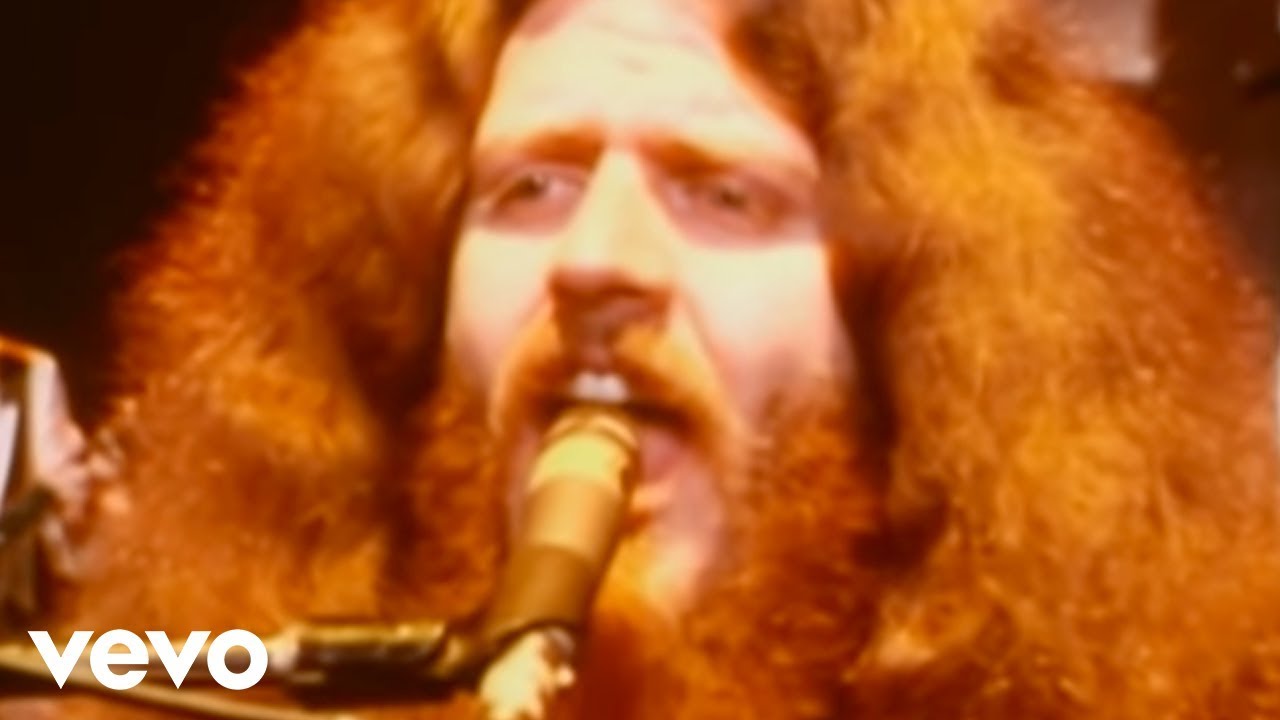
Kansas groaned when they heard it existed. It was the last song written, and the first hit they ever had.
When Kerry Livgren told the rest of Kansas he had one more song, the reaction, as guitarist Rich Williams remembers it, was a groan and an expletive about having another one to learn. It was the last day of rehearsals for the band’s fourth album. The gear was about to be packed for the drive to Louisiana, they had been working for months, and they wanted to be finished. The song Livgren had written the night before was Carry On Wayward Son. It became the first hit Kansas ever had.
They needed one badly. Kansas had made three albums for Don Kirshner’s label and put out four singles, and none of the singles had charted. The usual arrangement was that Livgren and singer Steve Walsh split the writing. On the first day of rehearsals Walsh announced that he had nothing, not one song. So Livgren, who was staying at his parents’ house in Topeka, sat at the family’s Lowrey organ every night and wrote, then carried the result to a vacant store in a strip mall where the band was rehearsing. “I was a writing machine,” he said. He would teach them one song during the day and write the next one that night.
Exactly where the band first heard the last of them depends on who is telling it. Livgren and Williams place it in Topeka, on the final day in the rehearsal room. Drummer Phil Ehart and producer Jeff Glixman remember it being properly presented only after everyone had reached Studio in the Country, in Bogalusa, Louisiana. Nobody disputes the order. It was the last song in, and Ehart has said he cannot remember whether something else was dropped to make room. Livgren has described it as arriving more or less complete. On the record Walsh sings lead and plays keyboards, Robby Steinhardt sings behind him, Williams and Livgren share the guitars, Dave Hope plays bass and Ehart plays drums, and the whole thing opens with nothing but voices.
Too Long to Be a Single
Nobody in the band was counting on it as a hit, mostly because of its length. Kirshner released the album, Leftoverture, on October 21, 1976, and FM stations went straight to the opening track. In November the label cut the 5:26 album version down to 3:26 and issued it as a single. Billboard’s Hot 100 listed it at No.86 on the chart dated December 25, 1976. The band was on the road that month when their manager called to say they had a hit, and Ehart remembers their answer being a single word: what? Billboard ranked it as high as No.11 in April 1977. RPM’s Canadian chart had it at No.5, the Official Charts Company only at No.51 in Britain, and by November 2019 the RIAA had certified it four times platinum.
A Search, Not an Answer
Listeners have long taken it for a religious song, and the chorus, which promises rest when the struggle is over, invites that. Livgren has said it was autobiographical and nothing so settled. He had been on a spiritual search for years alongside his music, and he called the song one of self-encouragement, a way of telling himself to keep looking. He did not become a born-again Christian until July 1979, almost three years after the record came out. Hope, born in Topeka on October 7, 1949, followed him. When Kansas first split in 1983 the two of them formed a Christian band, AD, and Hope was later ordained an Anglican priest, serving a church in Destin, Florida, until he retired in 2013.
The song has had a second life the band could not have planned. The television series Supernatural used it in nearly every one of its season finales, which introduced it to viewers born decades after 1976. That afterlife suits its history. It was written by a man under orders to fill an album, heard by a band that did not want to learn it, and judged too long for radio by the people who played on it. What they had been handed was a song about not yet having found what you are looking for, written by someone who had not, and that turned out to be something a great many people wanted to sing.
SONG INFORMATION
Artist: Kansas
Song: “Carry On Wayward Son”
Album:Leftoverture
B-side: “Questions of My Childhood”
Released: October 21, 1976 (album); November 1976 (single)
Studio: Studio in the Country, Bogalusa, Louisiana
Label: Kirshner
Songwriter(s): Kerry Livgren
Producer(s): Jeff Glixman, Kansas
Length: 5:26 (album version); 3:26 (single edit)
Chart Performance: No.11 Billboard Hot 100 (April 1977); No.5 Canada; No.51 UK
Certification: RIAA 4× Platinum
Lineup: Steve Walsh (lead vocals, keyboards), Robby Steinhardt (backing vocals), Kerry Livgren (guitar, piano), Rich Williams (guitar), Dave Hope (bass), Phil Ehart (drums)