








Harry Nilsson – Everybodys Talkin’
The Song Written in a Bathroom in Five Minutes That Became the Sound of Loneliness Forever
Fred Neil wrote “Everybody’s Talkin'” in a studio bathroom in 1966 because he wanted to catch a flight home to Florida. His manager Herb Cohen had promised him he could leave for the airport the moment he finished one more song for the album. Neil disappeared into the bathroom, wrote the whole thing in about five minutes, came back out, recorded it in a single take, and left. He never paid much attention to it after that. He was already thinking about the dolphins.
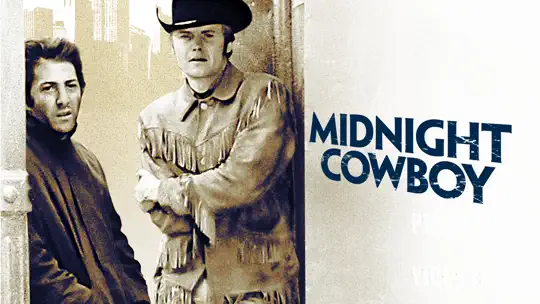
Harry Nilsson’s version peaked at Number Six on the Billboard Hot 100 in 1969 and hit Number One in Canada, earning Nilsson the Grammy Award for Best Contemporary Vocal Performance, Male. It was his first US Top 10 hit. The first time the single was released — in July 1968, a year before the film that made it famous — it barely registered, stalling at Number 113 on the Bubbling Under chart. The song was already a year old and going nowhere when John Schlesinger started cutting his film together with it as a temporary placeholder and then found he couldn’t take it out.
The story of how “Everybody’s Talkin'” ended up in Midnight Cowboy involves two songs that were supposed to be there instead and weren’t. Bob Dylan had agreed to write the title track — the song he eventually delivered was “Lay Lady Lay,” which arrived too late for the editing schedule. Schlesinger had already been using the Nilsson track as a guide vocal while cutting the film and found the picture had shaped itself entirely around it. Nilsson, aware of the situation, tried to give the director an original song called “I Guess the Lord Must Be in New York City” — written specifically to replace “Everybody’s Talkin'” with something he actually owned. He later admitted he had written it as close to the Neil track as he dared without actually stealing it. Schlesinger listened to both songs and kept the one he had started with. The film went out with a song Nilsson had covered from a man who wrote it in a bathroom to catch a plane, and which Nilsson had originally recorded with no particular plan, after his producer Rick Jarrard simply played it to him one afternoon and suggested it might suit his voice.
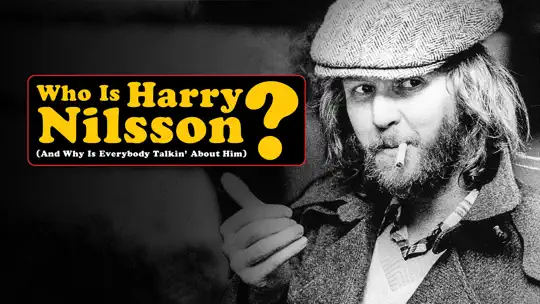
The recording took place on November 13, 1967, at RCA Victor’s studios in Los Angeles, produced by Jarrard and arranged by George Tipton. Nilsson overdubbed his own harmony vocals — a technique he had been developing obsessively since his days working night shifts as a computer programmer at a bank in Van Nuys, where he would come home in the small hours and stack his own voice in layers on a home reel-to-reel. The finished track adds a lightness and yearning to Neil’s original that the sparse, slightly spectral folk recording did not have. Where Neil’s version sounds like a man who has already left, Nilsson’s sounds like a man standing at the door. Both readings are in the lyric. The song is generous that way.
Aerial Ballet, the 1968 Nilsson album that first contained the song, is also notable for an entirely different reason: the album cover — depicting a family of aerial acrobats — is the record that gave Aerosmith their name. Drummer Joey Kramer had been listening to it constantly and suggested the title as the band’s name to the other members, some of whom initially thought it was a reference to Aerosmith’s hero Harry Nilsson having composed it. He hadn’t. Kramer just liked the sound of the word. The album also contained Nilsson’s arrangement of “One,” which Three Dog Night took to Number Five on the Hot 100 — meaning Aerial Ballet was responsible for two of the most circuitous success stories in late-1960s pop simultaneously.
Fred Neil spent the royalties from “Everybody’s Talkin'” — which reportedly ran into the millions — financing his dolphin rescue work in Coconut Grove, Florida, where he had retreated permanently by 1971, exactly as the song’s narrator promises to do. He gave almost no interviews, made no more records, and showed no particular interest in the fame the song had generated. He died in 2001 at 65, having spent his last three decades doing exactly what he had always preferred to do instead of being famous. Harry Nilsson died of heart failure in January 1994 at 52. The American Film Institute placed the song at Number 22 on its list of the greatest movie songs of the first hundred years of cinema. Through 2005 alone, it had aired on radio and television 6.7 million times. All of it traceable back to a five-minute bathroom session and a man who needed to catch a flight.
“Everybody’s Talkin'” has been covered more than 100 times — by Willie Nelson, Liza Minnelli, Beautiful South, Jimmy Buffett, and dozens of others — and appeared in Forrest Gump, Borat, and The Hangover Part III in the decades after Midnight Cowboy. But it is Nilsson’s version, opening over those first aerial shots of Joe Buck stepping off a bus into New York City, that the song will always belong to. One cannot imagine the film without it. One cannot imagine Nilsson without it, either — even though the two greatest hits of his career, this one and “Without You,” were both written by someone else. He had a gift for making other people’s songs sound like confessions. That is rarer than writing your own.
SONG INFORMATION
Related videos
 Watch LaterAdded
 Watch LaterAdded
 Watch LaterAdded
05:52
Watch LaterAdded
05:52