






Tina Turner: The Queen of Rock ’n’ Roll
The Queen Who Burned Her Crown Twice
Anna Mae Bullock learned early that nobody was coming to save her. Born November 26, 1939, in Nutbush, Tennessee—population barely enough to fill a church—she was the unwanted child of a stormy marriage between Floyd Richard Bullock, a deacon who worked the land, and Zelma Priscilla Currie, a spirited woman with Native American blood who never stopped looking for the exit. When World War II pulled the family to Knoxville for defense work, Anna Mae got shipped to her paternal grandparents, strict Baptists who ran the Woodlawn Missionary Baptist Church like a boot camp for souls. The sisters reunited after the war, but by 1950, when Anna Mae was eleven, her mother vanished without warning, fleeing her husband’s fists for St. Louis. The girl stayed behind in Nutbush, singing in the Spring Hill Baptist Church choir and performing on street corners for movie money, her voice already carrying the weight of someone twice her age.

That voice. Even then, performing blues with Bootsie Whitelow’s String Band as a teenager, Anna Mae Bullock possessed something that couldn’t be taught—a raw, tearing quality that grabbed you by the throat and refused to let go. She attended the one-room Flagg Grove Elementary School, built on land her great-great uncle had sold to trustees in 1889, and worked as a domestic for white families in Ripley. When her grandmother died in 1956, just before Anna Mae turned seventeen, she finally escaped to St. Louis to live with her mother. The reunion was awkward, strained by years of abandonment, but it got her out of Tennessee. She graduated from Sumner High School in 1958 and took work as a nurse’s aide at Barnes-Jewish Hospital, singing in nightclubs on weekends with her sister. Then one night at Club Imperial, she met a Mississippi-born guitarist named Ike Turner.
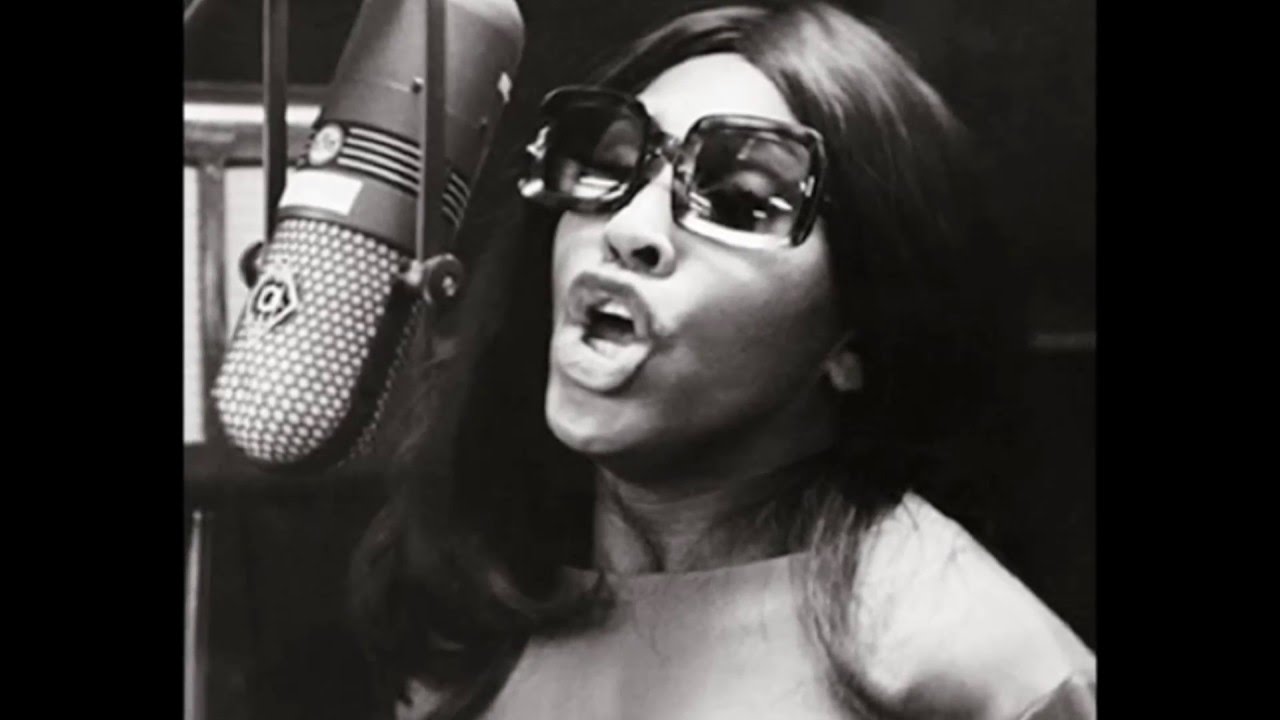
Ike Turner heard something in that voice nobody else had managed to capture on tape yet. He was initially skeptical when the eighteen-year-old girl asked to sing for him, but her persistence wore him down. She became an occasional vocalist with his Kings of Rhythm, performing as “Little Ann.” In 1960, when a scheduled singer didn’t show for a recording session, Anna Mae stepped in and sang “A Fool in Love.” The track hit number two on the R&B chart and number 27 on the Hot 100, and Kurt Loder later called it “the blackest record to creep into white pop charts since Ray Charles.” Ike trademarked the name “Tina Turner” immediately—not to honor her, but so he could replace her with another singer if she left. They married in 1962, though Ike later claimed they were never legally wed since he was still married to someone else. The Ike & Tina Turner Revue became one of the most explosive live acts of the 1960s, with Tina’s electric stage presence and the Ikettes’ synchronized chaos creating something dangerous and thrilling.
Behind the sequins and the synchronized spins, Ike was beating her. He slapped her, punched her to the ground, controlled every aspect of her life while draining their bank accounts for cocaine and other women. Phil Spector’s “River Deep – Mountain High” in 1966 should have been their breakthrough, arguably the peak of Spector’s “wall of sound” production, but it flopped in America despite becoming a European hit. Their cover of Creedence Clearwater Revival’s “Proud Mary” in 1971 finally gave them a top five American hit and a Grammy, but Tina was dying inside. She later described feeling brainwashed, her self-esteem systematically demolished by a man she was afraid of and strangely loyal to simultaneously. In 1975, she played the Acid Queen in Ken Russell’s film of The Who’s Tommy, an LSD-dealing gypsy who embodied chaos and danger—not far from how she felt about her own life. On July 1, 1976, after Ike beat her again in a Dallas limo, she walked out with 36 cents and a Mobil credit card. The divorce wasn’t finalized until 1978.
The wilderness years nearly killed her career. Three solo albums flopped. She played cabaret shows in Vegas and Europe, working constantly to pay off Ike’s debts while record labels treated her like damaged goods. Then in 1979, Olivia Newton-John invited her to appear on a TV special. Australian manager Roger Davies saw the performance and took her on, flying her to London in 1983 to cut tracks with British producers. Capitol Records A&R man John Carter fought to keep her signed when the label’s new president wanted to drop her. In early 1984, with Turner already touring the UK, Capitol demanded a full album in two weeks. Davies raced around London collecting songs that other artists had rejected. Terry Britten and Graham Lyle’s “What’s Love Got to Do with It” had been passed over by Cliff Richard. Mark Knopfler’s “Private Dancer” had been written for Dire Straits’ Love Over Gold but Knopfler knew it wasn’t a man’s song. Davies hired multiple producers to work simultaneously, and Turner drove to different studios every night for a fortnight, stepping up to bat with different pitchers and hitting every ball out of the park.
Private Dancer was released in May 1984. Turner was 44 years old, an age when most female pop stars are considered finished. The album sold over eight million copies, spawned seven singles, and won her three Grammys in 1985. “What’s Love Got to Do with It” spent three weeks at number one and became Billboard’s second-biggest song of 1984. The title track, with its perspective of a call girl dancing for money, felt like Turner claiming ownership of her own exploitation and survival. She performed 180 shows across five continents in 1985, the Private Dancer Tour grossing an estimated $40 million. David Bowie and Bryan Adams joined her onstage in Birmingham. She played Aunty Entity opposite Mel Gibson in Mad Max Beyond Thunderdome, and “We Don’t Need Another Hero” became another global hit. At 45, she was the biggest female rock star on the planet.
She never stopped working. Break Every Rule in 1986, Foreign Affair in 1989, the Twenty Four Seven Tour in 2000 that became the highest-grossing tour by a solo artist that year. She moved to Switzerland in 1994, settling in Küsnacht by Lake Zurich where the pastures reminded her of Nutbush. She became a Swiss citizen in 2013 and relinquished her American passport shortly after. Buddhism, which she’d practiced since the early 1970s, became her anchor, teaching her to see people as individuals beyond race and gender. Her 1986 autobiography I, Tina, written with Kurt Loder, exposed Ike’s abuse in detail and became the 1993 film What’s Love Got to Do with It with Angela Bassett and Laurence Fishburne. The Rock and Roll Hall of Fame inducted Ike & Tina Turner in 1991, though by then Ike was a broken man who spent years in prison for cocaine possession. He died in 2007. Turner received a Kennedy Center Honor in 2005, a Grammy Lifetime Achievement Award in 2018, and watched the West End musical Tina open in London in 2018 before it transferred to Broadway the following year.
She died on May 24, 2023, at her home in Küsnacht after a long illness. She was 83. The tributes crashed Google’s servers. Presidents and prime ministers issued statements. Every major artist from Beyoncé to Mick Jagger mourned publicly. Oprah called her a role model who taught her how to walk in heels and hold a microphone. Angela Bassett said playing Tina changed her life. Bryan Adams remembered her as the warmest, most professional artist he ever worked with. But perhaps the truest tribute came from the millions of abuse survivors who saw in Tina Turner’s story proof that you can leave, you can rebuild, you can reclaim your name and your power and become something even bigger than what tried to destroy you.
Two comebacks. That’s the Turner story nobody else can claim. Most artists are lucky to get one. She walked away from Ike Turner with nothing and became a star. Then the industry wrote her off and she came back even bigger at an age when women aren’t supposed to exist in pop music. She did it without compromising, without smoothing her edges, without pretending the pain hadn’t happened. Every time she sang “Proud Mary,” she owned it completely, transforming Creedence’s swamp rock into a gospel-funk explosion that was more Tina than anything Ike ever wrote. Every time she performed “What’s Love Got to Do with It,” she answered the question definitively: love had nothing to do with survival. Survival was about waking up, putting on the wig and the heels, and refusing to disappear.
She kept her maiden name. Anna Mae Bullock from Nutbush, who sang for nickels on street corners, who survived abandonment and abuse, who walked out with 36 cents and built an empire. She used to say that when she looked in the mirror she still saw that little girl from Tennessee, the one nobody wanted, the one who learned early that nobody was coming to save her. So she saved herself. Twice. And in doing so, she saved a lot of other people too. That’s the sound you hear in that voice—not just power, not just technique, but the sound of someone who refused to be erased. The Queen of Rock ‘n’ Roll. She earned that crown, burned it, and forged a new one from the ashes. Long may she reign.
Enjoyed this one? New forgotten gems every day — tap Music Videos Club below to visit and follow us on Facebook:
Related videos
 Watch LaterAdded
05:23
Watch LaterAdded
05:23  Watch LaterAdded
04:17
Watch LaterAdded
04:17  Watch LaterAdded
04:43
Watch LaterAdded
04:43