




![Atomic Rooster – The Devils Answer [totp2]](https://musicvideosclub.com/wp-content/uploads/2026/03/atomic-rooster-the-devils-answer-360x203.jpg)
Huey Lewis & The News – The Power of Love | Written on a Jog, Turned in Late, Went to No.1
He Wrote the Lyrics While Jogging — and the Film Was Already in Post-Production
Huey Lewis did not want to write a song called “Back to the Future.” When Steven Spielberg, Robert Zemeckis, and Bob Gale called him in for a meeting in 1984 to pitch the idea of Huey Lewis and the News as Marty McFly’s favourite band, Lewis was flattered but unenthusiastic. He’d never written for film. He didn’t know how. And the title they were suggesting would have made for an awkward song at best. Zemeckis offered a compromise: write whatever song you want and we’ll use it. Lewis accepted, and then spent the next few months trying to make the deadline while the film finished shooting around him. Guitarist Chris Hayes wrote most of the instrumental track. Lewis came up with the lyric while listening to Hayes’s demo on his Walkman during a jog — newly married, with two young children, thinking about what love actually felt like from the inside of a life it had changed. He barely made the deadline. The song he turned in was “The Power of Love.”
Released as a stand-alone single in June 1985, it debuted on the Billboard Hot 100 at number 46 the week of June 29. Then, on July 3, Back to the Future opened in theatres — and went straight to number one at the box office, where it stayed for most of the summer. “The Power of Love” went supernova alongside it, climbing to number one on the Hot 100 on August 24 and staying there for two weeks. It was the band’s first ever US chart-topper, their first number one in Canada and Australia, and their first Top 10 entry in the UK — where it was released as a double A-side with “Do You Believe in Love.” An Academy Award nomination for Best Original Song followed, though the trophy went to Lionel Richie’s “Say You, Say Me.” The Grammy nomination for Record of the Year went the same way. The song itself, certified Gold in the US on over a million copies, was certified platinum as the decade wore on and streaming built its numbers further. By late 2025, it had crossed 560 million Spotify streams.
The path to that recording had not been straightforward. Lewis’s first attempt at a film song involved teaming with Ry Cooder on a track called “In the Nick of Time.” Financial negotiations dragged on too long and the song didn’t make it — it ended up on the Brewster’s Millions soundtrack, performed by Patti LaBelle. Lewis went back to his own band and the song that eventually emerged was, in the most important sense, nothing to do with time travel. It was a love song, plain and personal, built on a riff Hayes had constructed and lyrics Lewis wrote while running. Johnny Colla contributed to the composition alongside Lewis and Hayes. The Tower of Power horn section provided the brass that punches through the track’s middle section. John “Jellybean” Benitez remixed the song for a seven-minute 12-inch dance version that became a dancefloor staple in its own right. The whole recording was completed in under two weeks.
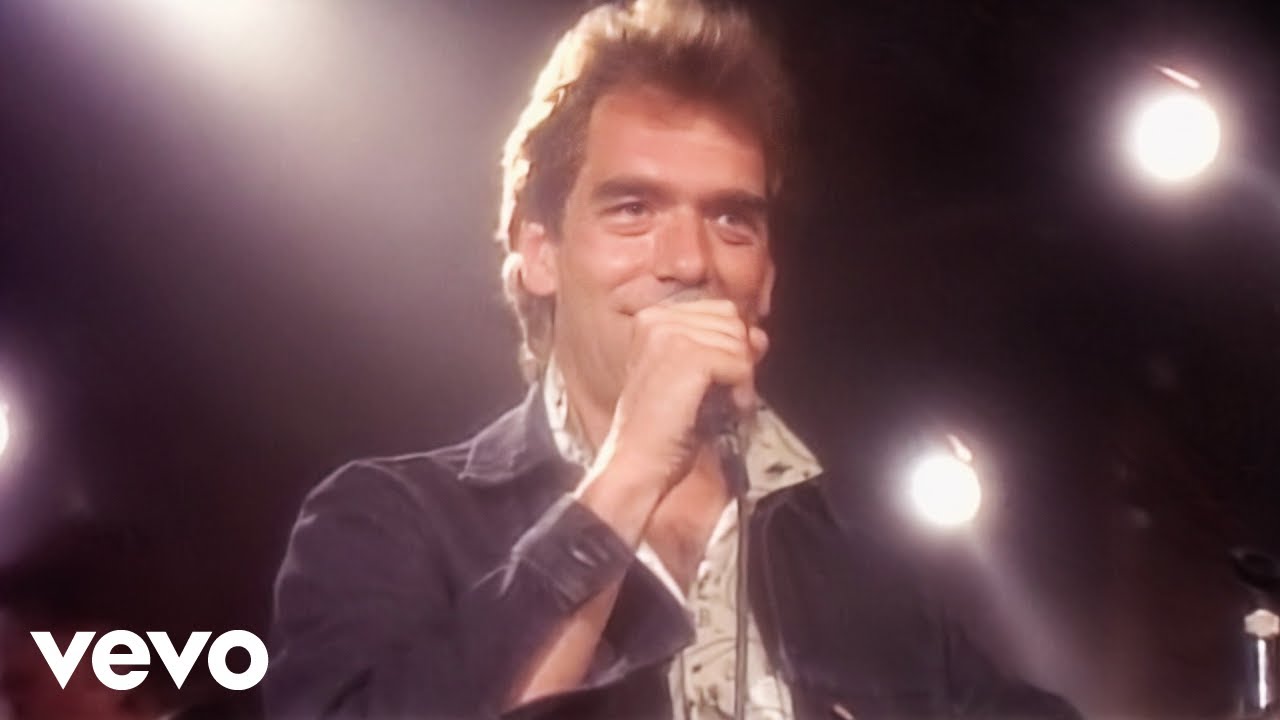
The official music video, filmed in June 1985, was shot at Uncle Charlie’s — a club in Corte Madera, California, that had been one of the band’s regular haunts in their early years. The decision to film there rather than a studio or a grander location was entirely in keeping with the band’s aesthetic: rooted, unpretentious, built around the feeling of a working rock group in their natural environment. The video’s key cameo is Christopher Lloyd arriving outside in the DeLorean, in full Doc Brown character, while the band plays inside — a connection to the film that plays as a knowing wink rather than a product placement. Lewis himself had already pulled off a smarter cameo inside the film: he appears as the Battle of the Bands judge who cuts Marty McFly’s group off after a few bars of the song’s opening riff, informing them they are “just too darn loud.” The man who wrote and sang “The Power of Love” was, in the film’s internal logic, unable to stand hearing it performed.
Lewis has said repeatedly that the song’s greatest impact was international. Sports, the band’s 1983 breakthrough album, had been a blockbuster in the United States but had made only modest inroads in Europe. “The Power of Love” changed that overnight — the film’s global gross of over $381 million pulled the single into markets the band had never reached, and for the first time Huey Lewis and the News were an international act rather than an American one. The song appears in all three Back to the Future films — heard as Marty rides his skateboard to school in the original, misplayed on a guitar by future Marty in Part II, and briefly audible from a car in Part III — a franchise presence that has kept it in continuous circulation for forty years. In 2025, it appeared in a Super Bowl Bud Light commercial alongside Post Malone, Shane Gillis, and Peyton Manning. Some songs simply refuse to leave.
Huey Lewis was diagnosed with Ménière’s disease — a chronic inner ear disorder that has severely damaged his hearing — in 2018, and the band has not performed or toured since. The 2020 album Weather, recorded before the diagnosis became debilitating, was their last studio release. That Lewis is now unable to hear the song that made him an international star is one of the more quietly devastating ironies in the history of American rock. He wrote the lyric while jogging, thinking about his family, barely making a movie deadline he’d accepted reluctantly. What came out the other side was a number one hit in five countries, an Oscar nomination, and one of the most durable recordings of the entire decade. “The Power of Love” is, as the lyric insists, a curious thing. Lewis would be the first to agree.
SONG INFORMATION
Related videos
 Watch LaterAdded
03:29
Watch LaterAdded
03:29  Watch LaterAdded
04:58
Watch LaterAdded
04:58  Watch LaterAdded