



![Lady Antebellum – Silent Night [4K]](https://musicvideosclub.com/wp-content/uploads/2025/12/lady-antebellum-silent-night-4k-360x203.jpg)




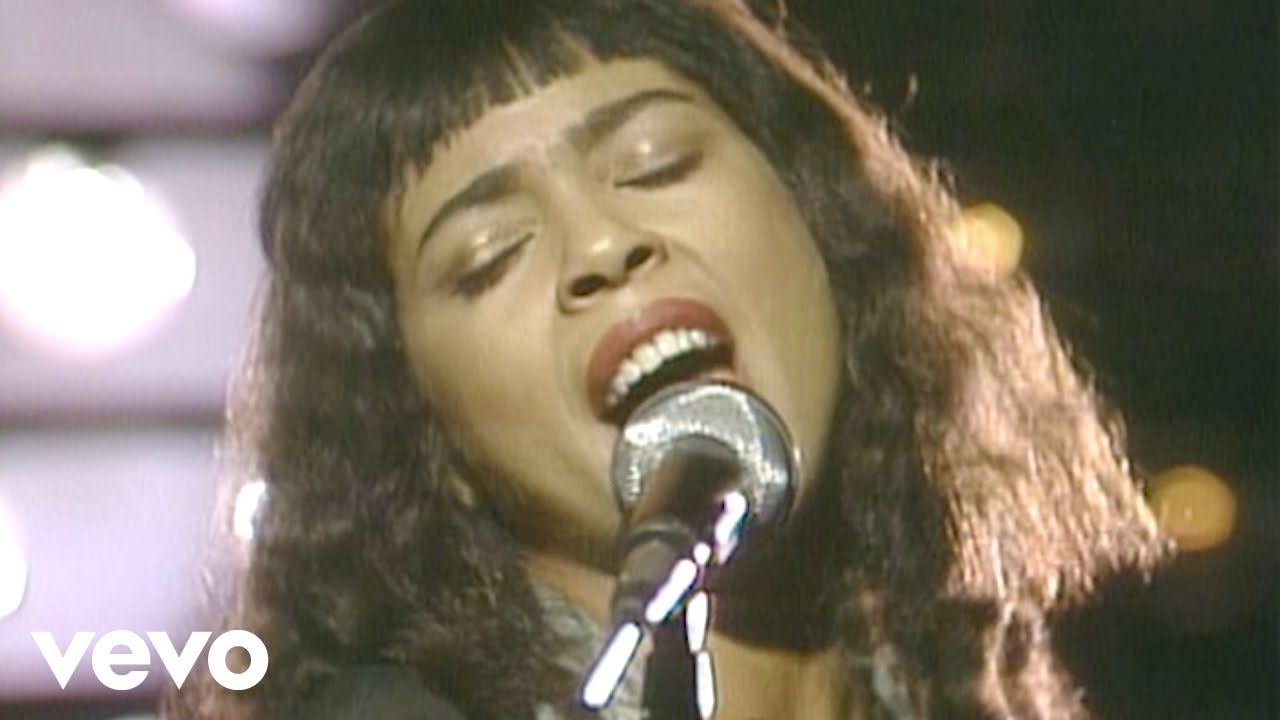
Irene Cara – Fame (Live)
She Went to Audition as a Dancer. They Wrote Her a Whole New Character When They Heard Her Sing.
Irene Cara arrived on the set of Fame in 1979 expecting to be a dancer. She had been cast as an extra — one of many bodies in the background of a film about students at New York’s High School of Performing Arts. Then producers David Da Silva and Alan Marshall heard her voice during a rehearsal, and their plan changed entirely. Screenwriter Christopher Gore sat down and wrote a new character specifically for her: Coco Hernandez, an intensely ambitious singer-actress, a young woman who wanted everything and was prepared to do almost anything to get it. Michael Gore and Dean Pitchford wrote a song for that character to sing. Its first line was “I’m gonna live forever.” As a prophecy, it turned out to be accurate.
“Fame” was released in May 1980 as the lead single from the film’s soundtrack on RSO Records and reached Number Four on the Billboard Hot 100 in September, spending one week at the top of the Billboard Dance chart. In the UK it went to Number One, as it did in Belgium, the Netherlands, and New Zealand. The song won the Academy Award for Best Original Song at the 1981 ceremony — where Cara performed it live on the Oscar stage — and took the Golden Globe for Best Original Song the same year. The film itself won the Academy Award for Best Original Score. In the AFI’s 2004 survey of the greatest songs in the history of American cinema, it ranked at Number 51. It was Cara’s first single. She was twenty years old.
What made the whole situation almost improbably layered was the other song Cara had recorded for the same soundtrack: “Out Here on My Own,” a ballad she described in later years as the song that described her entire life. Both “Fame” and “Out Here on My Own” received Academy Award nominations for Best Original Song in the same year — the first time two songs from the same film, performed by the same artist, had ever been nominated in the same category. Cara sang both at the Oscars ceremony. Gore and Pitchford had written “Fame” as a declaration of ambition, propulsive and almost defiant in its forward momentum. Cara, who had made her Broadway debut at nine years old in Maggie Flynn, who had recorded a Spanish-language album at eight, who had appeared on Johnny Carson’s Tonight Show as a child — she understood the difference between announcing yourself and proving yourself. The live performance was where she always proved it.
The song was recorded at Filmways/Heider’s Studio in Los Angeles, with Michael Gore producing his own composition. He built the track around Cara’s voice from the ground up, which is audible in how completely the arrangement serves the vocal rather than competing with it. The first verse is almost spare — just enough foundation to let the voice establish itself before the chorus opens everything up. Gore had never produced a pop record before Fame. His background was classical composition and film scoring. That inexperience turned out to be an advantage: he had no preconceptions about how the song was supposed to sound, which is part of why it sounds unlike anything else on the radio in 1980.
When the producers of the Fame television series approached Cara about reprising Coco Hernandez for the weekly show, she declined. She wanted a recording career, not a television career — and the distinction mattered to her. It was a decision that eventually cost her the kind of consistent mainstream platform the TV series provided to its cast over multiple seasons. But in 1983 she co-wrote “Flashdance… What a Feeling” with Giorgio Moroder and Keith Forsey during a car ride to a recording session in New York, and it went to Number One. She won the Grammy for Best Female Pop Vocal Performance in 1984. She won an Oscar. By any measure she had been right to trust her instincts.
What followed was harder. In 1985 Cara filed a lawsuit against record executive Al Coury and Network Records, alleging that royalties from both the Flashdance soundtrack and her first two solo albums had been withheld. The label countersued. The legal battle dragged on for years, effectively bankrupting her and — by her own account — resulting in an industry blacklist that made it almost impossible to get recordings released. A California jury awarded her $1.5 million in 1993, vindicating her entirely. But the damage to her career had already been done. She had been right. She had fought. She had won. She had lost the years regardless.
Irene Cara died on November 25, 2022, at sixty-three. She had spent her final decades performing with her all-female band Hot Caramel, quietly collecting lifetime achievement awards, and watching the songs that had been taken from her — legally and otherwise — continue to travel the world without her. “Fame” placed at Number 51 on the AFI’s greatest movie songs list. Celine Dion cited her as the artist who presided over movie theme songs before anyone else could. Whitney Houston watched Sparkle — Cara’s 1976 film — every Saturday for three months as a teenager. She left behind two of the most recognizable opening lines in pop history, written by other people, sung as if they were the most personal things she had ever said. “I’m gonna live forever.” “What a feeling.” Both turned out to be true.
SONG INFORMATION
Related videos
![Eagles – In The City (Official Video) [HD]](https://musicvideosclub.com/wp-content/uploads/2025/12/eagles-in-the-city-official-vide-360x203.jpg) Watch LaterAdded
Watch LaterAdded
 Watch LaterAdded
04:14
Watch LaterAdded
04:14  Watch LaterAdded
03:35
Watch LaterAdded
03:35