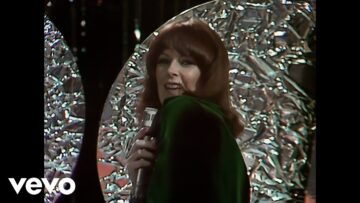
Britain’s biggest single of 1985 came from a singer born in Queens, and the one market her own label held it back from was America.
It entered the UK chart at No.97 in June 1985. Sixteen weeks later The Power of Love was No.1, and it stayed there for five weeks on its way to becoming the best-selling single of the year in Britain, the first by a female solo artist there to pass a million copies. The voice on it belonged to a New Yorker, the record was made in Germany, and the country that showed the least interest in it was her own. Rush’s version climbed only as high as No.57 in the United States. Eight years later the same song topped the Billboard Hot 100, in somebody else’s voice.
Jennifer Rush was born Heidi Stern in Queens in 1960, the daughter of the opera singer Maurice Stern, and spent part of her childhood in Germany. She released a local album in Seattle under her birth name, and when her American career stalled she went back to Europe. In 1982 she moved to Wiesbaden and signed with CBS Songs in Frankfurt as a songwriter. A first single under her own name went nowhere, so in 1983 she became Jennifer Rush.
Her partners there were the producers Gunther Mende and Candy DeRouge, working with the lyricist Mary Susan Applegate. Rush wrote from poems, which she set to music the producers built. Mende and DeRouge produced and arranged the record, and the 1984 CBS single credits all four as writers. On the self-titled debut album the track runs six minutes, a slow build from a hushed opening to a full-voiced climax. CBS released it as a single in December 1984, backed with I See a Shadow (Not a Fantasy).
A sleeper, then a record
The single began modestly, reaching No.16 in West Germany in January 1985. Britain took longer and then went further. CBS released it there that June, and the climb from No.97 to the top took until October. The Official Charts Company counted 1.2 million sales in 1985, well ahead of the year’s runner-up. The song also topped the charts in Ireland, Australia, Canada, Norway, Austria, New Zealand and South Africa, and a Spanish-language version, Si tú eres mi hombre y yo tu mujer, spent six weeks at No.1 in Spain.
The video was European too. The German television director Michael Leckebusch shot it in New York City, casting Rush as a woman protecting her partner from a dangerous crowd, so the singer who had left America came back to it on film. In the United States, CBS held the single back, reportedly judging it too European in style. That gave Air Supply time to release the first American version in August 1985, retitled The Power of Love (You Are My Lady), which peaked at No.68. Rush’s own record didn’t arrive until January 1986. She sang it on The Tonight Show that March, and it peaked at No.57 in April.
The song kept looking for its American audience. Laura Branigan recorded it in 1987 and reached No.26. Then, in 1994, Céline Dion’s version spent four weeks at No.1 on the Hot 100 and became the best-selling single by a woman in the United States that year. By then Rush had found her own route onto American radio, reaching the US Top 40 in 1987 with Flames of Paradise, a duet with Elton John.
Ten years of chart history on two continents come down to one song and one singer who could never quite bring them together. America eventually embraced The Power of Love, but it took four versions and a Canadian voice to get there. The original still carries what the covers smoothed over: a young American who had to leave home to be heard, singing a song her own country didn’t want from her. Britain bought more than a million copies of the version America passed on.
SONG INFORMATION
Artist: Jennifer Rush
Song: “The Power of Love”
Album:Jennifer Rush
B-side: “I See a Shadow (Not a Fantasy)”
Released: December 1984
Label: CBS
Songwriter(s): Candy DeRouge, Gunther Mende, Jennifer Rush, Mary Susan Applegate
Producer(s): Candy DeRouge, Gunther Mende
Length: 6:00 (album)
Chart Performance: No.1 UK (five weeks); No.1 Ireland, Australia, Canada, Norway, Austria, New Zealand; No.57 Billboard Hot 100
Certification: BPI Platinum; Music Canada Gold; ARIA Gold








![David Lee Roth – California Girls (Official Video) [HD]](https://musicvideosclub.com/wp-content/uploads/2026/10/david-lee-roth-california-girls-360x203.jpg)