There is no Ventura Highway. He saw the word on a road sign and liked it.
The sign was on the side of a road somewhere near Oxnard, and it said Ventura. Dewey Bunnell was in seventh grade, it was 1963, and the family car had a flat. His father was changing it. He and his brother stood on the verge with nothing to do, looked at the sky for a while, and read the sign. He was still thinking about it nine years later. There is no Ventura Highway and there never has been — Ventura is a city and a county, and the road that runs through it is Highway 101. He wanted the word.
What he has said about it since is that the word itself carried the whole idea — it sounded like an adventure, like leaving one place for a better one. He liked that word, he has explained, because it evokes a great adventure. That is very nearly the entire creative process behind one of the most recognizable openings in American soft rock.
The rest of the memory is in there too, mostly in the images. The alligator lizards are a real animal — there are alligator lizards all over California, and Bunnell and his brother used to catch them — but in the song they are a cloud, a long thin shape stretched across the sky above two bored boys on a roadside. And underneath the California of the lyric is Omaha, where Bunnell spent part of his childhood, walking through cornfields in winter and thinking about somewhere warm.
Three Air Force kids from London
America were not Californian. Bunnell, Gerry Beckley and Dan Peek met in London, where all three of their fathers were serving with the US Air Force, and formed the band there in 1970 after finishing school. California was a place they had been to and left, which is probably why they wrote about it the way people write about somewhere they miss rather than somewhere they live.
They cut Homecoming at the Record Plant in Los Angeles and produced it themselves, which was unusual for a second album by a band that had a hit single behind them and a label with opinions. Warner Bros. released it on November 15, 1972, with this song out ahead of it that September. It reached No. 8 on the Hot 100 and No. 3 on the adult contemporary chart, went to No. 43 in Britain, and carried the album to No. 9.
Bremen, in front of the cameras
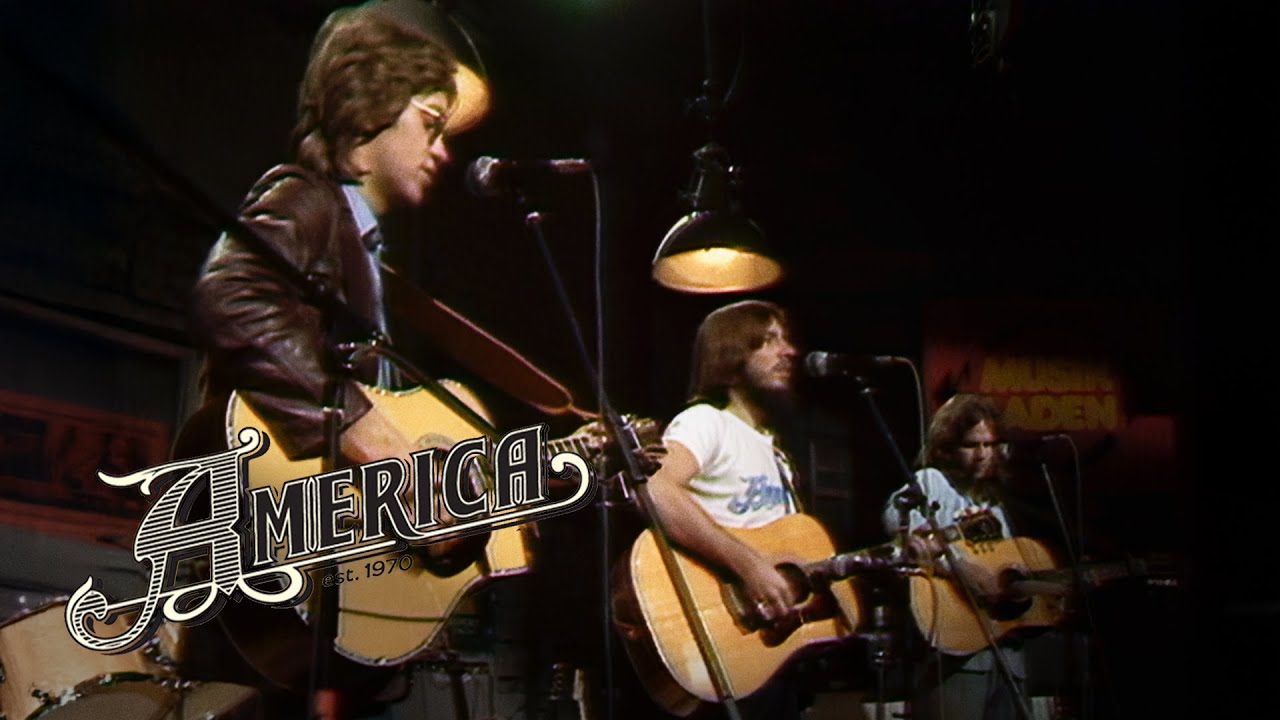
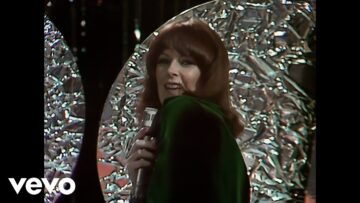
What plays here is Musikladen, the Radio Bremen programme that had taken over from Beat-Club and inherited its studio, its director Michael Leckebusch, and its habit of filming bands properly. The session America taped for it ran to a dozen songs and worked through most of what they had — this one, Tin Man, Lonely People, Don’t Cross the River, and A Horse with No Name, which is the other America performance from the same taping on this site.
The trio are exposed in a way they rarely were on record. Three voices, acoustic guitars, no studio layering to hide behind, and the harmonies either work in the room or they do not. They work.
Janet Jackson built Someone to Call My Lover on the guitar figure in 2001 and took it back into the American top five, which means a great many people know those eight bars without knowing where they came from. The song is now firmly attached to a stretch of Californian coast that a boy from Omaha saw once from the side of the road while his father changed a tire, and named after a highway that does not exist.
SONG INFORMATION
Artist: America
Song: “Ventura Highway”
Album:Homecoming
B-side: “Saturn Nights”
Released: September 1972
Recorded: 1972
Studio: The Record Plant, Los Angeles
Label: Warner Bros.
Songwriter(s): Dewey Bunnell
Producer(s): America
Length: 3:32
Chart Performance: US Billboard Hot 100 No. 8; US Adult Contemporary No. 3; UK Singles Chart No. 43