




Laura Branigan – Gloria
The Song She Couldn’t See the Potential In — Until They Changed Who Gloria Was
Laura Branigan had backed Leonard Cohen across European stages, auditioned for Ahmet Ertegun at Atlantic Records, and watched her debut single stall at number 69 on the Billboard Hot 100. She was not, by the fall of 1982, a woman who had run out of patience — but she was running low on time. When German producer Jack White put Umberto Tozzi’s Italian hit in front of her and suggested they build a version around it, Branigan was skeptical. Their first attempt proved her right: a faithful translation of Tozzi’s romantic lyric, retitled “Mario,” that went nowhere emotionally and sounded like a novelty. Then Canadian songwriter Trevor Veitch came in and rewrote the character from the ground up — and suddenly “Gloria” wasn’t a love song at all. She was a woman running too fast for her own steps, heading straight for a breakdown, and Branigan could hear exactly what that meant. She recorded it immediately, and the second most-played song on American radio in 1982 was born.
The single was released in July 1982 as the second cut from her debut album Branigan, and its rise was patient and improbable. Pop radio initially passed. It was the gay club circuit that picked it up first — Branigan and her team spent months touring dance venues across the country, driving the track through dancefloors before it cracked the mainstream. By November it had climbed to number two on the Billboard Hot 100, where it sat for three consecutive weeks, blocked first by Lionel Richie’s “Truly” and then by Toni Basil’s “Mickey.” It spent 36 weeks on the Hot 100 in total — a new record for a solo female act — and 22 of those weeks inside the Top 40. In Australia it hit number one and stayed there for seven consecutive weeks. It topped the chart in Canada, reached number six in the UK, and was certified platinum in the United States on over two million copies sold. Grammy voters nominated Branigan for Best Pop Vocal Performance, Female. The award went to Melissa Manchester. Nobody remembered that part.
The lyric that Veitch built is considerably stranger and darker than its production suggests. Gloria is not being serenaded — she is being confronted. The narrator watches a young woman self-destruct in real time: chasing men who don’t call back, mistaking attention for affection, hearing voices that aren’t there. “I think you’re headed for a breakdown,” Branigan warns her, and the delivery carries genuine concern underneath the disco sheen. Branigan described Gloria as “a girl that’s running too fast for her own steps” — a woman whose hunger for love has tipped into something that looks like a crisis. The music says one thing. The lyric says another. That gap is where the song lives, and it’s why it has never quite worn out its welcome.
The recording itself was assembled by White and co-producer Greg Mathieson — the same Mathieson who had played keyboards on Tozzi’s original Italian version, making him uniquely placed to understand what the melody needed in a different language. The band Atlantic assembled around Branigan was not modest: Steve Lukather of Toto on guitar, Leland Sklar on bass, Carlos Vega on drums, Michael Boddicker on synthesizers, and Maxine and Julia Waters on background vocals. The result — that rolling synth hook, the trumpet fanfares in the coda, the machine-precise rhythm section that cracks open in the chorus — is a record that wears its Euro-disco origins proudly while planting its feet firmly on American radio. Tozzi’s melody fragment, borrowed in turn from Beethoven’s Missa solemnis, runs underneath all of it: a cathedral dressed up in a dancefloor.
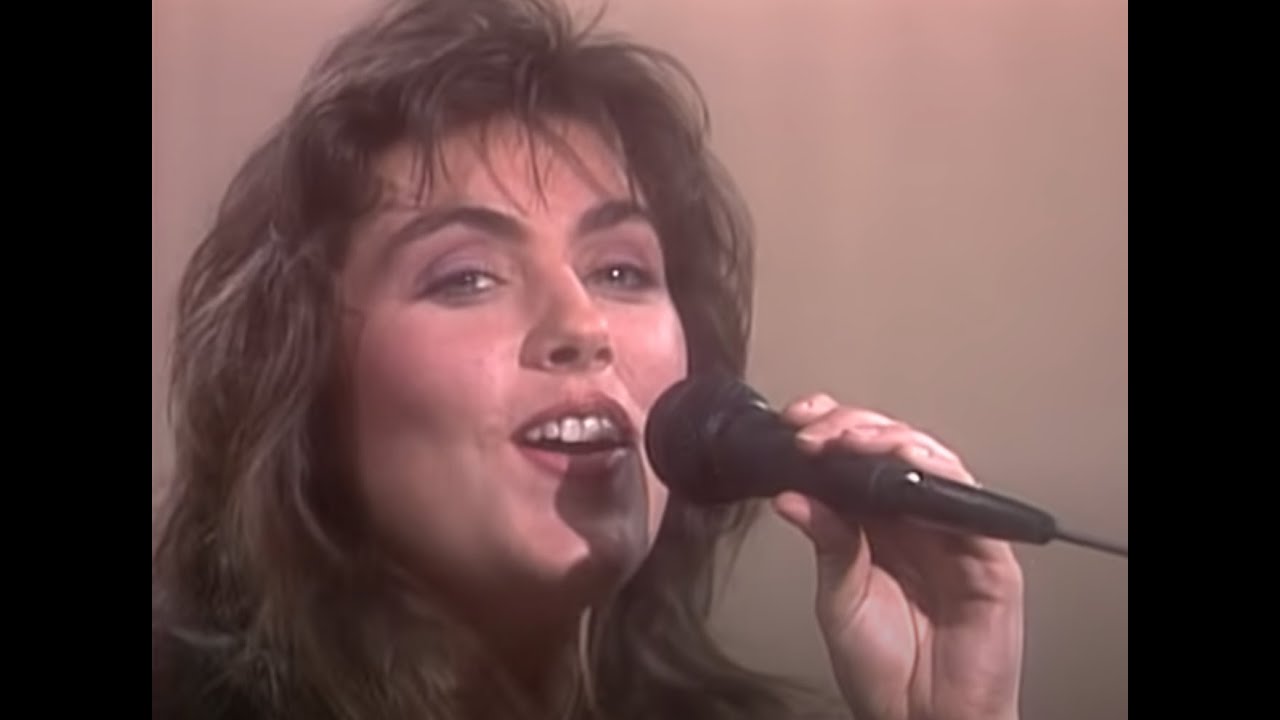
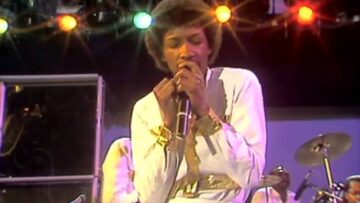
The official music video matched the song’s theatrical energy. Branigan appears centre-stage throughout, fully committed — no elaborate storyline needed, no gimmick to hide behind. In an era when MTV was beginning to demand spectacle, it was a performance-forward clip that trusted the voice to carry the room. The decision proved sound. The video received heavy rotation, and an entire generation of American teenagers encountered both the song and Branigan for the first time through that MTV placement. Branigan, the album, was certified Gold in both the United States and Canada. The second album, Branigan 2, arrived in 1983 carrying “Solitaire” — the first major hit for a young songwriter named Diane Warren — and “How Am I Supposed to Live Without You,” which served the same function for a young co-writer named Michael Bolton. Both had been European hits first. Branigan had become the gold standard for turning a continental track into an American one.
The song’s second life has been remarkable in its variety. In 2019, the NHL’s St. Louis Blues adopted “Gloria” after six players heard a Philadelphia bar go berserk to it following an Eagles playoff win — and rode it all the way to their first Stanley Cup in franchise history. Phish and Vampire Weekend, each playing St. Louis the night of Game 7, both performed it when the final buzzer sounded. The record re-entered the iTunes Top 3. In January 2021, the song surfaced in footage from the Capitol building in Washington D.C., prompting Branigan’s estate to issue a swift public statement. A song that had begun its life in Italian in 1979, been reinvented in English in 1982, and spent four decades in the world’s bloodstream had found its way into two of the most charged moments in recent American public life. Few pop records manage that kind of range.
Laura Branigan died on August 26, 2004, of an undiagnosed brain aneurysm, aged 52, while working on new material. She had called “Gloria” her signature song and said she had to end every show with it — that the audience simply wouldn’t let her leave without it. Listening now, it’s easy to understand why. It is a record that sounds like pure momentum: a warning dressed as a celebration, a breakdown that somehow feels like a party. Whoever Gloria was running from, or toward, the song she left behind runs just as fast — and shows no sign of slowing down.