



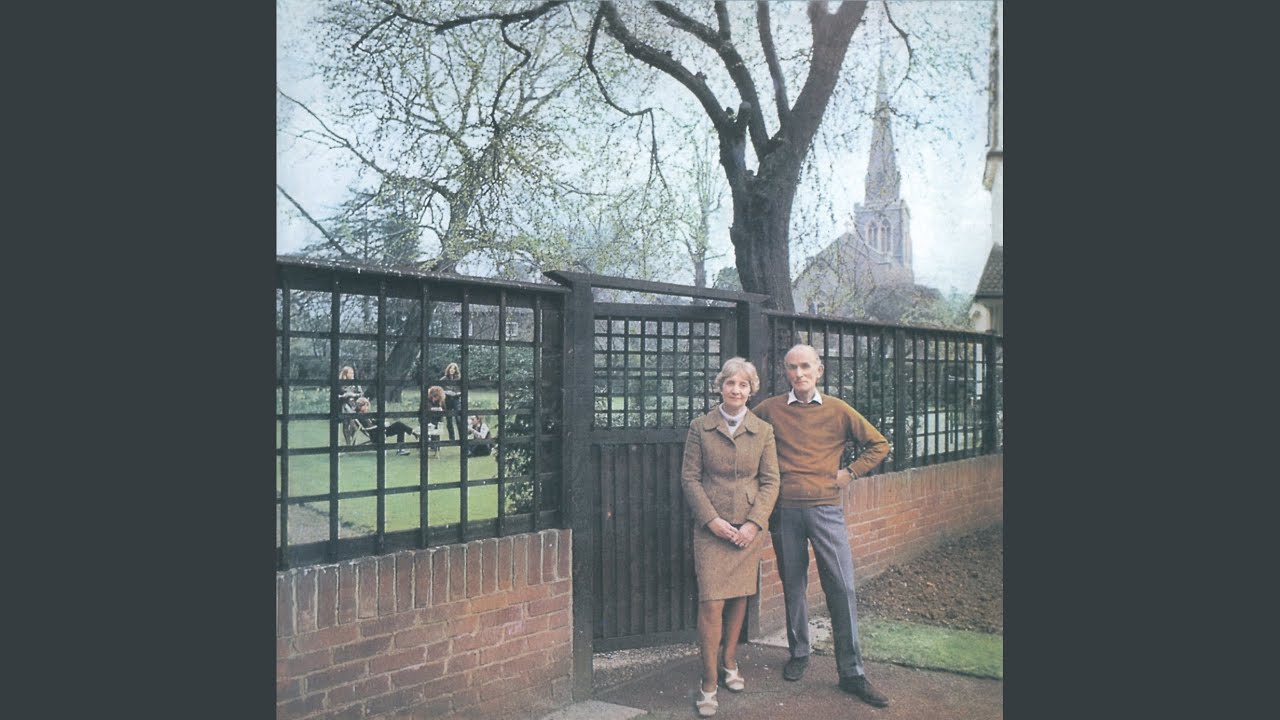





Fairport Convention – Who Knows Where The Time Goes?
She Wrote It as a Teenager — Her Second Song Ever — and Someone Else Released It Before She Did. It Was Also the Last Song Sandy Denny Sang Before She Died.
Sandy Denny was not yet twenty years old when she completed the second song she had ever written. It came out in a burst, the melody and the question forming together: who knows where the time goes? She recorded a first demo in 1966 and returned to it the following year, singing into a microphone with her guitar and not much else. For a while it sat quietly. Then Judy Collins heard a tape, recorded her own version in New York in August 1968, released it as the B-side of “Both Sides, Now,” and used it as the title track of a whole album. By the time Fairport Convention finally put out their recording in July 1969, Denny’s song had already been introduced to a large American audience through someone else’s interpretation — a fact that Denny found easier to live with than it might appear, because she knew, as did everyone who heard the two versions side by side, that the Fairport recording was something the Collins version could never quite be.
The sessions for Unhalfbricking took place at Sound Techniques Studio in Chelsea, London, over March and April 1969, with Joe Boyd producing alongside Simon Nicol and the band. Boyd had assembled one of the most instinctively sympathetic recording environments in Britain at that point — Sound Techniques was the room where Nick Drake was simultaneously making Five Leaves Left, where Pentangle were cutting foundational folk-rock records, where the acoustic-to-electric transition of an entire generation of British musicians was being documented with unusual delicacy. Engineer John Wood understood how to place a voice in a room. When Denny sang “Who Knows Where the Time Goes?” at Sound Techniques, the microphone caught something that the Chelsea address seemed to encourage: weight without effort, emotion without display.
What Richard Thompson Understood
The arrangement is built around restraint. Richard Thompson’s guitar licks, which run through the right audio channel in the stereo mix, operate at a level that most lead guitarists would consider beneath them. There is no solo, no flourish designed to announce itself. Thompson plays the song as though it already knows where it is going and his job is simply to accompany it there. Denny’s voice sits at the centre of the recording without competition from any other element — the bass, drums, and guitar form a frame rather than a structure, and what they frame is a vocal performance that has been described by Rufus Wainwright as “one of the saddest songs ever written” and by Nina Simone, who performed her own version, as “a lovely, lovely thing.” Linda Thompson, who knew the song from the inside, put it differently: she said it resonated with her as a teenager and still resonates at seventy-one, that it captures love and loss without sentimentality. Three perspectives separated by decades of living, all arriving at the same conclusion about a song written by a nineteen-year-old.
The album was released in July 1969 to considerable critical attention. It reached number twelve on the UK Albums Chart, the second-highest position Fairport Convention would ever achieve in their home country. Q magazine later placed it at number 41 in its list of the 50 Greatest British Albums Ever. The Observer called it “a thoroughly English masterpiece.” What no one writing about it that July could have known was that the recording was already a kind of memorial: drummer Martin Lamble, nineteen years old himself, had been killed on the M1 motorway on May 12, 1969, when Fairport’s van crashed returning from a show in Birmingham. Lamble had played every track on the album. He never heard it released.
The Track That Became the Measure
Denny left Fairport Convention later in 1969, went on to release solo records and eventually returned briefly to the fold, but “Who Knows Where the Time Goes?” traveled with her regardless of which band she was standing in front of. She performed it for the rest of her life. In 2007, BBC Radio 2 listeners voted the Unhalfbricking recording the Favourite Folk Track of All Time — a poll result that suggests the song had lost none of its pull across four decades, and that the Sound Techniques recording specifically was what people were reaching for when they tried to locate something essential in the British folk-rock tradition. Artists from Nina Simone and 10,000 Maniacs to Eva Cassidy, Cat Power, Nanci Griffith, and Sinéad O’Connor have returned to the song across the years, each trying in their own way to find what Denny found in it first.
The last song Sandy Denny ever sang in public was “Who Knows Where the Time Goes?” She died on April 21, 1978, aged thirty-one, following a fall, and the song she had written as a teenager closed the final chapter of her life as naturally as it had opened so many chapters before it. There is a particular quality to recordings that outlive their makers by this much — something the music itself seems to know, even when the singer didn’t yet. The question the song asks cannot be answered, which is precisely why no version ever feels complete enough to replace the next listening. Denny wrote it second, sang it last, and it is the first thing most people think of when her name is spoken.
SONG INFORMATION
Enjoyed this one? New forgotten gems every day — tap Music Videos Club below to visit and follow us on Facebook:
Related videos
 Watch LaterAdded
04:17
Watch LaterAdded
04:17  Watch LaterAdded
05:03
Watch LaterAdded
05:03  Watch LaterAdded
03:05
Watch LaterAdded
03:05