








![a-ha – Take On Me (Official Video) [4K]](https://musicvideosclub.com/wp-content/uploads/2025/11/a-ha-take-on-me-official-video-4-360x203.jpg)

Marvin Gaye – I Heard It Through The Grapevine (Live)
Berry Gordy Said No Twice — and the DJs Overruled Him
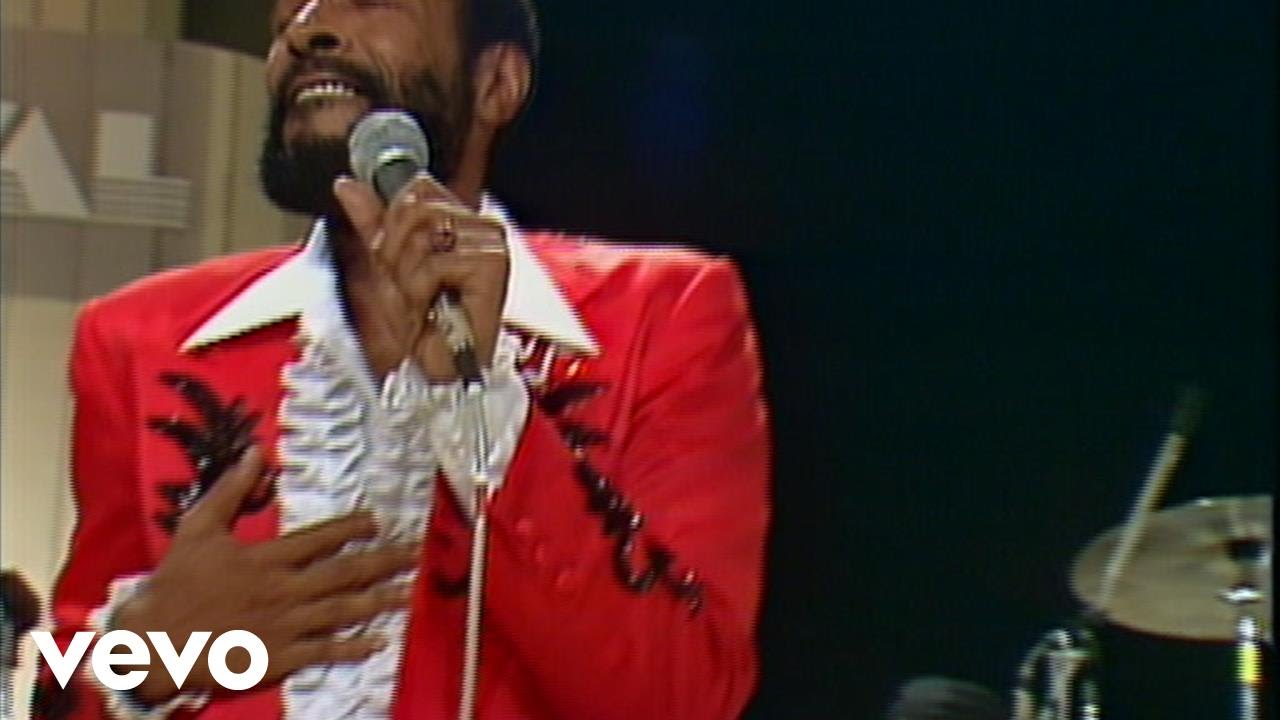
Whatever stage Marvin Gaye is standing on in this footage, whatever year the cameras were rolling, the performance you are watching carries the full weight of a song that almost didn’t exist — or rather, almost existed only in a vault, unheard and unreleased, buried under two separate rejections by the most powerful man in Motown. That “I Heard It Through the Grapevine” reached the world at all is a story about a producer’s obsession, a label chief’s stubbornness, and the particular kind of chaos that erupts when Chicago radio disc jockeys start playing an album track and the phones go crazy. That it became one of the most enduring recordings in the history of American soul is a story about what Marvin Gaye could do with a microphone and a melody that nobody else quite wanted him to have.
Norman Whitfield and Barrett Strong wrote the song together in 1966 — the first of many collaborations that would eventually produce “Ain’t Too Proud to Beg,” “Papa Was a Rollin’ Stone,” and “Ball of Confusion.” Strong came up with the title and the basic bass line while living in Chicago, where people used the phrase constantly; Whitfield helped complete it. The Miracles were the first to record it, on August 6, 1966, but Berry Gordy vetoed the release at Motown’s weekly quality control meeting, instructing Whitfield and Strong to make it stronger. Whitfield then recorded a version with Marvin Gaye in spring 1967 — five long sessions, with the Funk Brothers laying down the rhythm track and a string section from the Detroit Symphony Orchestra added on top. Whitfield pushed Gaye to perform in a higher key than his normal range, a technique that had worked on David Ruffin during the Temptations’ recording of “Ain’t Too Proud to Beg.” The mixture of Gaye’s raspy upper register and the Andantes’ sweeter harmonies convinced Whitfield he had a hit. Gordy disagreed and blocked the release again.
Furious but undeterred, Whitfield turned to Gladys Knight and the Pips, rebuilt the arrangement with a faster, gospel-inflected energy inspired by Aretha Franklin’s “Respect,” and persuaded Gordy to release that version as a single on September 28, 1967. It went to number one on the Billboard R&B chart for six weeks — blocked from the pop number one by the Monkees’ “Daydream Believer” — and became Motown’s biggest-selling single to that point. Knight had every reason to feel the song was hers. Whitfield still hadn’t given up on Gaye’s version. In the summer of 1968, he added it to Gaye’s new album In the Groove as an album track — the only way to release it without Gordy’s explicit approval as a single. When Chicago disc jockey E. Rodney Jones at radio station WVON started playing it on air, the listener response was immediate and overwhelming. Gordy, by his own admission, had to release it as a single because the DJs had already made the decision for him.
Released as Tamla 54176 on October 30, 1968, “I Heard It Through the Grapevine” entered the Hot 100 on November 23 at number 34 — the highest new entry of the week. Three weeks later, on December 14, it reached number one, where it stayed for seven weeks. It was Gaye’s first US number one, the longest-running Motown chart-topper on the Hot 100 to that point — a record that stood until Lionel Richie and Diana Ross’s “Endless Love” topped it with nine weeks in 1981 — and it became the final number one on the Billboard R&B chart of the entire year of 1968, with Gladys Knight’s version having been the first. The same song. The same year. The only pop song in history to sit at both ends of a year’s R&B chart. In March 1969 it reached number one in the UK for three weeks. The album was reissued under the song’s title, and In the Groove was retired in favour of I Heard It Through the Grapevine — the recording that had been twice rejected now defining Marvin Gaye’s entire identity.
Gladys Knight was not pleased. She maintained for years that Gaye’s recording had been built over an instrumental track Whitfield had originally prepared for the Pips, and that the version that eclipsed hers was in some sense assembled from her own materials. Gaye denied it. Whitfield said nothing definitive either way. What is clear is that the two versions are not really in competition: Knight’s is exuberant, almost defiant, gospel energy channelled into a warning; Gaye’s is interior, paranoid, dread running beneath the surface of every note. They are the same song telling two completely different emotional stories. The reason Gaye’s version became the definitive one is not that it is better — it is that it is unrepeatable. That specific combination of a voice being pushed past its comfort zone, a rhythm section at the peak of its collective ability, and a lyric about betrayal delivered by a man who seemed to believe every word of it, produced something that no amount of Motown quality control could have designed.
The song’s life beyond the 1960s has been equally improbable. Creedence Clearwater Revival stretched it to eleven minutes on their 1970 album Cosmo’s Factory. A 1985 Levi’s television commercial called “Launderette,” featuring a young Nick Kamen stripping in a laundromat, sent a re-release of Gaye’s version to number eight in the UK — introducing it to an entire generation who had been born after the original recording. The following year, the California Raisins clay animation group used a recreation of the track, sung by Buddy Miles, for a television advertisement that became one of the most-seen pieces of American commercial television of the decade. Rolling Stone placed it on their 500 Greatest Songs of All Time list in 2004. It remains the only song to top the Billboard R&B chart three separate times — Knight in 1967, Gaye in 1968, and electro-funk musician Roger in 1981.
Whatever the footage on this page was filmed — whatever city, whatever stage, whatever year of a career that ran from the late 1950s to April 1984 — what you are watching is Marvin Gaye performing a song that Berry Gordy twice decided wasn’t worth releasing, that the DJs released for him, and that history has since decided was one of the greatest recordings ever made. That Gaye himself remained unsatisfied despite the song’s success, according to his brother Frankie, is perhaps the most characteristically Marvin Gaye detail of all. Some people are never at peace with a masterpiece.
SONG INFORMATION
Related videos
 Watch LaterAdded
 Watch LaterAdded
 Watch LaterAdded
04:00
Watch LaterAdded
04:00