



![David Lee Roth – California Girls (Official Video) [HD]](https://musicvideosclub.com/wp-content/uploads/2026/10/david-lee-roth-california-girls-360x203.jpg)



a-ha – Take On Me
It Sold About 300 Copies The First Time, And The Same Riff Went To No.1 A Year Later
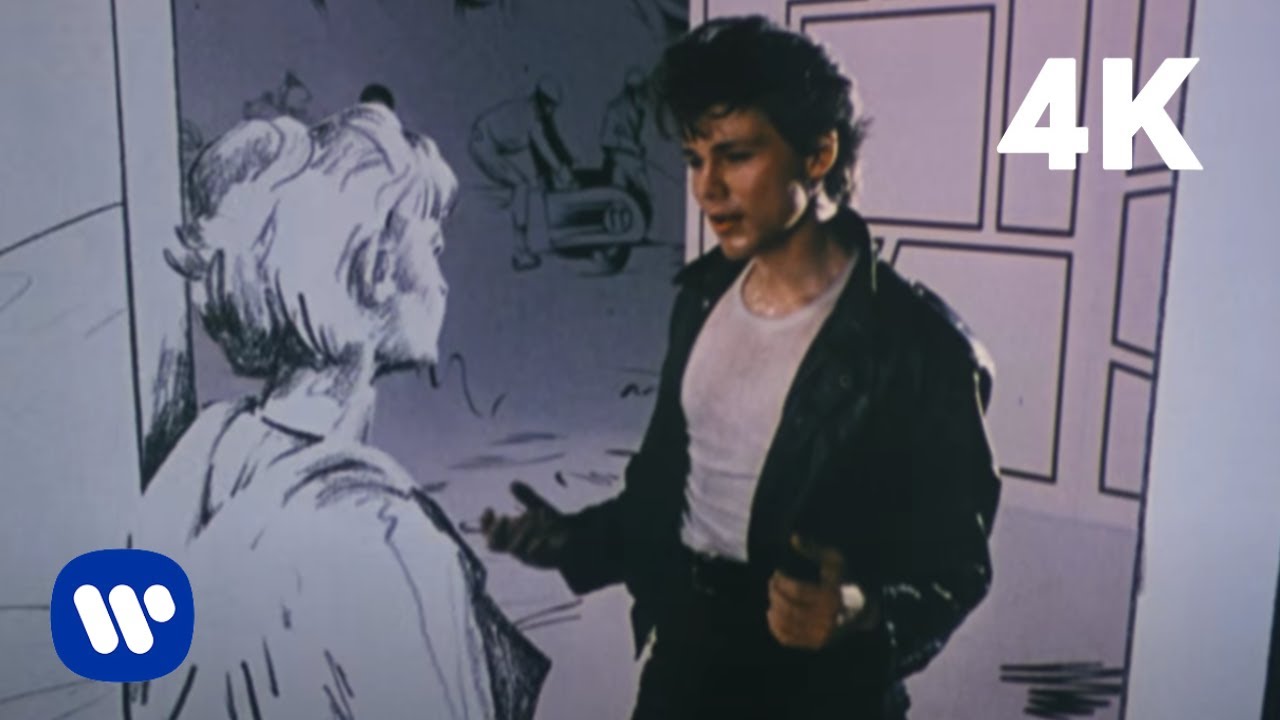
Commuter was a student film by animators Michael Patterson and Candace Reckinger, made by tracing pencil lines over live footage one frame at a time. Warner Bros. executive Jeff Ayeroff saw it and thought it could rescue a single his label had already failed to sell. The single was Take On Me, by a Norwegian trio called a-ha, and by the spring of 1985 it had been released twice to almost no one. The song itself was never the problem. Its keyboard riff had been written years earlier and barely changed, and what turned it into a hit was everything the label finally put around it.
Keep watching: 80s Music Videos – Top 50 Most Watched · 80s Music Videos
The riff came from a different band. Pål Waaktaar and Magne Furuholmen played in an Oslo group called Bridges, and Furuholmen was 15 when he came up with the figure, in a song they called Miss Eerie. Bridges made one independent album in 1980 and split. The two recruited singer Morten Harket, who heard the riff and said it had the sound of a universal hit, and the three moved to London in January 1983 to find a record deal. Along the way the song was retitled Lesson One and then given its final name.
A deal came because of Harket’s voice. Andrew Wickham of Warner Bros. heard him at an audition and later said he could not understand how someone who looked like a film star could sound like Roy Orbison. Getting that voice onto a record proved harder. Sessions began in April 1984 at Eel Pie Studios in Twickenham with producer Tony Mansfield, who leaned on a Fairlight synthesizer, and engineer Neill King then re-cut most of it. Warner Bros. released the result on October 19, 1984. It reached No.3 in Norway. In Britain it stalled at No.137 and sold about 300 copies.
The fix was to go back to the demo
The second attempt started by throwing out the polish. Producer Alan Tarney said his aim was to “recreate the original demo, the one from Sydenham,” and take off the rough edges. He recorded the song in a day at RG Jones in Wimbledon in the spring of 1985 and mixed it in a second, with Gerry Kitchingham engineering. The riff went onto a Roland Juno-60, with a Yamaha DX7 and PPG Wave keyboards around it and a LinnDrum that Waaktaar programmed. Harket sang it in about four takes, climbing from a low A to a falsetto E more than two and a half octaves above. A second British release that April failed as well, which showed the recording had not been the problem either.
That left the picture, and Ayeroff told director Steve Barron to take as much time and money as he needed. Barron’s starting image was a drawn hand reaching out of a comic book into the real world. He shot the band and actress Bunty Bailey in two days at Kim’s Café in Wandsworth, London, and on a soundstage. Patterson and Reckinger then spent 16 weeks rotoscoping around 3,000 frames by hand. Warner’s American office sent the finished video to clubs and to MTV a month before the single reached radio and stores.
No.1 in America, stuck at No.2 in Britain
The order mattered. Warner Bros. had released the single in the United States on June 17, 1985, and once MTV had the video the song climbed all summer. Billboard’s Hot 100 ranked it No.1 on October 19, 1985. A third British release followed on September 16. The Official Charts Company logged its entry at No.55 on September 28 and a No.2 peak on October 26, where it sat for three weeks behind Jennifer Rush’s The Power of Love. It reached No.1 in Norway, Germany, Sweden and several other European countries. At the 1986 MTV Video Music Awards the video won six prizes, including Best Direction and the Viewer’s Choice award.
It has not gone away. The boy band A1 took a cover to No.1 in Britain in 2000, the one place the original missed. The video was remastered in 4K from the original 35mm film in 2019 and passed one billion YouTube views on February 17, 2020. The song a billion people watched is, underneath, the same one that sold 300 copies. Tarney’s hit version was a deliberate return to the trio’s own demo, built on a riff a teenager wrote for another band. What changed was a label willing to release it three times, a producer who took things out, and two animators with pencils. The song had been right from the start, and it took a year for anyone to hear it.
SONG INFORMATION
Related videos
 Watch LaterAdded
03:30
Watch LaterAdded
03:30  Watch LaterAdded
06:49
Watch LaterAdded
06:49  Watch LaterAdded
04:05
Watch LaterAdded
04:05