










![Dead Or Alive – You Spin Me Round (Like a Record) [Live In Japan]](https://musicvideosclub.com/wp-content/uploads/2025/10/dead-or-alive-you-spin-me-round-360x203.jpg)

Neil Sedaka – Breaking Up Is Hard To Do
The Dooby-Doo Nobody Wanted — Until It Hit Number One
When Neil Sedaka released “Breaking Up Is Hard to Do” in June 1962, it entered the Billboard Hot 100 at a humble Number 62. Seven weeks later, it sat at the very top — and the most memorable part of the whole record, that rolling, wordless scat intro, only existed because nobody could think of anything better to put there. For what would become his signature song, the greatest trick Sedaka ever pulled was leaving a mistake in.
The single hit Number One on the Billboard Hot 100 on August 11, 1962, holding the top spot for two weeks before being knocked aside by Little Eva’s “The Loco-Motion” — a song co-written, fittingly enough, by Carole King, who had once been Sedaka’s high school girlfriend and the inspiration for his earlier hit “Oh! Carol.” The single also climbed to Number 7 in the UK and earned Sedaka a Grammy nomination for Best Rock and Roll Recording, a remarkable run for a song that, just months earlier, had drawn a collective shrug from everyone who heard the demo.
The title came to Sedaka in 1961, and he immediately sensed it was special. His songwriting partner Howard Greenfield did not share the enthusiasm. For months, Greenfield stalled, refusing to write the lyric, until Sedaka pressed him hard enough that Greenfield finally relented. Even after they finished the song and played it for their peers at the Brill Building — the same corridor of talent that housed Carole King, Gerry Goffin, Barry Mann, and Cynthia Weil — the reaction was indifferent at best. Nobody was impressed. For his musical inspiration, Sedaka had reached toward the propulsive energy of “It Will Stand” by The Showmen, the harmonics of the Everly Brothers’ “Cathy’s Clown,” and an unintentional kinship with the lilt of “Come Softly to Me” by The Fleetwoods. He pushed through the doubt.
The session took place on February 9, 1962 at RCA Victor Studio A on East 24th Street in Manhattan, produced by Sedaka’s manager Al Nevins. Working with only four available tracks — a severe limitation even by the standards of the day — Sedaka overdubbed three layers of his own harmonies, a technique he had borrowed from Les Paul and Mary Ford. The Cookies provided the three-part harmony on the fade. The night before the session, Sedaka called arranger Alan Lorber to insist that the “down dooby doo down down” phrase — which existed simply because he and Greenfield had never managed to write a proper lyric for that section — be built into the vocal arrangement from the very first bar, accompanied only by handclaps. That accidental hook, bare and immediate, would be what every listener remembered. Sedaka himself described the song’s central tension with perfect economy: “It coupled a sad lyric with a happy tune.”
“Breaking Up Is Hard to Do” was not part of any new studio album at the time of its release; it appeared on Neil Sedaka Sings His Greatest Hits alongside the string of Brill Building singles that had made him, by some measures, second only to Elvis Presley in US records sold between 1959 and 1962. It was the commercial peak of that first era — other 1962 highlights included “Next Door to an Angel” at Number 5 — but within two years the British Invasion would flatten his chart run entirely. Sedaka would later summarize the Beatles’ arrival in his career with characteristic bluntness: “The Beatles — not good.”
The song refused to stay buried. Lenny Welch reimagined it as a slow torch ballad in 1970, and The Partridge Family took their own version to Number 3 in both the UK and Australia in 1972. Sedaka noticed the slow ballad treatment worked, and in 1975 — now signed to Elton John’s Rocket Records in the middle of a remarkable American comeback — he re-recorded it himself at the new tempo, opening with a fleeting quote of the original scat intro before dissolving into something far more world-weary. That version peaked at Number 8 on the Hot 100 and Number 1 on the Easy Listening chart in early 1976, making Sedaka the only artist in chart history to place two versions of the same song in the Billboard Top 10 at different tempos. Elton John, who had called “Breaking Up Is Hard to Do” “one of the great songs of all time,” understood exactly what he had signed.
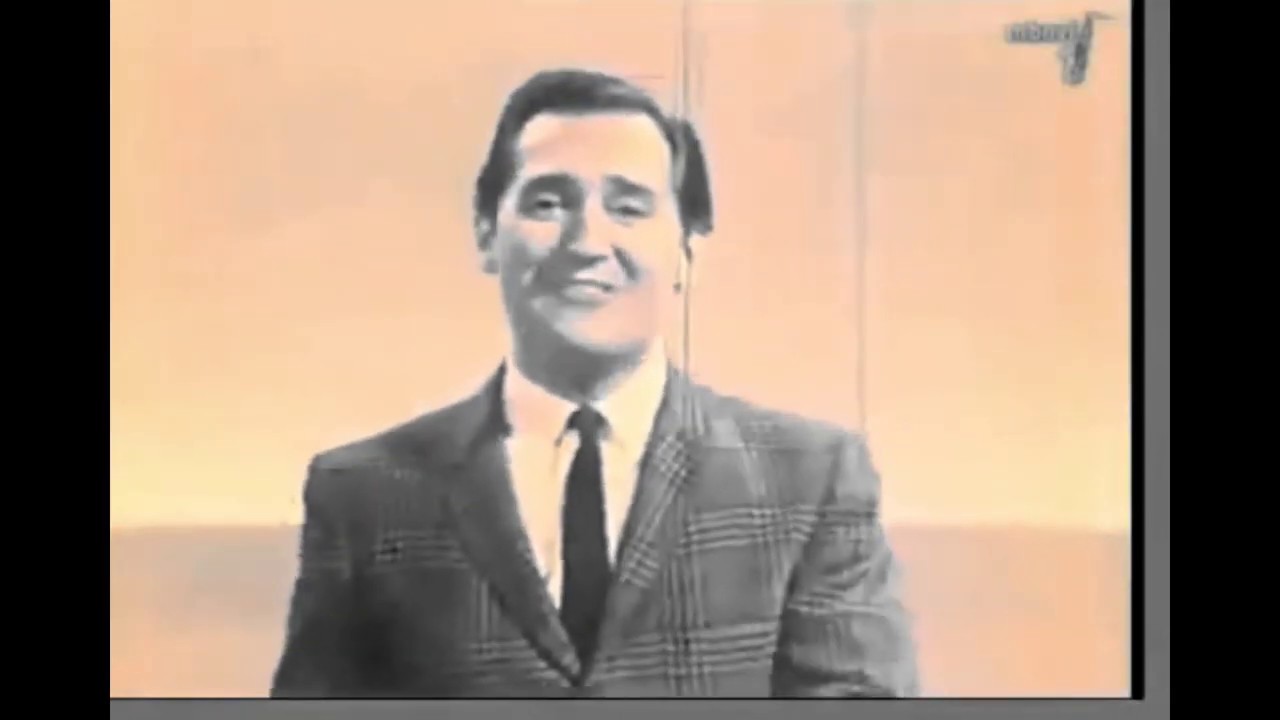
This Cinebox or Scopitone clip — one of those early coin-operated film jukeboxes that predated music television by two decades — captures Sedaka at the precise moment of that first peak, young and exuberant, performing a song he had fought to finish and that nearly everyone around him had dismissed. It is, in any catalog, a cornerstone record: the kind of song that sounds like it always existed, even though its most iconic element was a happy accident nobody wanted to fix. Sedaka himself said it best when he described the scat opening: “I liked it so much, I just kept it in.” Sometimes the improvised mistake is the magic.
SONG INFORMATION
Related videos
 Watch LaterAdded
03:27
Watch LaterAdded
03:27  Watch LaterAdded
02:47
Watch LaterAdded
02:47  Watch LaterAdded
03:24
Watch LaterAdded
03:24