



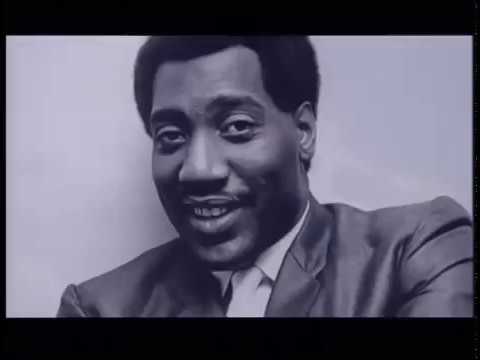





Otis Redding – (Sittin On) The Dock Of The Bay
It is the most famous whistling in recorded music, and nobody can say with certainty who is doing it.
Everyone knows the whistle. It runs across the fade of the biggest soul record ever made, it has been imitated in a thousand films and adverts, and the standard account is that Otis Redding whistled because the last verse wasn’t written yet and he meant to come back and finish it. That account is close to what happened without being quite the same thing, and the documentary record is stranger than the story: the whistling was not planned, nobody decided in advance to keep it, and the reference works are not able to state with confidence whose lips it came from.
Keep watching: Michael Bolton – How Am I Supposed to Live Without You · explore more soul →
The song started in August 1967, on a rented houseboat at Waldo Point in Sausalito. Redding had come off the Monterey Pop Festival that June, where a mostly white rock audience had discovered him in a single evening, and he was recovering from surgery on his throat. Bill Graham arranged the stay. He sat there watching the water and the ships, wrote the first verse under the working title “Dock of the Bay,” and listened to Sgt. Pepper’s Lonely Hearts Club Band while he did it. He told his wife afterwards that he had wanted to be a little different this time and to change his style, which is a modest way of describing a man with twenty-one R&B chart entries deciding to abandon the thing that made him.
He carried it back to Memphis in November. Steve Cropper’s account of what happened next is that Redding rang the Stax studio from the airport rather than checking into a hotel first, which he had never done, saying he had a hit. They cut it on November 22 and Redding returned on December 7 for a second pass, Cropper on acoustic and electric guitar. What they got is nothing like the rest of his catalog: no gospel shout, no horn charge, a vocal held almost to a murmur. Not everyone at Stax was pleased. There was concern in the building that the record was too pop for an Otis Redding release, someone floated bringing in the Staple Singers to put gospel voices behind it, and Jim Stewart, who ran the label, thought it strayed too far from what Redding was for.
What the whistle actually is
Redding regarded the song as unfinished. He intended to record a final version and never got the chance, because three days after that second session his chartered plane came down into Lake Monona, near Madison, Wisconsin, on December 10, 1967. He was 26. Four members of the Bar-Kays died with him; the trumpeter Ben Cauley survived, and the bassist James Alexander lived because there had been no room for him on board.
What survives on the master is a fade that Redding had not planned and had not approved. Cropper and the engineer Ronnie Capone heard it and decided it stayed. Beyond that, the sources thin out — the standard reference accounts do not identify the whistler with confidence, and the tidy version everyone repeats, in which a man whistles a placeholder for words he will never write, is a reconstruction laid over a gap in the paperwork. Cropper went back into the studio after the funeral and finished the mix, adding the seagulls and the surf from a sound-effects record that had been bought for jingle work. Volt released it on January 8, 1968, with “Sweet Lorene” on the flip.
It entered the Hot 100 on January 27 at No. 67 and was inside the top 30 within a fortnight. It held No. 1 for four weeks across March and early April 1968, topping the R&B chart for three of them, and reached No. 3 in Britain — the first posthumous No. 1 single in American chart history. It won Grammy Awards for Best R&B Vocal Performance, Male, and Best R&B Song. It was the first record Redding ever sold a million of, and until it arrived his best showing on the pop chart had been No. 25 with “Try a Little Tenderness.” He never performed it in front of an audience. Michael Bolton took it to No. 11 in 1987 and had to hire someone to dub the whistling, because he could not do it.
So the record that made Otis Redding a pop star is the one he was least sure about, on which the label’s founder thought he had lost his way, containing a passage he intended to erase. Everything deliberate about his career — the volume, the sweat, the gospel push — is absent from it. What is left is a man sitting still, and a sound at the end that nobody wrote, nobody planned and nobody can fully account for, which is the part the whole world remembers.
SONG INFORMATION
Related videos
 Watch LaterAdded
03:04
Watch LaterAdded
03:04  Watch LaterAdded
04:06
Watch LaterAdded
04:06  Watch LaterAdded
03:03
Watch LaterAdded
03:03