




Olivia Newton-John – Magic
The Film Bombed So Hard It Inspired The Razzies, But The Song Hit Number One
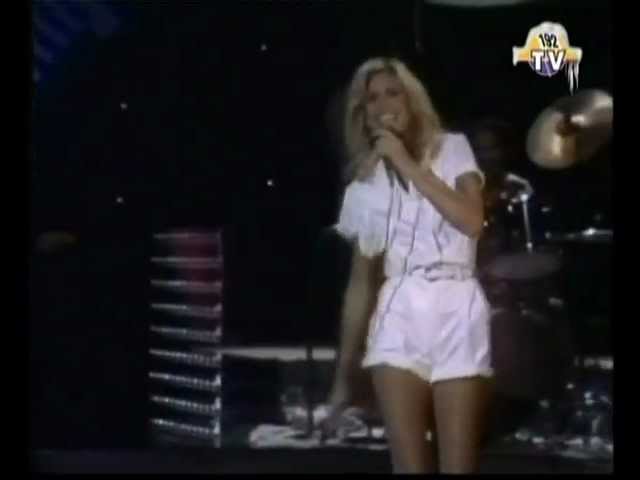
Olivia Newton-John released “Magic” in May 1980 as the lead single from the Xanadu soundtrack—a film that would bomb so spectacularly it helped inspire the creation of the Golden Raspberry Awards. The song topped the Billboard Hot 100 for four weeks starting August 2, 1980, and spent five weeks at number one on the Adult Contemporary chart. In Canada, it held the top spot for two weeks on both the pop and AC charts. Billboard ranked it the third most popular single of 1980, behind only Blondie’s “Call Me” and Pink Floyd’s “Another Brick in the Wall, Part II.” The film’s tagline promised “A Fantasy. A Musical. A Place Where Dreams Come True.” What audiences got was Gene Kelly on rollerskates and Olivia Newton-John as a Greek muse inspiring a struggling artist to open a roller disco nightclub.
The single moved over a million copies in the US alone and charted across the globe—number one in Canada, number four in Australia, number 13 in the Netherlands, number five in South Africa, and number four in New Zealand. In the UK, it peaked at a surprisingly modest number 32. Meanwhile, the Xanadu soundtrack became a commercial juggernaut despite the film’s failure, reaching number four on the Billboard 200 and earning double-platinum certification. Five singles from the album charted in the top 40, with ELO’s “I’m Alive” also selling a million copies. Newton-John had the unique distinction of topping charts worldwide with two different singles simultaneously—“Magic” in the US and the title track “Xanadu” (a duet with ELO) in many other territories.
John Farrar, Newton-John’s longtime producer and collaborator, wrote the song specifically for the film after reading the script. He wanted to capture themes of destiny, faith, and believing in yourself—creating what he called an ethereal sound that perfectly matched Newton-John’s airy vocals. The lyrics dealt with an inner guide encouraging you to follow your dreams: “You have to believe we are magic / Nothing can stand in our way.” Farrar deliberately crafted a pop-disco hybrid that incorporated synthesizers and a lush production without fully committing to either style. Shortly before his death in December 1980, John Lennon told Newsweek he enjoyed “Magic” and ELO’s “All Over the World” from the soundtrack—high praise from a Beatle who was notoriously selective about contemporary pop music.
Recording took place in 1979-1980 at various Los Angeles studios for both the soundtrack and the film itself. Farrar produced all of Newton-John’s tracks, while Jeff Lynne handled ELO’s contributions. The Xanadu soundtrack was split—Newton-John’s songs on side one, ELO’s on side two, with the title track featuring both as a grand finale. In the film, “Magic” doesn’t even appear as a production number—it plays in the background as Michael Beck walks into an abandoned nightclub and finds Newton-John there, acting like what one critic called “a manic pixie dream rollergirl.” The song was the soundtrack’s opener and became the album’s anchor despite being, according to some critics, the least interesting track musically. But what it lacked in complexity it made up for in accessibility—warm, hopeful, and endlessly radio-friendly.
Xanadu opened August 8, 1980, and immediately crashed. The $20 million production grossed only $23 million domestically. Critics savaged it—one review’s headline read “In a word, Xana-don’t.” Roger Ebert called it “a mushy and limp musical fantasy.” The film’s failure was so spectacular that it helped inspire publicist John Wilson to create the Golden Raspberry Awards to honor Hollywood’s worst. At the first-ever Razzies ceremony, director Robert Greenwald beat out Stanley Kubrick (nominated for The Shining!) to win Worst Director. Gene Kelly, in what would be his final film role before retiring from acting, diplomatically said only: “The concept was marvelous, but it just didn’t come off.” The movie effectively killed Newton-John’s chances at movie stardom after Grease. Michael Beck later joked that The Warriors launched his career, but Xanadu nearly ended it.
The song has been covered by countless artists and appeared in Macy’s “Find Your Magic” advertising campaign. Newton-John’s daughter Chloe Lattanzi recorded a duet version with her mother in 2016 called “You Have to Believe,” heavily sampling the original. In 2007, Xanadu became a successful Broadway musical that embraced the film’s camp sensibility and ran for over 500 performances. The show earned four Tony nominations and introduced the story to a new generation who understood it as intentional kitsch. Meaghan Jette Martin covered the song for the Disney Channel’s Wizards of Waverly Place: The Movie. Glee mashed it up with Josh Groban’s “You Raise Me Up” in their first-season finale, with Newton-John herself appearing as a judge.
For a song that soundtracked one of cinema’s most notorious flops, “Magic” achieved something remarkable—it outlasted, outearned, and ultimately outshone the movie it was written for. The Xanadu film is now a cult classic, the kind of thing shown at midnight screenings where audiences revel in its earnest absurdity. But the song never needed reconsideration or ironic distance. It was always magic, from the first day it topped the charts. As one Razzie co-founder later admitted: “The key to Xanadu is, it was enjoyable in a way that was not intended. It was a failure as a film but not necessarily as entertainment.” The same could never be said of the song—it succeeded exactly as intended, and became Newton-John’s biggest hit until “Physical” ruled the Hot 100 for ten weeks the following year.
SONG INFORMATION
Related videos
 Watch LaterAdded
04:05
Watch LaterAdded
04:05  Watch LaterAdded
04:48
Watch LaterAdded
04:48  Watch LaterAdded
05:28
Watch LaterAdded
05:28