






The Marshall Tucker Band – Can’t You See
The Marshall Tucker Band’s lead singer refused to sing Can’t You See, so the man who wrote it carried it for a decade
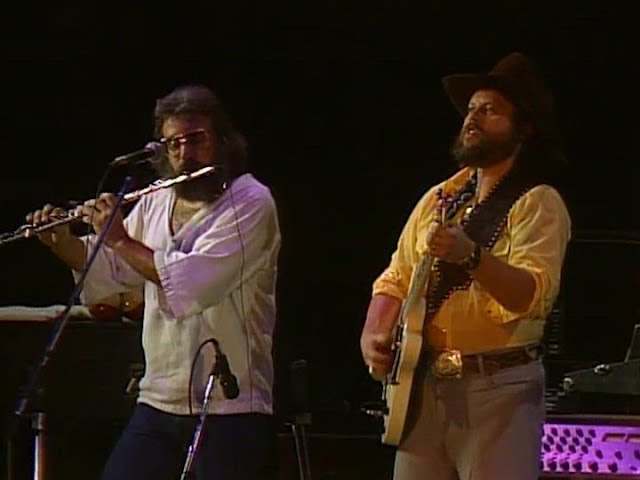
Doug Gray sang lead on almost every Marshall Tucker Band song, and when Toy Caldwell brought a new one to rehearsal in Spartanburg, South Carolina, Gray listened and handed it straight back. He told Caldwell he couldn’t sing it; this one was Toy’s to sing. So the band’s best-known record is sung by its guitarist and songwriter, in a voice nobody had planned to put up front. Eight years later, at New Jersey’s Garden State Arts Center, Caldwell was still singing “Can’t You See,” with a bassist beside him who had played in a band with him before the Marshall Tucker Band existed.
Keep watching: The Marshall Tucker Band – Heard It in a Love Song · explore more →
Caldwell wrote every track on the band’s 1973 debut, The Marshall Tucker Band, which Capricorn Records, the Allman Brothers’ label, released with Paul Hornsby producing. “Can’t You See” was its first single, and it opens unlike most Southern rock of the day: a picked electric guitar and Jerry Eubanks’s flute, which returns to close the song. The lyric belongs to a man so wrecked by a woman that all he can think of is getting as far away as possible. Billboard’s chart stopped it at No.108, just short of the Hot 100, but the album climbed to No.29 and went gold by 1975.
The song kept coming back. A version recorded live in Milwaukee on July 31, 1974, closed the 1975 album Searchin’ for a Rainbow, and when Capricorn reissued the single in 1977, the Hot 100 finally took it, peaking at No.75 that September. Other singers heard what it could carry. Hank Williams Jr. cut it in 1975, Waylon Jennings took it to No.4 on the country chart in 1976 and No.1 on Canada’s RPM country chart, and the Zac Brown Band recorded it with Kid Rock in 2010. Gray has said he owns roughly forty versions by other artists.
Holmdel, 1981
On April 22, 1980, just after the band finished Tenth, Tommy Caldwell suffered massive head injuries in a car crash and died six days later. Toy’s younger brother was the band’s bassist and co-founder, and the one who had found the key ring stamped “Marshall Tucker” in their rehearsal space and given the group its name. Another Caldwell brother, Tim, had died in similar circumstances. To replace Tommy, the band turned to Franklin Wilkie, who had played with Toy, Gray and Eubanks in the Toy Factory, the group that came before the Marshall Tucker Band. Their next album was titled Dedicated, and its closing song, “Ride in Peace,” carries a dedication to Tim and Tommy Caldwell and all lost loved ones.
In 1981 the band played the Garden State Arts Center in Holmdel, New Jersey, and filmed the show for an MTV broadcast. The lineup on stage was the original Marshall Tucker Band in every seat but one: Gray, Toy Caldwell, George McCorkle on rhythm guitar, Eubanks on flute and saxophone, Paul Riddle on drums, and Wilkie on bass. The concert as released runs fifteen songs, five of them from Dedicated, with “Can’t You See” near the end. Shout! Factory issued it on DVD in 2004 as Live From the Garden State 1981, alongside a documentary called Which One Is Marshall Tucker?
Caldwell, Riddle and McCorkle left the band in 1983. Toy Caldwell died on February 25, 1993, and Gray still leads the Marshall Tucker Band. “Can’t You See” became Toy’s song because the band’s lead singer said so on the first day, and this performance shows what that decision protected. With the band a year past its worst loss, and a friend from before the beginning holding down the bass, the song still had the one voice it was written for.
SONG INFORMATION
Enjoyed this one? New forgotten gems every day — tap Music Videos Club below to visit and follow us on Facebook: