




![The Score – Revolution: Lyrics [Assassins Creed: Unity]](https://musicvideosclub.com/wp-content/uploads/2025/10/the-score-revolution-lyrics-assa-360x203.jpg)









![Lady Antebellum – Silent Night [4K]](https://musicvideosclub.com/wp-content/uploads/2025/12/lady-antebellum-silent-night-4k-360x203.jpg)



![Sister Sledge – Hes the Greatest Dancer (Official Music Video) [4K]](https://musicvideosclub.com/wp-content/uploads/2025/09/sister-sledge-hes-the-greatest-d-360x203.jpg)






![Eagles – In The City (Official Video) [HD]](https://musicvideosclub.com/wp-content/uploads/2025/12/eagles-in-the-city-official-vide-360x203.jpg)



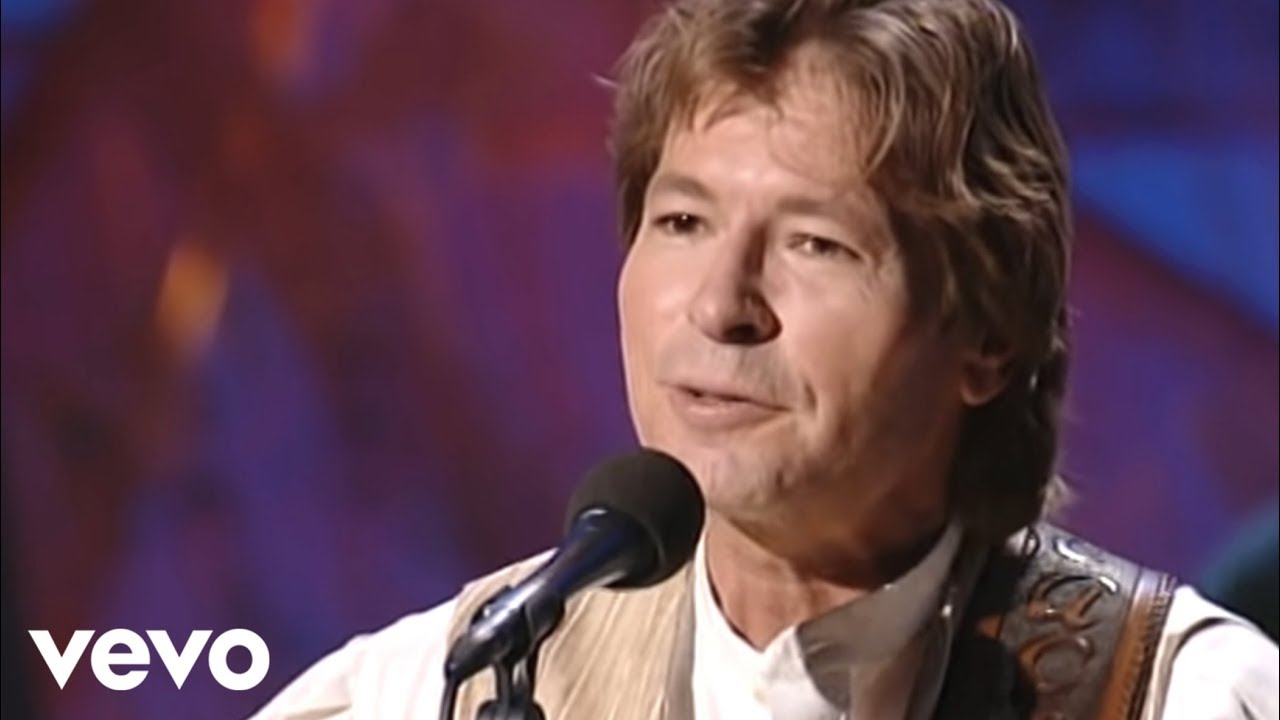
John Denver – Take Me Home, Country Roads
Written On A Maryland Road For Johnny Cash, Stolen By Denver At Midnight
Released on April 12, 1971, “Take Me Home, Country Roads” climbed to number two on the Billboard Hot 100 on August 28, blocked from the top spot by The Bee Gees’ “How Can You Mend a Broken Heart.” The song spent 17 weeks on the chart and reached number three on the Adult Contemporary chart, though it surprisingly peaked at only number 50 on the Hot Country Songs chart despite becoming synonymous with American country music. It sold over 1.8 million digital copies in the United States alone and was inducted into the Grammy Hall of Fame in 1998. In 2014, West Virginia officially adopted it as one of four state songs, cementing its status as a cultural touchstone. What nobody at The Cellar Door in Georgetown knew on December 30, 1970, when Denver debuted the song with lyrics taped to the microphone stand, was that the country roads weren’t in West Virginia at all—they were on Clopper Road in Montgomery County, Maryland, where songwriters Bill Danoff and Taffy Nivert had conceived it while driving to a family reunion, and none of the three writers had ever set foot in West Virginia.
While “Take Me Home, Country Roads” became Denver’s signature song and launched him to superstardom, its peak at number two made it his highest-charting single until “Sunshine on My Shoulders” and “Annie’s Song” both reached number one in 1974. The song entered the Hot 100 at number 99 on April 10, 1971, and climbed slowly as Denver was virtually unknown outside folk circles. His biggest success to that point had been writing “Leaving on a Jet Plane,” which he’d performed with The Chad Mitchell Trio but became a hit for Peter, Paul and Mary in 1969. Denver pushed RCA Records to keep promoting “Take Me Home, Country Roads” relentlessly, and their persistence paid off when it became a crossover phenomenon that summer. The song has been covered by over 100 artists including Olivia Newton-John, Toots and the Maytals, Ray Charles, Hermes House Band, and Me First and the Gimme Gimmes, proving its appeal across genres from pop to reggae to punk.
Bill Danoff and Taffy Nivert, a married folk duo performing as Fat City, started writing the song in late 1969 while driving along Clopper Road in Maryland’s Montgomery County. Nivert was behind the wheel heading to her family reunion in Gaithersburg when Danoff, playing guitar in the passenger seat, started thinking about country roads. He later explained to NPR that he’d grown up in western New England listening to the powerful AM station WWVA out of Wheeling, West Virginia, which felt exotic and distant, like Europe might as well have been. A friend had sent him postcards from West Virginia, and those images combined with memories of small roads from his childhood sparked the opening line. They worked on the song for about a month, intending to sell it to Johnny Cash. The original setting was Massachusetts, where Danoff grew up, but mass-a-chu-setts had too many awkward syllables. West Virginia fit perfectly despite none of them having visited. The Blue Ridge Mountains mentioned in the lyrics are primarily in Virginia, not West Virginia, and the Shenandoah River only touches West Virginia’s easternmost tip, making the geography wildly inaccurate but emotionally resonant.
On the evening of December 29, 1970, Denver performed a post-Christmas reopening show at The Cellar Door nightclub in Georgetown, Washington, D.C. Danoff and Nivert attended, and afterward Denver invited them back to their basement apartment for an impromptu jam session. Denver had broken his thumb and couldn’t play guitar, so he asked what they’d been working on. When they played what they had of “Country Roads,” Denver shouted that it was a hit and demanded to know if they’d recorded it. When Danoff said no, they didn’t have a record deal, Denver announced he had to have it for his next album. The three stayed up all night finishing the song, writing the missing bridge and polishing lyrics. As Denver later wrote in his autobiography, somewhere between Christmas and New Year’s Eve in the wee hours of the morning in their Washington apartment, they completed what would become his first number one record. The next evening, December 30, Denver performed at The Cellar Door again and called Danoff and Nivert onstage to help debut the song with lyrics scrawled on paper taped to the mic stand. The audience gave them a five-minute standing ovation. Danoff recalled the walls were vibrating and he thought the club would implode.
Recording sessions took place in early 1971 for Denver’s third studio album Poems, Prayers & Promises, released on April 6 by RCA Records. Producer Milton Okun, who’d worked with Peter, Paul and Mary, oversaw the sessions that featured Denver on vocals and guitar, with backing musicians including members of Fat City—Danoff and Nivert sang harmonies and appeared on several album tracks including “Gospel Changes,” “Around and Around,” and “Wooden Indian.” The arrangement was deliberately simple, built around Denver’s acoustic guitar, gentle bass, understated drums, and the harmonies that gave the chorus its soaring quality. The production emphasized the song’s folk roots while adding just enough polish for pop radio. Denver’s vocal delivery captured something sincere and yearning, his voice cracking slightly on certain phrases in a way that made the longing palpable. The recording took minimal takes because the three writers had performed it so many times by then they could execute it perfectly. Denver insisted on keeping the intimate feel they’d captured at The Cellar Door rather than drowning it in overproduction.
Poems, Prayers & Promises became Denver’s commercial breakthrough, reaching number 15 on the Billboard 200 and eventually earning gold certification. The album featured ten tracks showcasing Denver’s gift for accessible folk-pop with environmental and spiritual themes. Beyond “Take Me Home, Country Roads,” highlights included “Sunshine on My Shoulders,” which wouldn’t become a single until 1973 but eventually reached number one, “My Sweet Lady,” “Wooden Indian,” and “Gospel Changes.” The track “Around and Around” took on haunting resonance after Denver’s 1997 death in a plane crash, with lyrics about life coming around to an end and everything starting over again. Critics praised the album’s sincerity and craftsmanship, though some dismissed Denver as overly sentimental. The album established the template Denver would follow throughout the 1970s—earnest folk-pop celebrating nature, love, and simpler times, delivered with technical precision and undeniable melodic hooks.
The song became embedded in American culture in ways nobody anticipated. West Virginia University adopted it as an unofficial fight song, playing it during pregame shows and after every home football victory, creating one of college sports’ great traditions. Students and alumni sing it with arms linked, swaying back and forth in a ritual that transcends mere fandom. The tradition started organically in the early 1970s and became so central to West Virginia identity that when the state legislature debated official state songs in 2014, “Take Me Home, Country Roads” was an obvious choice alongside “West Virginia, My Home Sweet Home,” “This Is My West Virginia,” and “The West Virginia Hills.” The song appears in countless films and television shows including Logan Lucky, Kingsman: The Golden Circle, Alien: Covenant, Glass Onion, The Office, The Machine, and Dark Waters. Video game players know it as a recurring motif in the Fallout series, particularly Fallout 76, which is set in post-apocalyptic West Virginia.
In 1978, Johnny Cash and Denver finally performed the song together during Denver’s TV special Thank God I’m a Country Boy, marking the only collaboration between the two artists. Cash’s motivation for participating was partly because “Take Me Home, Country Roads” had originally been intended for him before Denver claimed it. The duet showcased both artists’ strengths—Denver’s earnest delivery paired with Cash’s gravitas created a powerful moment that validated the song’s country credentials. Danoff and Nivert later formed Starland Vocal Band, scoring a massive hit in 1976 with “Afternoon Delight,” which won two Grammy Awards including Best Arrangement for Voices. They never regretted giving Denver “Country Roads,” as it provided steady royalty income for decades. Nivert told interviewers they were struggling musicians at the time, and while they could have kept the song, Denver’s success meant far more exposure and financial reward than they could have achieved alone.
John Denver died on October 12, 1997, when his experimental amateur-built Rutan Long-EZ aircraft crashed into Monterey Bay near Pacific Grove, California. He was 53 years old. The National Transportation Safety Board determined the crash resulted from Denver’s inability to reach a fuel selector valve handle while attempting to switch fuel tanks, causing him to lose control. Denver had scored 13 Top 40 hits throughout the 1970s and sold over 33 million albums in the United States alone, making him one of the decade’s biggest-selling artists. His environmental activism, humanitarian work, and wholesome image made him a cultural icon who transcended music. As music historians have noted, Denver’s genius was making complex emotions feel simple, distilling universal longing into three-minute folk-pop songs that millions could sing along to without feeling embarrassed. “Take Me Home, Country Roads” remains his most enduring composition, proof that sometimes the best songs come from stolen inspiration, geographical inaccuracy, and all-night writing sessions fueled by creative desperation and the certainty you’ve stumbled onto something magical.
SONG INFORMATION
Chart Performance: No. 2 in US (1 week), No. 3 on Billboard Adult Contemporary, No. 50 on Hot Country Songs, No. 3 in Canada, 17 weeks on Billboard Hot 100; 1.8 million digital sales in US; Grammy Hall of Fame (1998)
Related videos
 Watch LaterAdded
06:00
Watch LaterAdded
06:00 ![Big Star – Thirteen [Alternate Mix] (Official Music Video)](https://musicvideosclub.com/wp-content/uploads/2024/12/big-star-thirteen-alternate-mix-360x203.jpg) Watch LaterAdded
02:39
Watch LaterAdded
02:39  Watch LaterAdded
03:34
Watch LaterAdded
03:34