The Man Who Landed A Helicopter On Cash’s Lawn To Deliver A Demo
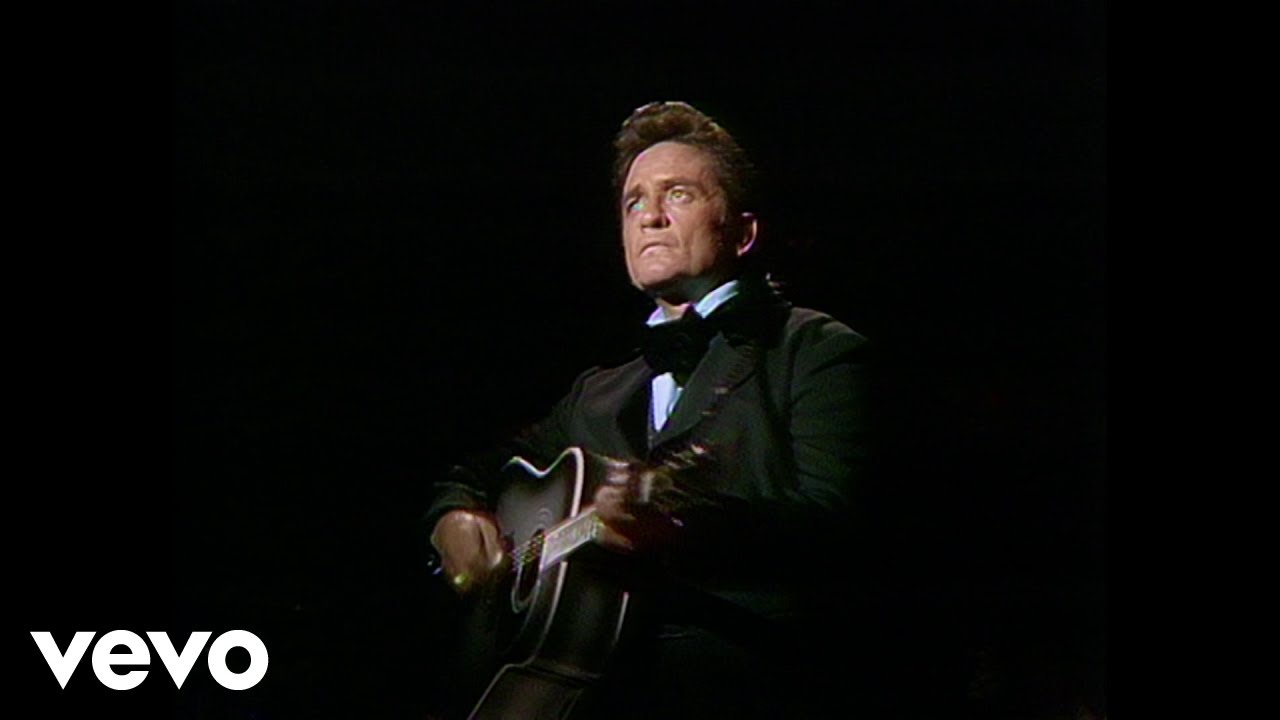
What you’re watching on this September 23, 1970 broadcast of The Best of the Johnny Cash TV Show is the performance of a song that had already made country music history — and the story of how it got there is one of Nashville’s all-time great tales. By the time this footage was taped at the Ryman Auditorium, “Sunday Mornin’ Comin’ Down” had already hit number one on the Billboard Hot Country Singles chart on October 10, 1970, and won the CMA Award for Song of the Year. Cash introduced it to his nationwide television audience with five words: “Don’t forget that name — Kristofferson.”
The single was released on July 29, 1970, peaked at number one for two weeks, and gave Kris Kristofferson his first number one as a songwriter. It was a career-altering moment for a man who had been living in a run-down Nashville tenement on a shoestring budget — estranged from his family, turned down by his parents, and sweeping floors at Columbia Records as a janitor. “It was the song that allowed me to quit working for a living,” Kristofferson said years later.
The story of how Cash heard the song has two versions — both brilliant, only one verifiably true. Cash’s version: Kristofferson landed a National Guard helicopter on the lawn of his Tennessee home above Old Hickory Lake, stepped out with a tape in one hand and a beer in the other, pressed it into Cash’s palm, grinned, and took off again. Kristofferson’s version: he doesn’t think Cash was even home. “To be honest, I don’t think he was there,” Kristofferson told Uncut. “He had a very creative memory — but I would never dispute his version because he was so responsible for any success I had.” Whatever actually happened, the tape got through. Cash heard it and immediately claimed it as his own — according to legend, he liked the songs on Kristofferson’s demos so much he’d been secretly keeping them to himself.
None of this happened in a vacuum. Kristofferson was an Oxford graduate, a Rhodes Scholar, a former Army captain, and a trained helicopter pilot who had turned down a professorship at West Point to sweep floors near the artists he wanted to write for. He watched Bob Dylan record Blonde on Blonde through the studio glass and never dared say hello. He had already tried to reach Cash by befriending June Carter, who would smuggle tapes home in her purse — and Cash would listen in bed and throw them out the bedroom window into the lake below. The helicopter was a last resort. It worked.
The television performance itself carried its own drama. Before Cash performed the song on his weekly CBS show on February 25, 1970, network censors demanded he change the line “Wishing, Lord, that I was stoned” to “Wishing, Lord, that I was home.” Cash rehearsed the substitute. Then the cameras rolled — and he sang it exactly as Kristofferson had written it, landing hard on the word “stoned” with barely concealed defiance. The audience erupted. The censors, in the end, said nothing.
Ray Stevens had recorded the song first in 1969, giving Kristofferson his first ever properly produced cut. “I had to leave the publishing house and I just sat on the steps and wept,” Kristofferson recalled, “because it was such a beautiful thing.” But it was Cash’s version — raw, lived-in, and heavy with personal weight — that made it permanent. Cash soon invited Kristofferson to perform with him at the Newport Folk Festival; the two men remained close friends for the rest of their lives, later joined as part of The Highwaymen alongside Willie Nelson and Waylon Jennings.
Watch Cash perform it here in September 1970, just weeks after it hit the top, and you can hear why it hit so hard — a voice carrying real damage, singing about loneliness so specific it feels universal. Kristofferson once said the song opened doors that had been closed his whole life. Cash opened most of them. “The cleanest dirty shirt” is now one of the most quoted lines in American music — borrowed everywhere from country radio to Wall Street. That’s what happens when a great song finds the right voice.
SONG INFORMATION
Artist: Johnny Cash
Song: “Sunday Mornin’ Comin’ Down”
Album:The Johnny Cash Show
Released: July 29, 1970
Recorded: February 25, 1970 (live), Ryman Auditorium, Nashville, Tennessee
Studio: Ryman Auditorium, Nashville, Tennessee
Label: Columbia Records
Songwriter: Kris Kristofferson
Producer: Bob Johnston
Chart Performance: No.1 US Billboard Hot Country Singles, CMA Song of the Year 1970