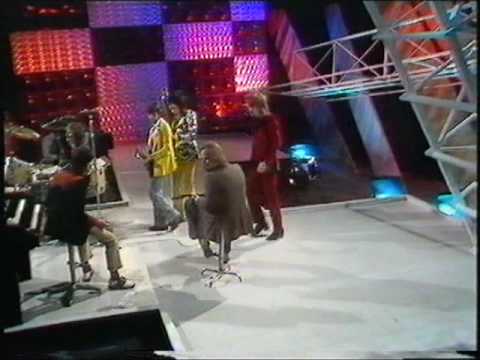
Maggie May was released in July 1971 as the B-side to “Reason to Believe,” from Rod Stewart’s album Every Picture Tells a Story. Radio DJs soon flipped the single, and “Maggie May” became the dominant track, propelling Stewart to international fame. By early October, it reached No. 1 in both the U.K. and U.S., marking his first solo chart-topper and defining his blend of folk-rock storytelling and raspy vocal charm. The accompanying Top of the Pops performance, filmed the week the record rose to No. 2 on the U.K. charts, captures Stewart and The Faces at a moment of ascendance—confident, unvarnished, and unmistakably British.
Co-written with guitarist Martin Quittenton, “Maggie May” tells of a young man’s affair with an older woman, inspired by Stewart’s own teenage experience. The lyrics balance remorse and affection, blending youthful uncertainty with self-awareness. Musically, it’s an acoustic-driven song shaped by mandolin and rhythm guitar, supported by restrained percussion. The arrangement builds gradually, its looseness giving it a conversational quality that fits the narrative voice. Ray Jackson’s mandolin outro became one of the song’s most recognizable moments—so much so that it effectively functions as a second hook.
Recorded quickly at Morgan Studios in London, the session emphasized feel over formality. Stewart, then balancing solo work with his role in The Faces, produced the track himself with minimal overdubbing. The interplay between acoustic instruments and his grainy vocal tone gives the recording its warmth. Its folk roots, combined with a rock rhythm section, positioned “Maggie May” at the crossroads of early-1970s British songwriting and American singer-songwriter influence.
When Stewart appeared on Top of the Pops in September 1971 to perform the song, the performance became one of the show’s most memorable. Backed by The Faces and featuring DJ John Peel miming on mandolin, the broadcast embodied the charm of live British television at the time—casual, imperfect, and completely in sync with the song’s character. Within a week of the performance, “Maggie May” climbed to the top of the charts, where it remained for five weeks.
More than fifty years later, Maggie May remains central to Stewart’s legacy. Its mix of folk introspection, rock sensibility, and autobiographical storytelling defined his solo voice and influenced generations of singer-songwriters to come.
Line-up: Rod Stewart — lead vocals, acoustic guitar, producer; Martin Quittenton — co-writer, acoustic guitar; Ray Jackson — mandolin; Ronnie Wood — guitar; Micky Waller — drums; Pete Sears — piano and organ; Danny Thompson — double bass.
10
Enjoyed this one? New forgotten gems every day — tap Music Videos Club below to visit and follow us on Facebook: