





![Starship – We Built This City (Official Music Video) [HD]](https://musicvideosclub.com/wp-content/uploads/2024/10/starship-we-built-this-city-offi-360x203.jpg)

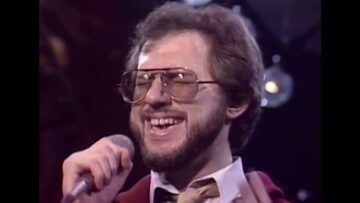
The Three Degrees – The Heaven I Need
From Kenny Gamble’s Philadelphia to a South London Warehouse — and the Production Team Nobody Had Heard of Yet
By the autumn of 1985, Stock, Aitken and Waterman were operating out of a converted warehouse on The Borough in South London — a facility built around a Hilton Sound Mitsubishi X800 32-track digital system that Pete Waterman had acquired on the conviction that the future of pop production was in the box rather than the room. The Hit Factory, as it would become known, was barely functional as a professional recording space. The ceiling leaked. The heating was unreliable. The three men running it had produced a handful of singles — for Princess, for Brilliant, for a handful of acts that had found modest chart positions — and were, in any objective assessment, an emerging rather than established production team. When The Three Degrees walked into that warehouse in 1985 to record “The Heaven I Need,” they brought with them a history that ran from Philadelphia International Records to Buckingham Palace to Giorgio Moroder’s Munich studio. They were, by any measure, the most accomplished artists Stock Aitken Waterman had yet worked with. Neither party was entirely certain the match would work. The result was one of the most underestimated singles of either career.
Released in September 1985 on Supreme Records, “The Heaven I Need” entered the UK Singles Chart on October 5 at Number 47, peaked the following week at Number 42, and spent five weeks on the chart before falling away — narrowly missing the Top 40 in a result that left the Three Degrees themselves genuinely surprised and regretful. The Netherlands, where the group had maintained a devoted following since “Dirty Ol’ Man” had gone gold there in 1974, gave the record a warmer reception — which explains the invitation to appear on TROS television on December 12, 1985, six weeks after the UK chart run had ended. In the Dutch market, the Three Degrees were not a nostalgia act being offered one more chance. They were a consistently valued group with an audience that showed up regardless of what the British charts had decided.
The song was written by Mike Stock, Matt Aitken, and Pete Waterman — their own composition rather than a commission — and its construction reflects the specific sonic moment SAW occupied in the autumn of 1985. Before the Hi-NRG assembly line that would dominate the Hit Factory’s output from 1986 onward, the production team was working with a broader palette: the R&B influence of their work with Princess and Brilliant sat alongside the soul credibility they understood the Three Degrees represented. The result is cleaner and more contemporary than the Philly strings of the 1974 recordings, built around the drum machine and synthesizer architecture that the PWL facility made accessible, but shaped with enough melodic care that the trio’s harmonics — which had been the group’s most consistent commercial asset across two decades — remained the structural centre of the arrangement. The Discogs community has consistently returned to this period of SAW production as their finest — the brief window before the formula hardened into a brand.
The lineup performing at TROS in December 1985 was the last great stable configuration of The Three Degrees: Sheila Ferguson, Valerie Holiday, and Helen Scott. Ferguson — who had been the group’s lead voice on virtually every major recording since she joined in 1966 — would leave in 1986 to focus on her family and, eventually, to pursue a solo career and television work in the UK that included the long-running ITV programme What’s Cooking. Her departure closed a chapter that had begun when a nineteen-year-old from Philadelphia had stepped into the group as a temporary replacement and stayed for twenty years. Holiday, who joined in 1967 and remains the group’s longest-serving member, was watching the chapter close in real time during these final performances. The TROS broadcast is therefore a document of an ending that nobody in the room was necessarily acknowledging as one.
The arc of the Three Degrees’ career by 1985 was one of the more remarkable in American pop history. They had recorded the Soul Train theme, “TSOP (The Sound of Philadelphia),” with MFSB in 1973 before most listeners had heard their name. “When Will I See You Again” had topped the UK chart in August 1974 — the first time an all-female group had achieved that since The Supremes in 1964 — and had sold over two million copies worldwide. Prince Charles had invited them to perform at his thirtieth birthday party at Buckingham Palace in 1978; they had been guests at his pre-wedding party to Princess Diana in 1981. Giorgio Moroder had produced four UK Top 20 hits with them between 1978 and 1980. And now they were in a leaking warehouse in Borough, working with three producers who were still finding their footing, making a single that narrowly missed the Top 40 — and performing it on Dutch television two months later for an audience that had never stopped appreciating them. The career had moved through extraordinary rooms. Not all of them needed to be extraordinary to matter.
Stock Aitken Waterman went on, of course, to produce Rick Astley, Kylie Minogue, Jason Donovan, Bananarama, Sonia, and the most commercially dominant run in British pop production history — the three years between 1987 and 1989 when they placed more singles in the UK chart than any other producer team since the 1960s. The Three Degrees’ work with them predated all of it. Waterman later described the early PWL sessions as a period when the team was still discovering what it was capable of. In those sessions, the Three Degrees were not a legacy act lending credibility to an unknown team. They were the reason the team took the job seriously. “The Heaven I Need” stalled at Number 42. The voices on it, assembled over twenty years of professional harmony singing, sound nothing like a stall.
![Sisters Are Doin’ It For Themselves [Ft. Aretha Franklin] (Official Video)](https://musicvideosclub.com/wp-content/uploads/2025/05/sisters-are-doin-it-for-themselv-360x203.jpg)