






![Eric Clapton – I Shot The Sheriff [Crossroads 2010] (Official Live Video)](https://musicvideosclub.com/wp-content/uploads/2026/09/eric-clapton-i-shot-the-sheriff-360x203.jpg)
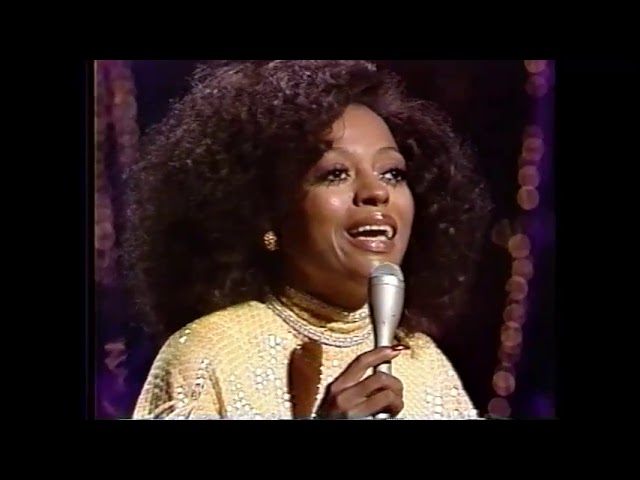
Diana Ross – Do You Know Where You’re Going To
Michael Masser and Gerry Goffin Wrote the Song for Thelma Houston in 1973. She Recorded It. Berry Gordy Shelved Her Tape. Two Years Later, When Gordy Needed a Theme Song for the Film He Was Directing, Masser Pulled the Same Song Out of His Drawer and Gave It to Diana Ross. It Reached Number One on the Billboard Hot 100 in January 1976.
Michael Masser had not written Do You Know Where You’re Going To for Diana Ross, and he had not written it for a movie. He had written it in 1973 with Gerry Goffin — Carole King’s recently estranged husband and one of the most-recorded American pop lyricists of the previous fifteen years — for Thelma Houston, the gospel-trained singer who had been signed to Motown for two years without a hit. Houston had recorded the song in 1973 in a Motown studio. The recording had been completed. Berry Gordy had then taken the tape, decided he was not going to release it as a Houston single, and shelved it. Houston had no recourse. She continued making Motown singles that did not chart for the next two years. Masser, meanwhile, had moved on to other songwriting projects — including co-writing Diana Ross’s 1973 number-three hit Touch Me in the Morning. By the summer of 1975, Berry Gordy was directing a film called Mahogany, with Diana Ross in the lead role and Billy Dee Williams and Anthony Perkins co-starring. He needed a theme song. He asked Michael Masser to write the score and the theme. Masser, who had never scored a film before and would only score one more in his entire career — Muhammad Ali’s 1977 self-titled biopic The Greatest — looked through his catalogue and offered Gordy the unreleased song he had written two years earlier for the singer Gordy had just shelved. Gordy listened. The lyrics were revised slightly to fit Ross’s character, Tracy Chambers, an aspiring fashion designer trying to make sense of a life moving in two directions at once. Diana Ross was given the song. She recorded it in Los Angeles that summer.
What Goffin had been writing about, in the original 1973 lyric, was Carole King. He confirmed the autobiographical reference years later, in Don Kirshner’s biography The Man with the Golden Ear. The song’s central question — “Do you know where you’re going to? Do you like the things that life is showing you?” — had been Goffin’s attempt, in the wake of the marriage’s dissolution and King’s commercial ascendance with Tapestry in 1971, to write what he genuinely wanted to ask her. The lyric carried inside it the unresolvable mathematics of a married songwriting partnership that had ended. King had become one of the biggest-selling solo artists in popular music. Goffin had not. The song was a question one writer was asking another writer about whether the trajectory they had each taken away from the partnership had been worth it. Diana Ross, recording the song in summer 1975 for a film about a fashion designer caught between Rome and Chicago, between Anthony Perkins and Billy Dee Williams, between glamour and what she had left behind, sang the lyric without knowing the autobiographical context. The song fit Tracy Chambers’ character because it had originally fit a different woman in a similar bind. The questions worked twice.
Hal Blaine, Leland Sklar, and the Wrecking Crew Sound
The recording was unusual for a Motown release. Masser produced. Lee Holdridge arranged and conducted the orchestra. Berry Gordy was credited as executive producer. The session musicians, however, were not Motown’s house players. The Funk Brothers — the Detroit rhythm section that had played on virtually every Motown classic of the 1960s — were not on the date. Instead, the band was largely composed of Wrecking Crew session musicians from Los Angeles, including Hal Blaine on drums and Leland Sklar on bass. The arrangement was orchestral pop in a Hollywood film-music register: sweeping strings, layered acoustic guitars, fluttering piano, swelling backing vocals. The sound owed less to Motown’s rhythm-and-blues lineage than to the kind of cinematic balladry that had made Burt Bacharach’s “Alfie” and Marilyn and Alan Bergman’s collaborations with Michel Legrand into Hollywood standards a decade earlier. The arrangement built methodically toward a final crescendo at the closing minutes of the recording, the question of the title returning across rising orchestration before the song faded out. A Miami radio DJ told a 1975 caller that Mahogany had “the longest ending of any Top 40 song in history.” That was hyperbole. The five-minute single did, however, run longer than most contemporary chart material, the orchestral closing alone running over a minute. Diana Ross’s vocal — careful, measured, enunciating every word with the deliberate precision that was characteristic of her late-period recording style — held the entire production together. Stereogum’s Tom Breihan, reviewing the song decades later, observed that Ross “lifts and dignifies” what would otherwise have been a generic mid-1970s film ballad, taking a syrupy track and turning it, almost single-handedly, into a rich reverie.
The single was released by Motown on September 24, 1975 — two weeks before the film opened theatrically on October 8. It debuted on the Billboard Hot 100 in October. It climbed steadily through the autumn, into Christmas, and into the new year. It reached number one on the Billboard Hot 100 the week of January 24, 1976. It was Diana Ross’s third solo number-one, after Ain’t No Mountain High Enough in 1970 and Touch Me in the Morning in 1973. It also topped the Billboard Easy Listening chart for three weeks and reached number five on the UK Singles Chart. It was nominated for the Best Original Song Academy Award at the 48th Academy Awards, broadcast live on March 29, 1976. The song nearly was not nominated. Academy rules at the time stipulated that nominees had to have been written specifically for the film in question — and Do You Know Where You’re Going To had been written two years before Mahogany existed. Clive Davis, by then the head of his post-Columbia label Arista, lobbied the Academy committee to bend the rule. The committee bent it. The nomination was made. Ross performed the song live at the ceremony — the only Best Original Song nominee of that year to perform her own nominated song. The Oscar went to Keith Carradine for I’m Easy from Nashville. The film Mahogany, by the time of the ceremony, had recouped its budget several times over.
The Song That Became a Standard
The Mahogany soundtrack album reached number one on the Billboard 200 album chart. The single’s Spanish-language version — ¿Sabes a Dónde Vas? — was released as part of Ross’s continued international rollout. The song became a permanent fixture in her live concert repertoire from 1975 onward and has remained one of the recordings she is most associated with through five subsequent decades of touring. It has been covered by Mariah Carey on the international editions of her 1998 compilation #1’s; by Jennifer Lopez on the international editions of her 1999 album On the 6; by Shirley Bassey, Johnny Mathis, Dinah Shore, Amii Stewart, and dozens of other vocalists across the years following the single’s release. It has been sampled in over forty hip-hop and electronic recordings. It was nominated for AFI’s 100 Years…100 Songs list in 2004. Its closing question — “Do you know where you’re going to? Do you like the things that life is showing you?” — has become one of the most-quoted song lyrics in late-twentieth-century pop, the kind of phrase that speakers, writers, and politicians have invoked across decades for the way its specific question opens onto every listener’s general one.
The song’s afterlife has also produced one of the more elegant ironies in Motown history. Two years after Berry Gordy took Do You Know Where You’re Going To from Thelma Houston and gave it to Diana Ross, the producer Hal Davis — looking for a follow-up to Ross’s 1976 hit Love Hangover — heard a Harold Melvin & the Blue Notes deep cut called Don’t Leave Me This Way. He recognised what it could become with the right vocal. Diana Ross was the obvious choice. He took the song to Thelma Houston instead. Houston’s version reached number one on the Billboard Hot 100 in April 1977 and won the first Grammy ever awarded to a disco recording. The song that Berry Gordy had given to Ross had, by then, run its full commercial cycle. The song that Davis had given to Houston was beginning hers. Two singers passed each other in opposite directions on Motown’s roster across two years, each receiving the recording the other might have had. Do You Know Where You’re Going To had been the question all along. The answer for both singers, by 1977, was: number one. Just not necessarily the song they had originally been given.