





![David Lee Roth – California Girls (Official Video) [HD]](https://musicvideosclub.com/wp-content/uploads/2026/10/david-lee-roth-california-girls-360x203.jpg)



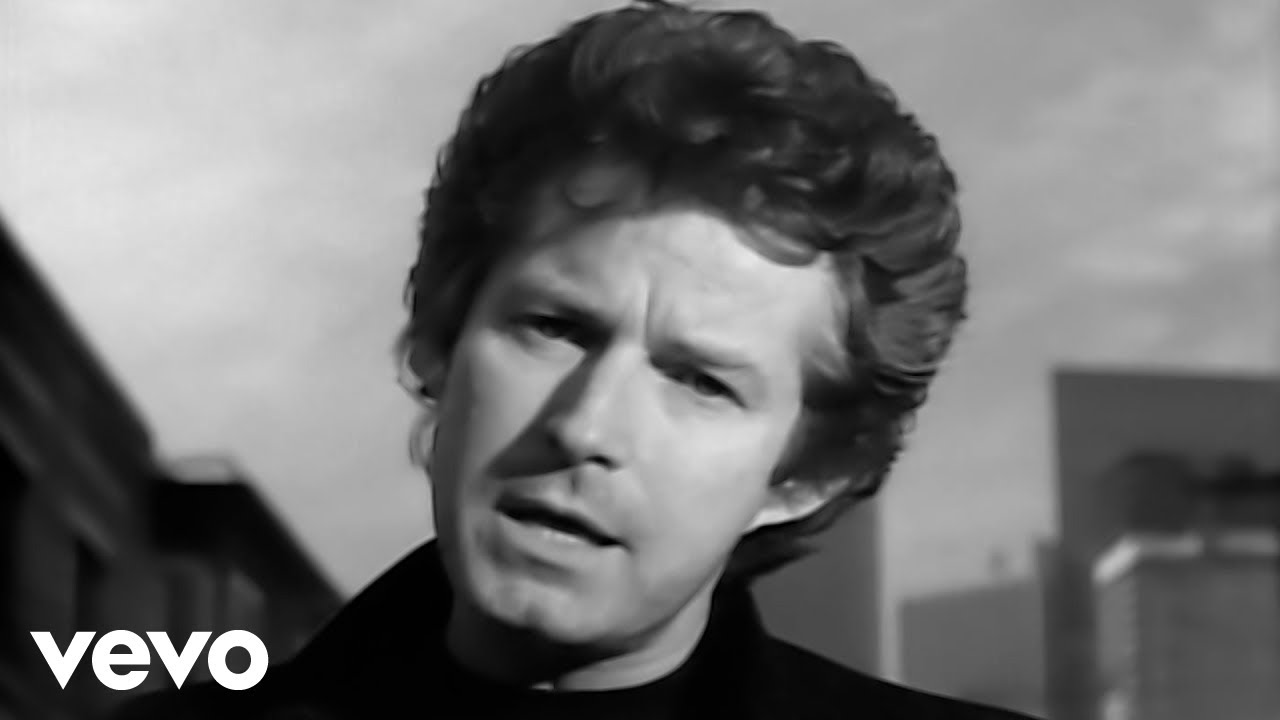
Don Henley – The Boys Of Summer
Tom Petty passed on the demo, so it went to a man who listened once, arms folded, without moving — and turned it into the definitive song about summer ending.
Don Henley sat at one end of a long table, arms folded, and listened to the cassette all the way through. He didn’t tap his foot. He didn’t nod. Mike Campbell, sitting at the other end watching him, was certain the man hated it. When the tape ran out, Henley said only, “Okay, I’ll see what I can do with that” — and Campbell left thinking the meeting had gone badly. What Henley did with it was The Boys of Summer: a No. 5 hit, a Grammy winner, one of Rolling Stone’s 500 greatest songs ever made, and the track that turned an Eagles drummer into an MTV-era solo star. The strangest part is that the music had already been rejected — by Tom Petty.
Keep watching: Scandal – Goodbye to You · more from the 80s →
Campbell, the Heartbreakers’ guitarist and Petty’s closest musical partner, had bought himself a LinnDrum machine and built the track alone at home — the hypnotic guitar figure, the chords, the whole moody architecture, no words. He played it for Petty and producer Jimmy Iovine, and both were underwhelmed; it didn’t fit the album they were making, Southern Accents. Campbell has since offered a generous defense of the pass: the demo’s chorus resolved to a minor chord, where the finished song lifts to that huge major — Petty, he says, heard an inferior version. It was Iovine who suggested the fix that changed two careers: take it to Don Henley, who was hunting material for his second solo album. Henley reworked the track into a higher key — a change that initially infuriated Campbell — and once the arrangement clicked, he said, the melody and lyrics came pouring out.
An anti-summer song for the end of summer
What Henley wrote over Campbell’s music is one of pop’s great sleights of hand: a record that sounds like summer and is actually about summer being gone. The narrator drives an empty road out of season, haunted by a woman who has moved on to younger, brighter company — the boys of the title, borrowed from Roger Kahn’s celebrated 1972 book about the Brooklyn Dodgers, repurposed as everything vibrant the narrator can no longer compete with. And then there is the song’s most famous image, the one whole essays have been written about: the narrator spotting a Grateful Dead sticker on the back of a Cadillac — an entire generation’s idealism summed up in one glimpse of countercultural youth absorbed into upholstered middle age. Released on October 26, 1984, as the lead single from Building the Perfect Beast on Geffen, it climbed to No. 5 on the Billboard Hot 100, ruled the Top Rock Tracks chart for five straight weeks, reached No. 12 in Britain, and won Henley the Grammy for Best Male Rock Vocal Performance. Petty, hearing the finished record on the radio nearly note-for-note as Campbell had demoed it, eventually admitted he regretted letting it go.
The video that remade Don Henley
The other half of the song’s immortality is three and a half minutes of black-and-white film. Director Jean-Baptiste Mondino shot the video as a French New Wave reverie — a boy drumming on a rooftop, a woman’s hands, a convertible gliding through half-remembered light — and it swept the 1985 MTV Video Music Awards, taking Video of the Year. For Henley the exposure cut two ways: in the Eagles he had been the voice hidden behind a drum kit, rarely on camera, and suddenly he was one of the most recognizable faces on MTV. The song never left the culture after that. It has been covered across genres — punk band the Ataris took their version onto the charts in 2003 — ranked No. 416 on Rolling Stone’s 500 Greatest Songs of All Time, and reclaimed by its author’s old band when the reunited Eagles began performing it live. Four decades on, it remains the record people reach for when the light starts changing in late August: the sound of something golden, watched from the far side of its ending — written because one legend said no, and another sat perfectly still, listening, and heard it.
SONG INFORMATION
Enjoyed this one? New forgotten gems every day — tap Music Videos Club below to visit and follow us on Facebook:
Related videos
 Watch LaterAdded
04:41
Watch LaterAdded
04:41  Watch LaterAdded
04:50
Watch LaterAdded
04:50  Watch LaterAdded
04:30
Watch LaterAdded
04:30