



![Rush – Spirit Of The Radio [Live] – 1989](https://musicvideosclub.com/wp-content/uploads/2025/08/rush-spirit-of-the-radio-live-19-360x203.jpg)


New York Dolls – Looking For A Kiss
Bob Harris Called It Mock Rock on Live Television — and the Creem Poll Named Them Both Best and Worst New Group of the Year
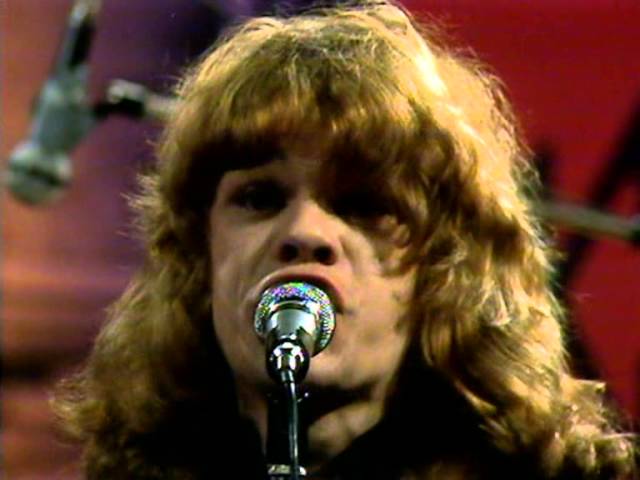
On December 4, 1973, the New York Dolls walked into Radio Bremen’s television studios in Germany with five months of commercial failure behind them and the full force of their live act intact. The debut album — recorded at the Record Plant in New York in eight days on a budget of $17,000, released on July 27 — had sold poorly. It reached only number 116 on the American Billboard 200. In the UK it failed to chart altogether. A Stereo Review critic had compared the guitar playing to the sound of lawnmowers. The Creem magazine poll had simultaneously elected them the best and worst new group of 1973. A few weeks earlier, on The Old Grey Whistle Test in London, presenter Bob Harris had called them “mock rock” on live television and compared them unfavorably to the Rolling Stones. None of this mattered in the Musikladen studio. The cameras captured “Looking for a Kiss” at somewhere close to its maximum velocity — David Johansen leaning into every syllable, Johnny Thunders and Sylvain Sylvain churning out the kind of dual-guitar noise that sounded like nothing else in 1973 and like everything that came after.
“Looking for a Kiss” was written by David Johansen and appeared as the second track on the debut album, right after “Personality Crisis.” The original Rolling Stone review singled it out as “many people’s favorite Dolls song” — a description that has never stopped being true. Johansen had come to the Dolls through the theatre world of Andy Warhol’s Factory and Charles Ludlam’s Ridiculous Theater Company, and the lyric sits in that tradition: oblique, intimate, addressed directly to a listener whose identity — lover, dealer, mirror — the song never quite commits to. The opening move, turning the Shangri-Las’ “You best believe I’m in love, L-U-V” into something more sinister through sheer delivery, established the song’s method in its first seconds. Johansen once said of the band’s writing that they were always “jumping from voice to voice” — character to narrator to listener — “all jammed up together.” “Looking for a Kiss” does this in under three minutes.
The recording on the debut had been produced by Todd Rundgren, who had been lukewarm about the band and who later said the festive atmosphere of the sessions — critics’ darlings, press everywhere, extra people socialising throughout — made it hard to concentrate. Johansen himself remembered little from the sessions beyond the lights on the control board. What Rundgren did, whatever his reservations, was place Sylvain’s guitar through the left speaker and Thunders’ through the right — a stereo separation that the Ramones, among others, would later cite as foundational. The song’s Bo Diddley rumble under Thunders’ lead figures, the descending backing vocal lines, the momentum that never quite sounds controlled because it never entirely is: all of this is preserved in the record. The live version that Musikladen captured has the same energy but more oxygen — a stage band playing at the intensity they had built across two years of New York club shows before anyone paid attention.
The Band Europe Heard Before America Did
The European tour of December 1973 preceded the Dolls in Paris on the 1st and 2nd, then at the Bataclan on the 3rd, then Bremen on the 4th, then Hamburg the following day. Europe was not entirely more receptive — Harris’s “mock rock” verdict had been delivered in London on the BBC — but the continental audiences brought a different kind of attention to a band still trying to find any audience willing to take them seriously. The Musikladen footage shows the band fully in command of the performance even as the record it promoted was quietly dying. Johansen’s stage presence drew from the full range of what he had absorbed — Mick Jagger’s physicality, the gender-fluid theatrical tradition, the outer-borough street energy of a Staten Island kid who had washed up in the Factory’s orbit. Thunders played like someone for whom technique was a secondary consideration to feeling, which is precisely why the playing lands. Sylvain held the rhythm end of the guitar parts together with the focused aggression of a man who had been building up to this since junior high school in Queens. Arthur Kane stood his ground on bass. Jerry Nolan, who had replaced original drummer Billy Murcia — who died of asphyxiation during a European tour in November 1972, just before the recording sessions — drove the whole thing forward at the tempo the song demanded.
The album’s influence took years to become legible. The Sex Pistols, the Ramones, Aerosmith, Kiss — the bands that variously claimed or were assigned the Dolls’ influence all found it in different aspects of the same record. The drag fashion informed glam metal a decade later. The amateurism that the critics cited as a flaw became, in retrospect, the document of something that could not have been captured any other way. Robert Christgau called the debut his favourite rock album, ranking it ahead of the Dolls’ own second record. The Guardian included it in their “1000 albums to hear before you die” and called it “an efficacious antidote to the excesses of prog rock.” The band that was elected worst new group of the year by the same poll that elected them best was also, as it turned out, the most influential new group of the year by a considerable margin.
The Last Survivors
The band disbanding in 1976 after two albums and a Malcolm McLaren-managed communist-chic last stand. A 2004 reunion brokered by Morrissey for his Meltdown festival in London brought Johansen, Sylvain, and Kane back together — Kane died of leukemia less than a month later. Three further albums followed in the 2000s before the band quietly folded after a 2011 tour supporting Alice Cooper. By 2025, all five original members were gone. Billy Murcia in 1972. Johnny Thunders in 1991. Jerry Nolan in 1992. Arthur Kane in 2004. Sylvain Sylvain in 2021. David Johansen, the last, died February 28, 2025, at seventy-five, of a brain tumour. The Musikladen footage from December 1973 — four minutes in a German television studio, the band at full power, five months into a career that nobody thought was going anywhere — is now the kind of document you can only fully understand in retrospect. Which is, in a way, exactly what the song always described: looking for something, knowing you can’t afford to miss it, moving before anyone else catches up.