






Dave Mason – World In Changes
He Passed Away April 19 — Peacefully, In His Favorite Chair, With His Dog at His Feet. This Farm Aid Performance From 1986 Is One of the Best Reasons to Remember Why Dave Mason Mattered.
Dave Mason died on the evening of April 19, 2026, at his home in Carson Valley, Nevada. He had cooked dinner with his wife Winifred, sat down in his favourite chair, and didn’t wake up. His maltese, Star, was at his feet. His family described it as a storybook ending — on his own terms, which was, they said, how he had lived his entire life. He was seventy-nine years old, a Rock and Roll Hall of Famer, a founding member of Traffic, a man who had played guitar at Abbey Road with George Harrison and at Electric Lady Studios with Jimi Hendrix, who had recorded session parts for the Rolling Stones and briefly played in Derek and the Dominos before Duane Allman joined, who had befriended Cass Elliot and made an album with her at the Hollywood Bowl and the Fillmore East, and who had written “Feelin’ Alright” — a song that Joe Cocker turned into a defining moment of Woodstock and that has since been covered by dozens of artists across five decades. The world in which Dave Mason existed was, as his most enduring solo song puts it, still going through changes.
“World in Changes” appeared first as a single in April 1970, then as the opening track of side two of Alone Together, Mason’s debut solo album, released in June of that year on Blue Thumb Records. The album was produced by Mason and Tommy LiPuma — who would go on to work with Miles Davis — and recorded at Sunset Sound and the Elektra Recording Studio in Los Angeles with an assembly of musicians that reads now like a directory of who was essential in American rock and soul at the turn of that decade. Leon Russell played keyboards. Jim Keltner played drums. Jim Gordon and Carl Radle, who would form half of Derek and the Dominos’ rhythm section a few months later, were present. Rita Coolidge and Claudia Linnear sang. Larry Knechtel, who had played piano on Bridge Over Troubled Water, played bass. The engineering was handled by Bruce and Doug Botnick, who had made the Doors’ records. Al Schmitt mixed. About a third of the original pressings came on marbled vinyl — swirled pink, brown, and beige — in a tri-fold gatefold sleeve designed to be used as a wall hanging. Billboard called it a masterpiece. Mason reportedly continued signing copies of the marble vinyl version for the rest of his life.
A Song Built to Last
“World in Changes” is a song about orientation in uncertain times — about loving someone in a world that won’t hold still, about still having things to learn, about continuing despite the instability of everything around you. The lyric is not complicated. Mason was a songwriter who trusted simplicity, who understood that the melody could carry emotional weight that the words didn’t need to spell out, and the verses of “World in Changes” move with the ease of something that already knows it will be sung for a long time. He wrote it during the period when he had left Traffic for what turned out to be the last time as a full member, when he had moved to Los Angeles and was still finding the shape of his solo career, and it carries the feeling of someone who has recently lost the ground he was standing on and is figuring out what the new ground feels like. By any reasonable measure, it is among the finest songs he ever wrote — and in a catalog that includes “Feelin’ Alright,” “Only You Know and I Know,” and “We Just Disagree,” that is a high bar to clear.
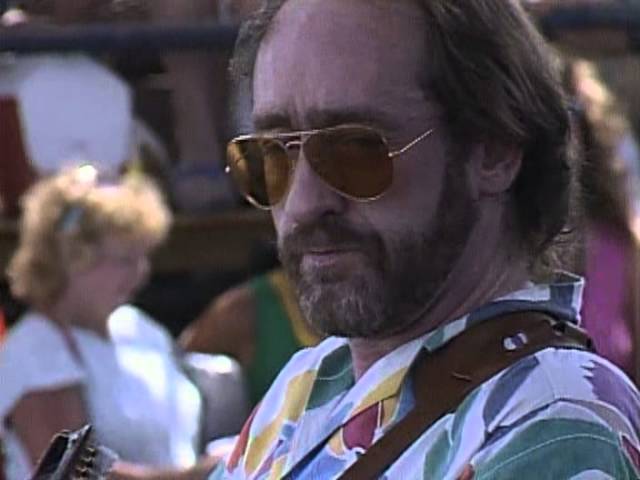
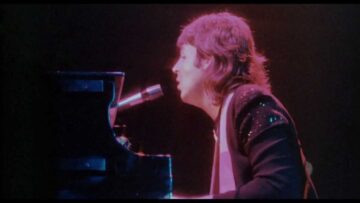
The Farm Aid II performance captured in the video took place on July 4, 1986, at the Manor Downs Racetrack in Austin, Texas. The concert — the second Farm Aid event, following the original in September 1985 — was broadcast live on VH-1 and drew performers including Alabama, Stevie Ray Vaughan, The Beach Boys, Joe Walsh, Bonnie Raitt, Emmylou Harris, John Mellencamp, and Willie Nelson, who had co-founded Farm Aid with Neil Young and Mellencamp after Bob Dylan remarked, from the stage at Live Aid, that he hoped some of the money raised might go to American farmers facing foreclosure. Farm Aid II took place as the American farm crisis was deepening, and the concert’s Fourth of July timing in Texas gave it a particular political and emotional charge. Mason’s set that afternoon carried “World in Changes” across a crowd and a context that the song, with its themes of resilience and orientation in a shifting world, was built for. The performance is unshowy and assured — a man who had been singing this song for sixteen years by that point, who knew exactly where every chord and every breath needed to land.
The Best-Kept Secret
A friend of Mason’s once described him as the best-kept secret in rock and roll. The phrase was affectionate but also carried a note of frustration — the slight bewilderment that comes from watching someone of obvious genius fail to receive the full recognition that a less discerning audience might have delivered more reliably. Mason’s career was marked throughout by this gap: he was universally admired by musicians, inducted into the Rock and Roll Hall of Fame in 2004 with the rest of Traffic, sought out as a collaborator by Paul McCartney, George Harrison, Michael Jackson, Eric Clapton, and David Crosby and Graham Nash, and yet the kind of household-name status that his songwriting warranted seemed always just slightly beyond reach. He knew it. He talked about it openly in interviews, with more curiosity than bitterness. He had diagnosed his own situation accurately: his sound was too accessible for the progressive rock crowd and too rooted for the pop mainstream, and he had spent his career existing in the space between those categories, writing songs that rewarded the people who found them.
“World in Changes” is still going through changes. The Farm Aid broadcast caught it at mid-career, sixteen years after the marble vinyl first spun in 1970, eight years before Mason’s next great solo act of writing. Dave Mason spent the last months of his life finishing a children’s book — a reimagining of his 1967 Traffic song “Hole in My Shoe,” which he had written at nineteen years old. He died in April 2026 with the morning of his life still audible in the evening of it: the same writer, the same sense that a melody could hold more than words could carry alone, the same faith that a song built simply enough would outlast the world that produced it. He was right. It already has.