Creedence Clearwater Revival – Lookin’ Out My Back Door
- LUD:
159M
When Dr. Seuss Made A Number Two Hit
Released in July 1970 as a double A-side with “Long As I Can See the Light,”“Lookin’ Out My Back Door” reached number two on the Billboard Hot 100 but hit number one on the Cash Box chart. Diana Ross kept it from the top spot with her six-minute soul symphony version of “Ain’t No Mountain High Enough.” The single sold over a million copies and earned both gold and platinum certifications. This became CCR’s fifth and final number two hit, cementing their peculiar distinction as the band with the most runner-up singles without ever reaching number one on the Hot 100.
The song spent 13 weeks on the Billboard chart and helped push the Cosmo’s Factory album to number one for nine consecutive weeks in both the US and UK. By 1970, Creedence was outselling The Beatles and had become America’s most commercially successful band despite coming from San Francisco, where trippy psychedelic rock dominated. They ignored the prevailing trends entirely and forged their own swamp rock sound that mixed rockabilly, country, and R&B. That year alone saw Motown occupy the top spot for 18 weeks, making it particularly tough competition for anyone chasing number one.
John Fogerty wrote the song for his three-year-old son Josh, drawing inspiration from reading him the Dr. Seuss book And to Think That I Saw It on Mulberry Street. In that 1937 children’s classic, a boy watches an imaginary parade of fantastic creatures pass by on a street. Fogerty relocated the magical menagerie to his back door, creating an escape from troubles back in Illinois. Josh apparently contributed the signature hook, and Fogerty later recalled knowing his son would love hearing him sing it on the radio. The whimsical imagery fooled listeners into thinking it was about drugs, with theories circulating that the flying spoon referenced cocaine and the dancing animals represented an acid trip. Fogerty always maintained the band stayed away from psychedelic drugs.
Fogerty played a Regal dobro on the track, the only time he used the instrument on a Creedence record. He’d purchased it from vintage guitar dealer George Gruhn during the band’s appearance on the Johnny Cash Show in Nashville on June 5, 1969, after meeting bluegrass master Tut Taylor. That country-tinged dobro sound, combined with the bouncing rhythm and Buck Owens namecheck in the lyrics, gave the song an unexpected Bakersfield country feel that set it apart from their harder-rocking material. The entire band recorded it at their warehouse rehearsal space in Berkeley, California, the same space drummer Doug Clifford called “the factory,” which inspired the album title when paired with his nickname, Cosmo.
The song appeared on Cosmo’s Factory, CCR’s fifth album in just two years and their commercial peak. The album was remarkably dense with hits, featuring six singles that all charted in the top five, including “Travelin’ Band,”“Up Around the Bend,” and “Run Through the Jungle.” It also included a seven-minute psychedelic jam called “Ramble Tamble” and an 11-minute cover of Marvin Gaye’s “I Heard It Through the Grapevine.” The prolific output masked growing tensions, particularly with Tom Fogerty chafing under his younger brother’s control. Tom would leave the band by the end of 1970.
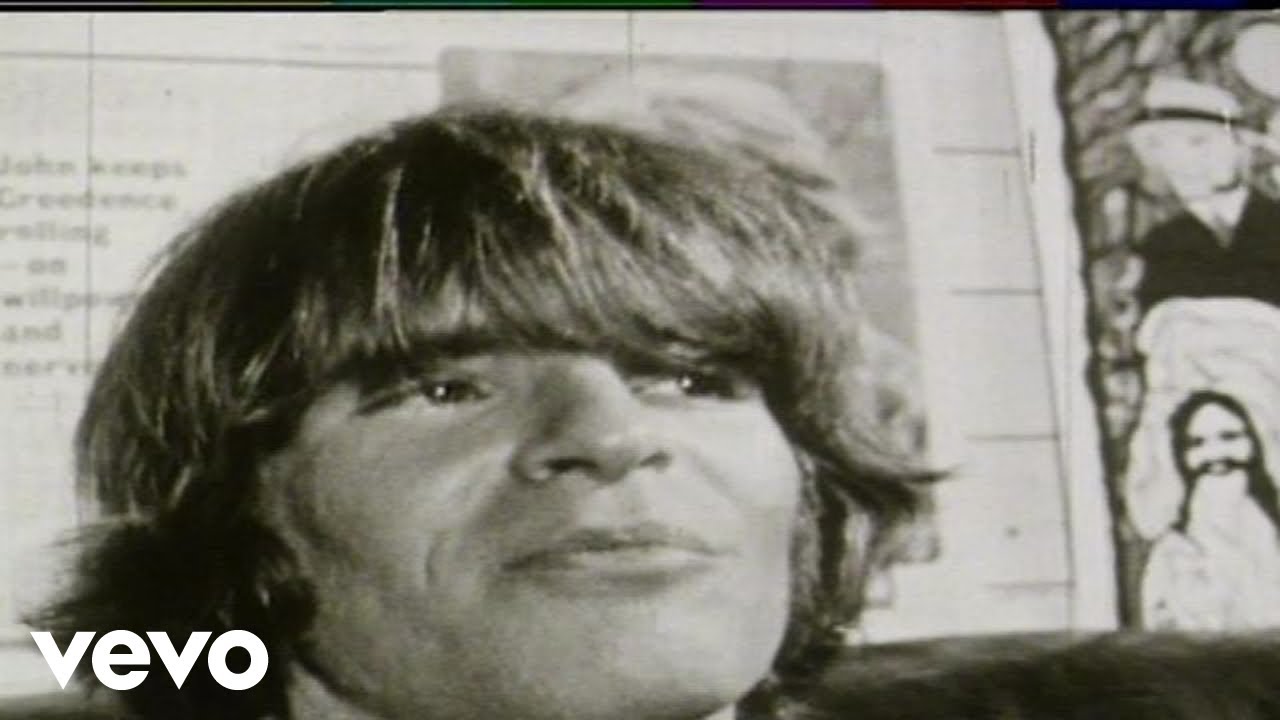
Buddy Alan, Buck Owens’ son and Merle Haggard’s stepson, recorded a cover version in 1971 that reached number 37 on the country charts. The irony wasn’t lost on anyone that the son of the man mentioned in the original recorded his own version. CCR never performed the song live during their brief run, though it appeared in a 1970 promotional film where the band mimed to the recording. Fogerty didn’t play it onstage until a 1989 earthquake relief benefit in Oakland, and it’s since become a staple of his solo shows. The Big Lebowski immortalized it in a scene with The Dude smoking in his car.
The song endures because it captures pure escapist joy wrapped in a deceptively simple country shuffle. That dobro, those nonsense syllables, and Fogerty’s gleeful vocal create something that feels both innocent and knowing. Five decades later, it remains one of rock’s great feel-good songs, proof that sometimes the best inspiration comes from reading bedtime stories to a three-year-old. CCR might never have reached number one, but they created something more lasting than chart positions.