


![a-ha – Take On Me (Official Video) [4K]](https://musicvideosclub.com/wp-content/uploads/2025/11/a-ha-take-on-me-official-video-4-360x203.jpg)
![WAR – Low Rider (Official Video) [Remastered in 4K]](https://musicvideosclub.com/wp-content/uploads/2026/03/war-low-rider-official-video-rem-360x203.jpg)
ABBA – Thank You For The Music
Benny Andersson Composed the Melody at a Dinner Party — Playing a Small Piano Under the Stairs. The First Recording Was So Steeped in Doris Day That the Band Called It That. The Second Take Became One of the Most Loved Songs ABBA Ever Made.
The melody arrived without effort, which is how the best ones often do. Benny Andersson was at a dinner party at manager Stig Anderson’s home in 1977 when he sat down at a small piano tucked under the stairs and played what would become “Thank You for the Music.” He later described it as one of his quickest compositions, something that came fully formed before he had time to think about it. Björn Ulvaeus wrote the words. The subject was simple and quietly audacious: a young woman’s gratitude for the gift of music — not for fame, not for success, but for the ability to feel it, make it, and carry it through a life. The lyric handles an enormous theme by keeping its gaze personal and slightly wondering. The singer doesn’t quite understand why she was chosen. She only knows she was lucky, and she is grateful for that.
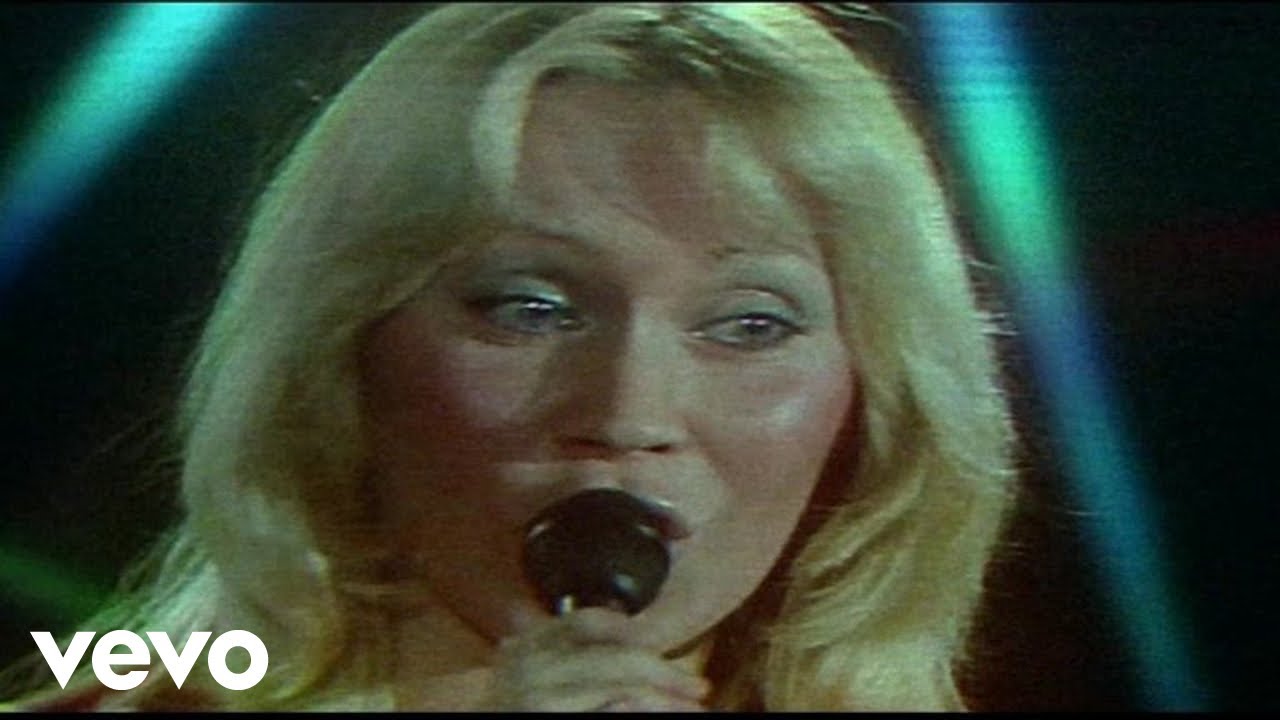
The recording history of the song is more layered than its three minutes and fifty-one seconds suggest. The first session took place on June 2, 1977, at Marcus Music Studio in Stockholm, and produced an arrangement that nobody could quite agree on: a jazzy, cabaret-flavoured take with a staccato feel, Agnetha Fältskog at the microphone, her vocal interpretation drawing enough from the warmth of Doris Day that the group simply called it the Doris Day version afterward. They listened back and knew it wasn’t right — not wrong, but not it. Six weeks later, on July 21, they reconvened at Glen Studio and recorded the version that appeared on the album. Benny at the keyboards, Björn on guitars alongside Lasse Wellander, who added mandolin as well, Rutger Gunnarsson on bass, Roger Palm holding the rhythm on drums and tambourine. Agnetha sang the lead with Anni-Frid Lyngstad joining her on the chorus. The first version was shelved and forgotten for seventeen years, eventually surfacing on the 1994 box set of the same name — where listeners could hear exactly what had been replaced and why.
What the Mini-Musical Was Built Around
Before the studio version was even finished, “Thank You for the Music” had already been heard live. Andersson and Ulvaeus had been developing a short theatrical piece for ABBA’s 1977 European and Australian tour — a four-song mini-musical called The Girl with the Golden Hair, a phrase drawn directly from the lyric, in which Agnetha’s character was a young woman ascending from ordinary life to fame. The other songs in the sequence were “I Wonder (Departure),” “I’m a Marionette,” and “Get on the Carousel.” “Thank You for the Music” was the opening number and the encore. Every night of the tour — which ran from January 28 to March 12, 1977, through Europe and into Australia — it closed the show. The lyrics Agnetha sang on those stages were slightly different from what ended up on the album; the studio version refined what the live version had tested. By the time ABBA recorded the final take at Glen Studio in July, they already knew precisely how the song worked in front of an audience, which is not a thing most recording sessions can say about their material.
The promotional video, directed by Lasse Hallström in February 1978, placed the four members of ABBA in a room full of children singing along to the track. Hallström’s approach throughout his long collaboration with ABBA was to allow the relationship between the music and its audience to be visible — to let the camera find the emotional transaction rather than constructing it. The children in the video were not performing enthusiasm; they were simply there, and the song was doing what it did. The video aired on the Swedish evening news programme Rapport during that period, and the song was also woven into ABBA: The Movie, the concert film released in December 1977, where it plays over the closing titles as the camera pulls back from the band performing in a hut on an island in the Stockholm archipelago to a wide view of the surrounding water. That final image — the four of them on a small island, surrounded by sea, the music continuing after the performance has ended — is an accidental summary of what the song is about.
The Long Life of a Short Song
ABBA: The Album was released on December 12, 1977, on Polar Music. It reached number one in Australia, the Netherlands, Norway, and Sweden, and climbed to number three in the UK where it produced two chart-topping singles in “The Name of the Game” and “Take a Chance on Me.” “Thank You for the Music” was not released as a standalone single in most territories at the time — it appeared as the B-side to “Eagle” in May 1978 across Belgium, France, West Germany, Austria, Switzerland, the Netherlands, and Australia, reaching the top ten in several of those countries on that basis. A Spanish-language version, recorded in 1980 as “Gracias por la Música,” was released as part of ABBA’s Spanish-language recordings project. The English version was finally released as a proper single in November 1983, pressed in the UK as a shaped picture disc, reaching number thirty-three on the British singles chart. The song had been on ABBA Gold since 1992, one of the best-selling compilation albums ever released, which has sold over thirty-one million copies. When Mamma Mia! opened in the West End in 1999, “Thank You for the Music” was in the show. When the film arrived in 2008, it was there too. It has been covered more than ninety times in languages across the world.
What Andersson found under the stairs at that dinner party in 1977 was not really about ABBA, even though ABBA was the vessel it traveled in. It was about the specific experience of being someone for whom music is not optional — for whom it is, as the lyric puts it, the source of all their joy. That experience is not rare. It is the private biography of an enormous number of people who have never played an instrument or written a lyric, who have simply spent their lives being reached by music and knowing that without it something essential would be gone. The song addresses them directly, from the inside. That is why it has lasted. Not because it is a hit — though it is — but because it names a thing most people feel and almost no one finds a way to say cleanly. The girl with the golden hair found a way. The piano under the stairs helped.