


![Gary Moore – Still Got The Blues (Live at Hammersmith Odeon) [HD]](https://musicvideosclub.com/wp-content/uploads/2025/10/gary-moore-still-got-the-blues-l-360x203.jpg)
Stone The Crows – Freedom Road
The Song Was Never on Any of Their Studio Albums — Maggie Bell Wrote It, John Peel Caught It on the BBC in May 1970, and Then Stone the Crows Quietly Stopped Trying to Record It.
The song was never on a studio album. Freedom Road was written by Maggie Bell, performed in concert by Stone the Crows from 1969 onward, and recorded for John Peel’s Top Gear at the BBC on May 19, 1970. The recording was broadcast eleven days later, on May 30, alongside the band’s readings of The Fool on the Hill, Curtis Mayfield’s Danger Zone, and Bob Dylan’s The Ballad of Hollis Brown. None of those four tracks would appear on the band’s debut album, released earlier the same year. Two would migrate to the second album in October. Freedom Road would migrate nowhere. It would stay in the live set, get played on European television through the rest of 1970, and never get a studio recording. The BBC tape is the recording of record.
Stone the Crows had been called Power six months earlier. The band that Maggie Bell and Glasgow guitarist Les Harvey had assembled with bassist James Dewar, drummer Colin Allen, and keyboardist John McGinnis was already working the Burns Howff bar in Glasgow when Led Zeppelin’s manager Peter Grant came to see them play. Grant — the imposing figure who shaped the rock industry’s understanding of what an artist’s earnings ought to look like — exclaimed “stone the crows” the first time he heard them, the old British expression of astonishment. The phrase became the name. He signed them to Polydor, brought in his Cartoone associate Mark London as co-manager and producer, and moved them to London. Their self-titled debut Stone the Crows was recorded at Advision Studios in early 1970 and released in February of that year, five tracks across two sides — four short pieces and the seventeen-minute closer I Saw America. There was no room for Freedom Road.
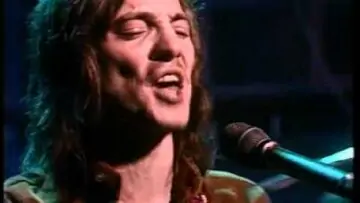
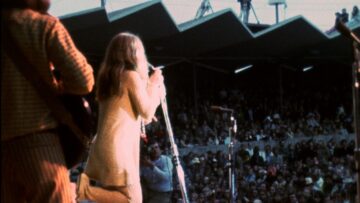
The Peel session catches the song at its full early-1970 length, opening with a long, exploratory introduction the band had developed over months of live performance. Bell’s voice — the instrument that drew Janis Joplin comparisons consistently throughout her career, in a way that diminished neither singer once the resemblance was set aside — moves between a low, rolling swagger and full-throated declarative phrases. Harvey’s guitar takes long, melodic solos in the Frank Zappa-influenced register that one British reviewer noted on the Angel Air reissue years later. McGinnis threads organ figures underneath. The structure permits expansion without losing its shape, and what the listener hears is a working live band stretching out in a BBC studio, not a band trying to compress itself for vinyl.
Where the Song Belonged Was the Stage
The decision not to include Freedom Road on the debut Stone the Crows is striking in retrospect, but it fits the record’s logic. The first side was four shorter songs — original material from Dewar and Harvey, an adaptation of a Josh White Jr. piece called Blind Man, and an ambitious soul-jazz reading of Lennon and McCartney’s The Fool on the Hill. The second side belonged entirely to I Saw America, the suite Harvey, Allen, and Mark London had constructed to address what Harvey had brought back from his 1969 American tour with Cartoone supporting Led Zeppelin. By the time the second album Ode to John Law arrived in October 1970, the band’s recording priorities had shifted further — toward Curtis Mayfield’s Danger Zone and the longer original material that defined that record. Freedom Road remained where it had always lived: in the live set, on the BBC tapes, and on European television.
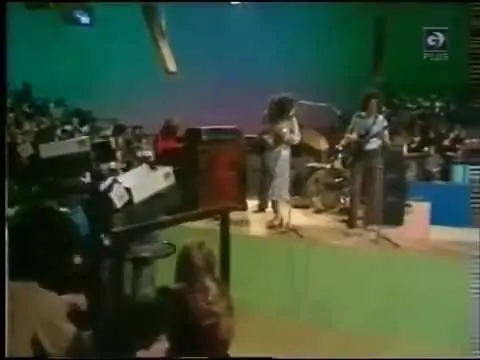
Stone the Crows played extensively in continental Europe through 1970 and into 1971. They performed at Switzerland’s Montreux Jazz Festival that summer, captured by Swiss TV’s Pop Hot programme. They appeared on West Germany’s Beat-Club out of Bremen in November and December of the same year. French television’s Pop Deux filmed them at the Taverne de l’Olympia and the Bataclan in Paris. The original lineup — Bell, Harvey, Dewar, McGinnis, and Allen — was filmed multiple times before John McGinnis and James Dewar left at the end of 1971, replaced by keyboardist Ronnie Leahy and bassist Steve Thompson. Footage from this period that has reached YouTube tends to circulate with the BBC audio synced over it, the visuals from one broadcast attached to the audio from another — a reminder that for a band whose studio output was modest in volume, the live and broadcast archive is the larger document.
What Survives
The afterlife of Freedom Road has been gradual but persistent. The Pop Hot footage from Montreux 1970 was included on Repertoire Records’ Transmissions 4CD/2DVD set; their Live At The BBC compilation collected both Peel readings, the May 1970 Top Gear session and a Sunday Concert broadcast nine days later. Strange Fruit’s The BBC Sessions, Vol. 1: 1969–1970, released in 1999, gave the song its first dedicated commercial release. Angel Air’s 2015 reissue of the first two studio albums included it as a bonus live track. Listeners who came to Stone the Crows through the studio records discovered the song decades after it had been written, and discovered that what they had been missing was not a footnote but one of the band’s defining live pieces — a song the studio had never quite gotten around to keeping. Less than two years after this Peel session, on May 3, 1972, Les Harvey would be electrocuted on stage at Swansea’s Top Rank Suite while preparing to play. He was twenty-seven. Stone the Crows dissolved the following year. The recordings made in 1970 — at the BBC, at Montreux, at Bremen, at Paris — became the primary evidence of what they had been together, with the original lineup, when the band was still building toward an international breakthrough that the accident in Swansea would prevent.