



![Van Halen – Everybody Wants Some!! (Live at the Tokyo Dome 2013) [PROSHOT]](https://musicvideosclub.com/wp-content/uploads/2025/10/van-halen-everybody-wants-some-l-360x203.jpg)




![Bruno Mars – Risk It All [Official Music Video]](https://musicvideosclub.com/wp-content/uploads/2026/02/bruno-mars-risk-it-all-official-360x203.jpg)




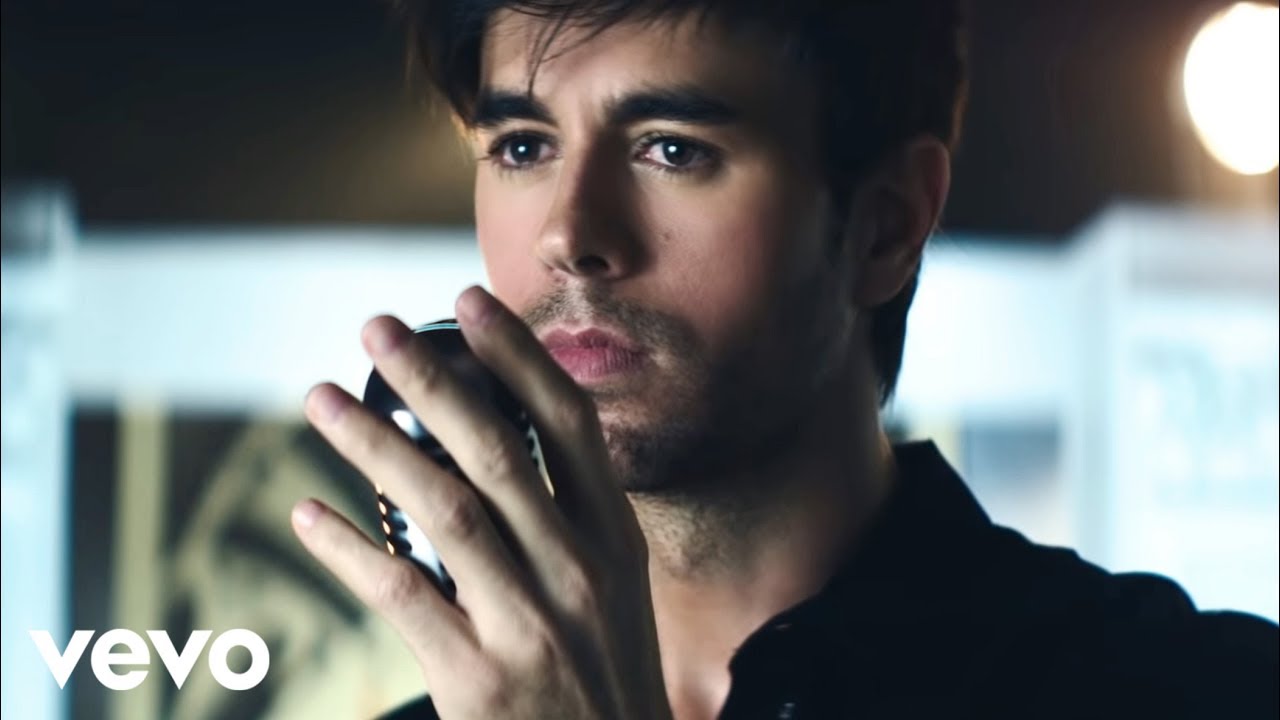
Enrique Iglesias – El Perdedor (2014) ft. Marco Antonio Solís | One Billion Views
He Had Grown Up Listening to Marco Antonio Solís With His Mother. Three Decades Later, Enrique Iglesias Asked the Former Los Bukis Frontman to Sing With Him on His Tenth Album. The Music Video They Made Together Has Since Crossed One Billion Views on YouTube.
Enrique Iglesias was eight years old in 1983 when his mother, the Filipino-Spanish journalist Isabel Preysler, played him Marco Antonio Solís for the first time. Solís was at that point the lead singer of Los Bukis, the Mexican grupero band he had founded with his cousin Joel Solís in 1975 and which had become, by the mid-1980s, one of the most successful Spanish-language romantic acts on either side of the border. Solís was the songwriter, the falsetto, the architect of the Bukis sound. To a child growing up between Madrid and Miami, he was the voice his mother put on when she wanted to feel something specific. Iglesias would tell interviewers in adulthood that Solís had been the figure he most admired in Latin music throughout his childhood and teenage years — the singer he had quietly hoped, since the moment he started recording his own albums in 1995, that he would someday get to record with. By 2013, Iglesias was thirty-eight years old, the most commercially successful Spanish-speaking pop artist of the twenty-first century, the son of Julio Iglesias, and was assembling his tenth studio album for Republic Records. He called Solís. The collaboration he had been wanting for thirty years was finally going to happen.
The song was El Perdedor — “the loser” — written for the Spanish-language portion of an album that would otherwise feature collaborations with Jennifer Lopez, Kylie Minogue, Pitbull, Romeo Santos, Sean Paul, Yandel, and Descemer Bueno across English, Spanish, and bilingual tracks. Iglesias had been moving steadily for over a decade between his Latin-pop recording career — which had earned him eight number-one singles on the Billboard Hot Latin Songs chart by 2010 — and his English-language crossover career, which had given him hits like Hero, Bailamos, and I Like It. The Solís duet sat at the centre of the album’s Spanish-language identity. Sex and Love would feature two complete recorded versions of El Perdedor: a pop version, with Solís sharing lead vocals across orchestral pop production, and a bachata version, in the Dominican guitar-driven dance style that had taken Romeo Santos to international stardom. The pop version was released as the album’s second single in late 2013, following Loco with Romeo Santos. It topped three Billboard charts: Hot Latin Songs, Latin Pop Songs, and Tropical Airplay.
The Video Jessy Terreo Built Around a Story
The music video was directed by Dominican director Jessy Terreo, who had previously directed Iglesias’s videos for Dímelo and Cuando Me Enamoro. The female lead role was given to telenovela star Sandra Echeverría, the Mexican-American actress whose work on La Usurpadora and El Capo had made her one of the most recognisable faces of contemporary Spanish-language television drama. The video opened at a formal event — a wedding-adjacent ceremony, evening dress, candlelight — at which Echeverría’s character arrives accompanied by a date who is not Iglesias. On the venue’s stage, performing their duet to the assembled audience, are Iglesias and Solís. The narrative engine of the video is the look the two characters exchange when Echeverría sees Iglesias on stage and recognises him: the previous relationship is implied, the present circumstances are stated, and the song’s lyric — about a man watching the woman he loves pledge herself to someone else — becomes the soundtrack to the story it is describing in real time. Terreo’s direction kept the staging cinematic, the colour palette warm-amber and candlelit, the cuts patient. The music video premiered in January 2014 after a thirty-second trailer in December 2013 had drawn over a million views in its first weeks.
The full video has since accumulated over one billion views on YouTube. It joined the small group of Spanish-language music videos to cross the billion-view mark — a milestone that, by the mid-2020s, has become one of the standard measures of cultural penetration in Latin pop, but which in 2014 was reserved for a handful of acts. The video’s success made El Perdedor one of Iglesias’s most-watched recordings on the platform. Sandra Echeverría would, in the years following the video, transition further into recording — releasing her own Spanish-language albums and citing the Iglesias video as the moment her musical aspirations became visible to a wider audience.
Idol, Collaborator, Mentor
What the recording captures, beyond its commercial achievement, is something closer to a generational handoff. Marco Antonio Solís had been making Spanish-language romantic ballads professionally since 1975 — three years before Enrique Iglesias was born. By the time the two recorded together in 2013, Solís was fifty-four years old, a Latin Grammy winner several times over, and one of the most-covered Mexican songwriters of his generation. His vocal on El Perdedor sits low and steady against Iglesias’s higher pop-tenor, the older voice carrying weight the younger voice does not need to. Iglesias has called the recording session one of the best experiences of his musical life. He has continued to cite Solís in interviews as the singer he most listens to. Marco Antonio Solís has, since 2014, returned to touring with Los Bukis — the original band reunited in 2021 for a stadium tour that became one of the highest-grossing Latin music tours of the decade. Sex and Love was Iglesias’s third Top Ten album on the Billboard 200, his fourteenth career charting album, and one of the records that confirmed Latin pop’s commercial reach in the streaming era. The album also produced Bailando, the Descemer Bueno and Gente de Zona collaboration that would top charts in over twenty countries and earn Iglesias three Latin Grammys later that year. El Perdedor remained, by 2025, the song from the album that listeners returned to most often — the duet with the singer Enrique Iglesias had been waiting since childhood to sing with, the cinematic four-minute story that one billion viewers and counting have now watched, and the recording that confirmed what its title declared and immediately complicated: that the loser, in the song’s small drama, was also the voice carrying the song. The grown-up child who had been listening to Solís on his mother’s stereo was, in the end, the one with the duet that crossed continents.