

![Eric Clapton – I Shot The Sheriff [Crossroads 2010] (Official Live Video)](https://musicvideosclub.com/wp-content/uploads/2026/09/eric-clapton-i-shot-the-sheriff-360x203.jpg)
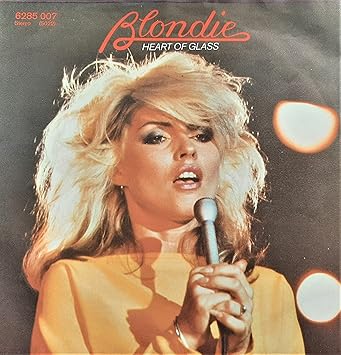
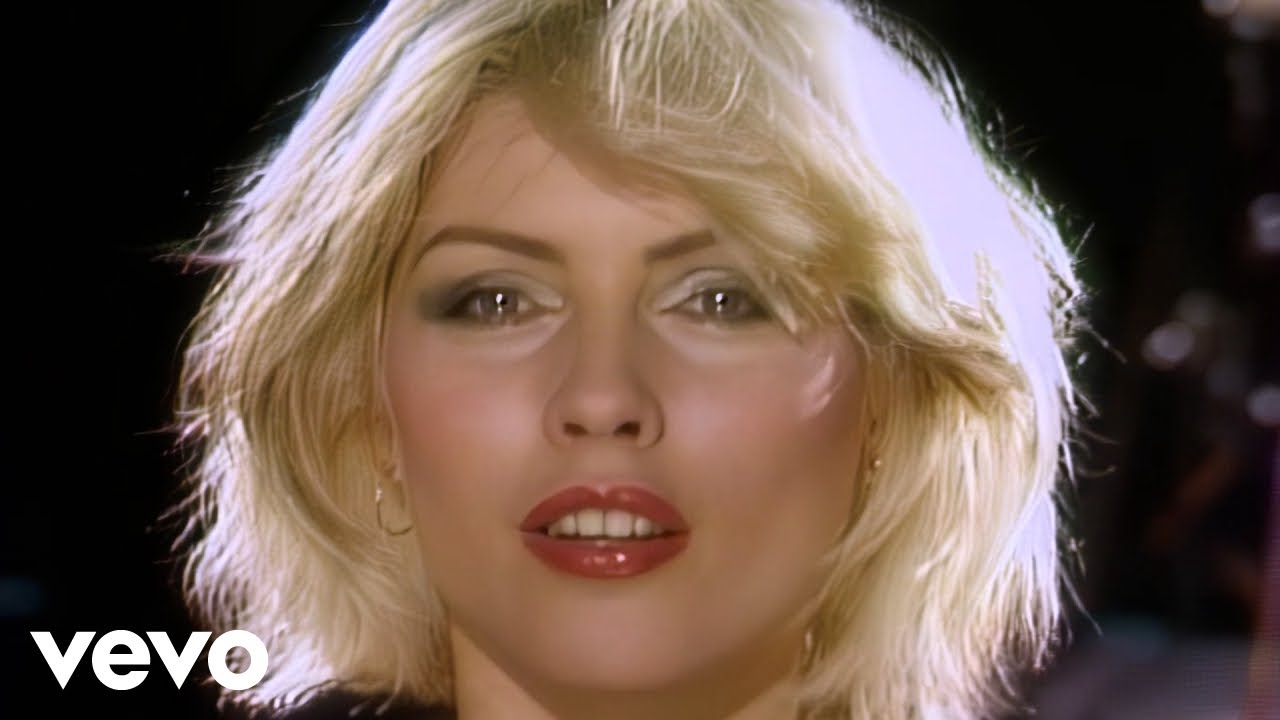
Blondie – Heart Of Glass
Blondie started this song in 1974 as a slow reggae experiment they nicknamed “The Disco Song” — and spent four years failing to make it work before a drum machine and a doubtful producer turned it into a global No. 1.
The song that made Blondie world-famous almost never got made at all. Heart of Glass began life around 1974 as one of the very first songs Debbie Harry and Chris Stein ever wrote together — a slow, funky number they called Once I Had a Love, and privately nicknamed “The Disco Song.” For four years they couldn’t crack it. They tried it as a ballad. They tried it as reggae. Nothing stuck. It took a drum machine, a producer the band didn’t trust, and a deliberate decision to be “uncool” to turn a four-year problem into one of the defining records of its era.
Keep watching: Blondie – Sunday Girl · more Blondie →
The breakthrough came in 1978, when Blondie reluctantly teamed with Australian producer Mike Chapman to make their third album, Parallel Lines. Harry knew Chapman only by reputation — he was the Los Angeles hitmaker behind a string of British glam smashes — and she was wary of handing her scruffy New York band to a pop professional. Her caution eased when she played him the early cuts of Heart of Glass and Sunday Girl and he heard exactly what they had. Chapman pushed them to commit fully to the disco arrangement they’d been circling for years, and the band, half in defiance of their own punk scene, went for it. As Harry later put it, playing disco “wasn’t too cool in our social set — but we did it because we wanted to be uncool.”
Built like a Meccano set
The record they built at New York’s Record Plant in June 1978 was painstaking, mechanical, and unlike almost anything a rock band had attempted. At its center sat a Roland CR-78 — one of the first programmable drum machines, so new that year that its use here was among the earliest in popular music. Chris Stein and keyboardist Jimmy Destri had brought the little box back from a music store on 47th Street, and its steady “tikka tikka tikka” pulse became the song’s spine. Drummer Clem Burke, who took his groove from the Bee Gees’ Stayin’ Alive, had to sync his live playing to the machine by hand, note by note, in an era before any of this was easy. Bassist Nigel Harrison compared assembling the track to building a Meccano set. The backing alone took more than ten hours to get down. Not one person in the room — Chapman included — suspected they were making a No. 1.
They were. Released as a single in January 1979, Heart of Glass went to No. 1 on the US Billboard Hot 100 and topped the UK chart, along with charts across Australia, Canada, Ireland, and Europe. It became Blondie’s commercial breakthrough and the engine that drove Parallel Lines to blockbuster status. The title, fittingly for a band steeped in downtown art-world cool, was lifted from a 1976 Werner Herzog film none of them had actually seen.
The disco backlash — and the vindication
Not everyone came along. Blondie had grown out of the CBGB punk scene, where “Death to Disco” T-shirts were common, and some of their original fans took Heart of Glass as a betrayal. Stein was unrepentant: he had no sympathy, he said, for anyone who thought the band had sold out. The backlash didn’t last. As one Los Angeles critic dryly noted at the time, it was disco that had given life to Blondie, not the other way around. The song’s fusion of new wave and Eurodisco — cold and danceable, with Harry’s triple-tracked vocal floating over the top like a cloud — turned out to be a template the 1980s would follow. John Lennon was so taken with it that he sent Ringo Starr a postcard advising him to write more songs like it, a detail Harry called “totally wonderful” to learn.
The video sealed the image. Directed by Stanley Dorfman, it shows Blondie performing in a glittering, near-empty discotheque, the camera returning again and again to Harry in a silver Stephen Sprouse dress. Contrary to a myth that has followed the clip for decades, it was not filmed at Studio 54 — the club appears only in a brief establishing shot. Blondie were among the few American bands making videos before MTV existed, largely so they could be seen in Australia and Europe when they couldn’t tour there. In 2015 Heart of Glass was inducted into the Grammy Hall of Fame. Harry has named it, alongside Rapture, the song she is proudest of having written — the four-year problem that became her signature.
SONG INFORMATION