








Starship – Sara
A breakup ballad named for a happy marriage, written by a married couple, starring a third woman
Mickey Thomas has said that Peter Wolf wrote Sara for him, and it was true in a more personal way than most hit songs are. The title is the name of the woman Thomas was married to, Sara Kendrick. Another married couple wrote it: Wolf, an Austrian producer and keyboardist, and his wife, Ina. When Starship shot the video, the Sara on screen was neither of them but the actress Rebecca De Mornay. Nobody connected to the song was breaking up when it was made. Its sorrow was built in a studio, and it has lasted longer than either marriage around it.
Keep watching: 80s Music Videos · explore more →
The band that recorded it was itself new, if only in name. Paul Kantner, a founder of Jefferson Airplane, left Jefferson Starship in 1984 after objecting to its synth-rock direction. Legal action over the name followed, and the remaining members dropped “Jefferson” and became Starship. Thomas had joined in 1979, recruited partly on the strength of his lead vocal on Elvin Bishop’s Fooled Around and Fell in Love. He now fronted the band alongside Grace Slick. Their producer was Wolf, who had played keyboards with Frank Zappa and is no relation to the J. Geils Band singer of the same name. Wolf first worked with the group on 1984’s Nuclear Furniture, then co-produced Knee Deep in the Hoopla and played keyboards across it.
Peter and Ina Wolf had tried to be artists themselves first. In 1984 they made an album as Wolf & Wolf for Morocco, Motown’s short-lived rock label, and it went nowhere. They turned to writing for other people. On Sara, both are credited with the music and Ina with the lyric, which builds its farewell out of weather: a storm in the other person’s eyes, a goodbye that cannot be timed well. They named it for Thomas’s wife, and Thomas has said that is why it always felt like his song.
A ballad made of machines
Wolf produced the track with Jeremy Smith, and most of what you hear was programmed. Wolf played the keyboards and synthesizers and programmed the LinnDrum, Pete Sears played bass synthesizer, and Donny Baldwin played electronic drums. Craig Chaquico supplied the lead guitar, and Slick, the band’s other lead singer, sang backing vocals behind Thomas. Thomas has said the song was solemn and musically deeper than the band’s other hits. Wolf, he told Something Else!, “wrote something that was unusual for that time.”
Grunt and RCA released Knee Deep in the Hoopla in September 1985, and its first single, We Built This City, spent two weeks at No.1 that November. Sara followed as a single in December, backed with Hearts of the World (Will Understand). On March 15, 1986, it replaced Mr. Mister’s Kyrie at the top of the Billboard Hot 100. It held the spot for a week before Heart’s These Dreams took over, Heart’s first No.1. On the adult contemporary chart it stayed at No.1 for three weeks, the band’s first chart-topper there. Billboard ranked it No.24 for the year. Abroad it reached No.10 in Australia, but in Britain it stopped at No.66.
Not that Sara
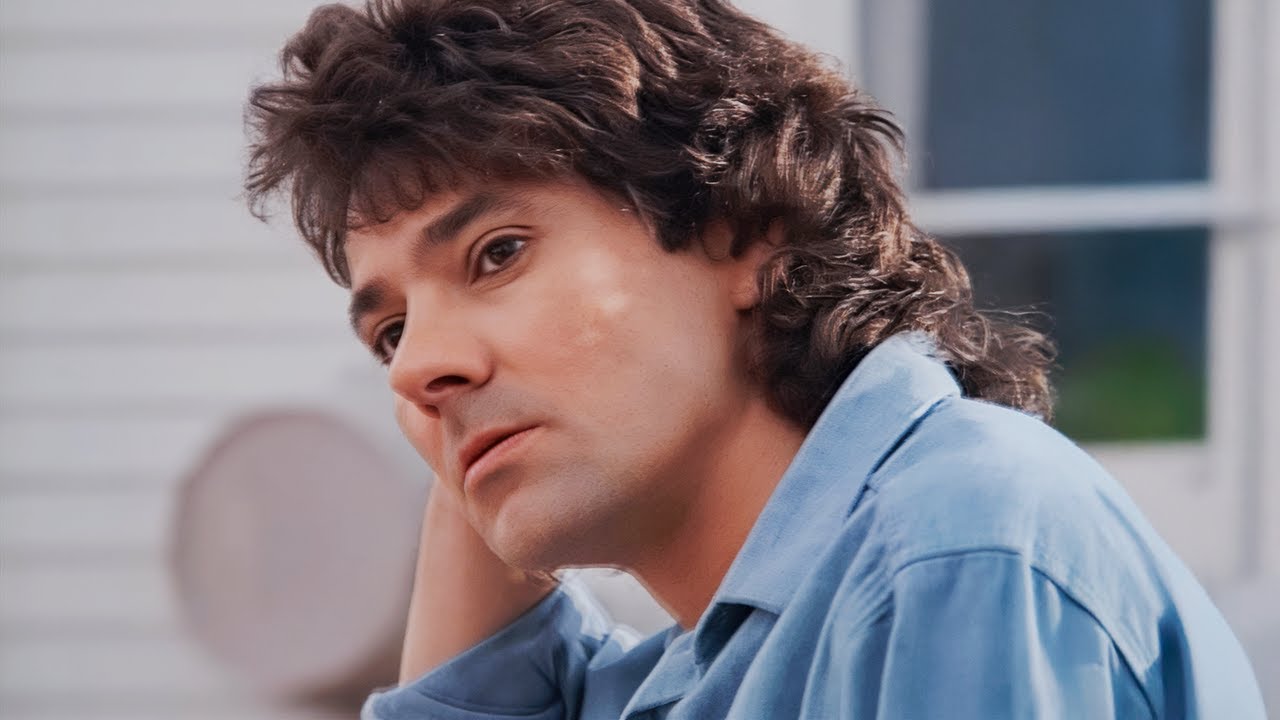
Francis Delia, who also directed the clips for We Built This City and Tomorrow Doesn’t Matter Tonight, directed the video. He cast De Mornay, then best known for Risky Business, as Sara opposite Thomas. He set their breakup on a Midwestern prairie farm and cut in black-and-white flashbacks to Thomas’s character as a boy. It ends with De Mornay driving off down a dirt road while a storm closes in on the farm, the lyric’s weather made literal. MTV played it heavily, and the official video is now on Starship’s channel, upgraded to HD.
The real stories ended less neatly than the video. Peter and Ina Wolf made one more album together, as Vienna in 1987, and later had their marriage annulled. Thomas and Sara Kendrick divorced years later. Starship scored a third No.1 in 1987 with Nothing’s Gonna Stop Us Now. Still, when Thomas looks back at the three, he points to Sara as the one that has aged best, and he puts that down to its depth.
He is right, and the reason is how it was made. Sara was not a diary entry. It was a portrait of a breakup, written by two people who were together, named for a woman who was happily married, and acted out by a woman who had no part in any of it. That distance kept it from belonging to one couple’s story. When the marriages around it did end, the song didn’t change, because its grief had never been anyone’s in particular. It is still the saddest of Starship’s three No.1s, and the one they made from the furthest away.
SONG INFORMATION
Enjoyed this one? New forgotten gems every day — tap Music Videos Club below to visit and follow us on Facebook: