





Deep Purple – Black Night
Management Were Screaming for a Single — So the Band Went to the Pub, Then Wrote One That Night
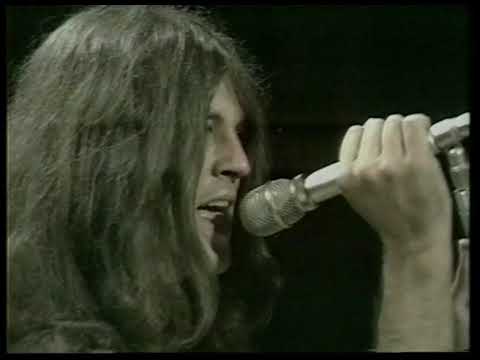
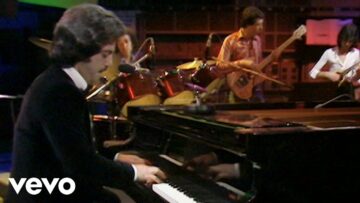
When this Top of the Pops footage was filmed in October 1970, Deep Purple had been a functioning unit in their classic Mark II configuration for barely sixteen months. The five-piece that appeared on Britain’s most-watched chart programme — Ritchie Blackmore, Ian Gillan, Roger Glover, Jon Lord, Ian Paice — had already released the seismic Deep Purple in Rock that June, a record that reached number four on the UK album chart and remained there for over a year. But it was “Black Night”, which had entered the singles chart in August and spent three months climbing and holding its position, that gave them a mainstream British audience for the first time. On Top of the Pops, with its peak weekly viewership of millions, the Mark II lineup performed the riff that had made them unavoidable. The footage, uploaded to Ritchie Blackmore’s official channel in March 2026, is one of the few surviving television records of this lineup at the precise moment of their commercial breakthrough.
The song’s creation story is one of the blunter origin myths in British hard rock. After completing Deep Purple in Rock, the band’s management grew alarmed that the album contained nothing remotely suitable as a commercial single. Roger Glover recalled the pressure in a 1988 Metal Hammer interview: the management were screaming for a single because there wasn’t one on the album. A session was booked at De Lane Lea Studios in London in early May 1970. Before recording began, the band spent time at a nearby pub. When they returned, Blackmore picked up his guitar and played the main riff almost immediately. The group recorded it the same night. Glover later identified Ricky Nelson’s 1962 hard-rocking arrangement of the George Gershwin standard “Summertime” as the foundational inspiration. Jon Lord, speaking in the BBC documentary Heavy Metal Britannia, confirmed it directly: “Black Night” was essentially built from that bassline, then driven through the Mark II lineup’s capacity for volume and attack until it became something new.
What the studio session produced was a track that fit none of the expected templates of its moment. It was too loud and compressed for the progressive rock the band had been edging toward; too formally constructed for full-bore improvised jamming; and far too aggressive for the mainstream pop that still dominated British radio. Engineer Martin Birch, who had already distinguished himself on Deep Purple in Rock by recording everything louder than the VU meters were supposed to allow, captured it at the same uncompromising level. The result was a song that sounded like nothing else in the Top 40, driven by a descending guitar riff that Blackmore had apparently assembled from borrowings and instinct in roughly an evening. Ian Gillan’s vocal was recorded with the urgency the circumstances demanded. The whole thing was completed in a single session.
Two Riffs, One Chart, One Summer
“Black Night” entered the UK singles chart in August 1970 and peaked at number two — held off the top spot by Freda Payne’s “Band of Gold,” a soul chart-topper with staying power. It also reached number one on both the NME and Melody Maker singles charts and topped the chart in Switzerland. The song spent 21 weeks on the UK charts and remains Deep Purple’s highest-charting UK single. The chart moment it occupied was historically concentrated: Black Sabbath’s “Paranoid” was simultaneously in the UK Top Five. Two Birmingham-adjacent hard rock bands, two descending riffs, one chart. Critics would later identify that brief chart window as the moment British heavy rock announced its commercial viability. Deep Purple never described themselves as a heavy metal band; they preferred to frame their music as coming from jazz, blues, and progressive sources. The chart proximity to Sabbath made the argument on their behalf regardless.
The Top of the Pops appearance came as the single was still active on the chart, the band’s first extended residency in the British singles conversation after a career that had begun with covers and Marks I through II transitions. The performance shown in the footage preserved what the Deep Purple in Rock album had demonstrated in longer form: a group that had found a specific, lethal combination of keyboard weight, guitar sharpness, and vocal aggression, and had tightened it into something that could survive a three-minute format. Jon Lord’s Hammond organ, which on the album tracks was given room to sprawl, is anchored here inside the single’s shape. Blackmore plays the riff straight. “Black Night” became a setlist fixture almost immediately after its release, positioned as the first encore — the last song the crowd would hear — throughout the Mark II touring cycle that ran until Gillan and Glover departed in 1973. The arrangement seen on Top of the Pops is the version that went on the road.
The Riff That Stayed
When Deep Purple were inducted into the Rock and Roll Hall of Fame in 2016, “Black Night” was already 46 years old and had been performed live more times than anyone in the band had counted. Blackmore had reprised snippets of the riff across his post-Purple work throughout the 1970s and 1980s even when the full song was absent from setlists. After the 1984 reformation, it returned as a main-set staple. Metallica played its introduction during encores on their 1989 tour. Bruce Dickinson recorded it as a live B-side. The riff generated from a single pub-preceded session at De Lane Lea proved, in the accounting that only time provides, more durable than almost anything produced with greater deliberation. The Top of the Pops footage from October 1970 — three minutes of the Mark II lineup playing the song that wasn’t supposed to exist — is a document of a band that had just, almost accidentally, written the song they would never be able to stop playing.
SONG INFORMATION
Related videos
 Watch LaterAdded
03:30
Watch LaterAdded
03:30  Watch LaterAdded
06:49
Watch LaterAdded
06:49 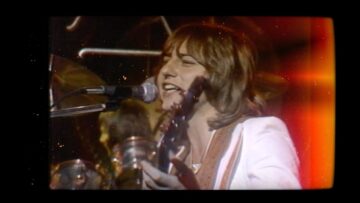 Watch LaterAdded
04:48
Watch LaterAdded
04:48