Deep Purple – Strange Kind Of Woman (Live, New York, 1973)
- LUD:
Ian Gillan’s voice and Ritchie Blackmore’s guitar answer each other note for note here.
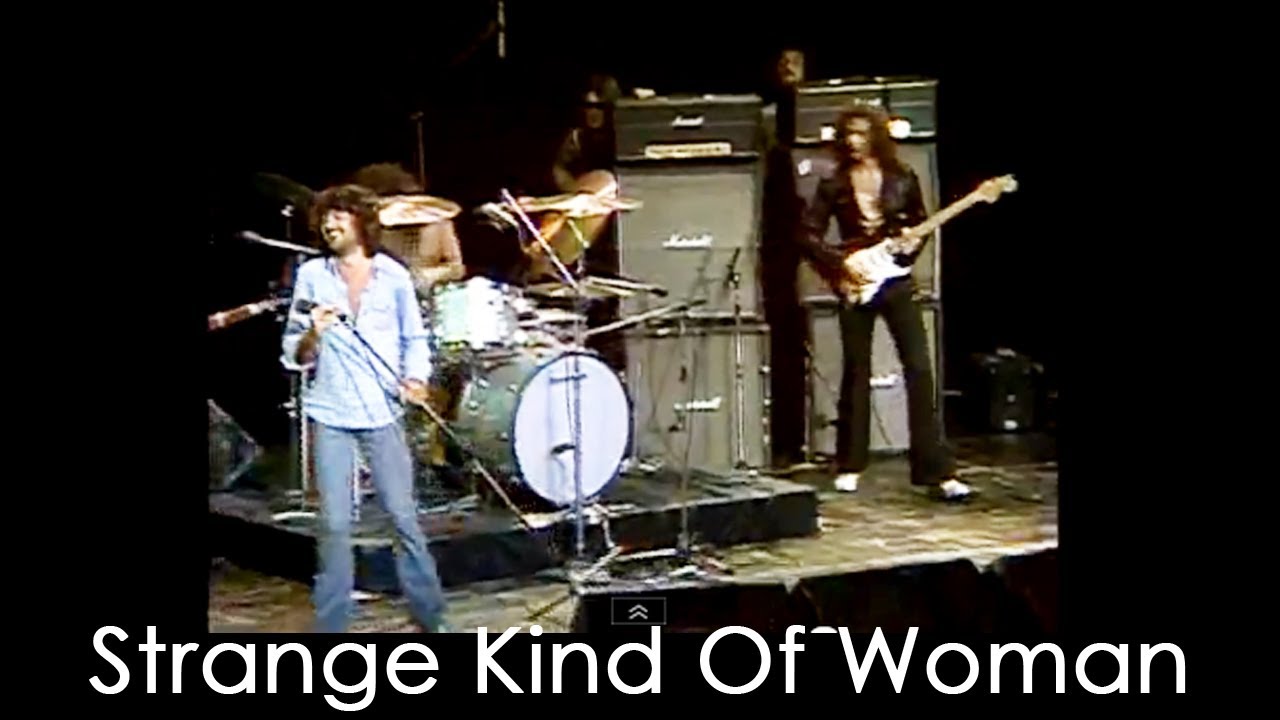
The passage everyone remembers from Strange Kind of Woman is not on the single. It is the exchange the song grew into on stage, where Ian Gillan sings a phrase and Ritchie Blackmore’s guitar returns it, then Gillan answers that, and the two climb over each other until the distinction between the voice and the instrument stops being useful. It is one of the most closely matched things two musicians have done on a rock stage. By the time this footage was shot, the two men doing it were within a few months of never working together again.
The record came first and came quickly. Deep Purple were under pressure to follow Black Night, which had gone to No. 2 in Britain the previous summer, and they wrote this one at the Hermitage, a rented house in Devon where Roger Glover has recalled the sessions being interrupted by séances and reported hauntings. They taped it in January 1971 at the start of the Fireball sessions without it being part of them, and Harvest released it on February 12, 1971 with I’m Alone on the flip. It reached No. 8 in Britain, No. 8 in Germany, and topped the chart in Denmark.
America ignored it. The single never entered the Hot 100 and picked up only scattered airplay, which is why Warner Bros. took the unusual step of adding it to the US and Canadian pressings of Fireball in place of Demon’s Eye — the same album, sold with a different track list depending on which side of the Atlantic you bought it.
What it turned into on stage
The band kept it in the set and it kept growing. The studio version runs under four minutes and is a tight, unfussy hard rock single. The live version stretches past seven, and the middle of it became the duel. Gillan pushes into a register where the tone genuinely blurs against a Stratocaster, and Blackmore matches him rather than accompanying him. The version on Made in Japan in 1972 is the one most people know, and it made the argument permanently.
This performance is from New York in 1973, and there is something worth saying plainly about it: nobody appears to know exactly when or where. The footage circulates widely, it sits on official releases alongside Copenhagen material from the same period, and the year is not in question. The venue and the date are simply not documented. What can be established is the outer limit — it was filmed before July 1973, because David Coverdale took over from Gillan that month.
A few months from the end
Gillan and Glover left Deep Purple in June 1973. The relationship between Gillan and Blackmore had deteriorated past the point where either man wanted to fix it, and the band that had spent three years becoming one of the loudest and most successful live acts in the world took that as reason enough to break the lineup rather than the tension.
Which is what makes this footage worth more than its sound quality. Two people who had run out of patience with each other are standing a few feet apart doing something that requires listening to the other person more closely than almost anything else in the repertoire. There is no version of that call-and-response that works if either of them is coasting. Whatever was going on offstage, neither of them coasts here.
Mark II reassembled in 1984 and made records again, and Gillan is still touring the material more than fifty years on. The single that America declined to chart is now one of the songs the band cannot leave out. Nancy, the woman in the lyric, remains the subject of several incompatible explanations Gillan has offered over the decades, and he has never seemed troubled by the inconsistency.
SONG INFORMATION
Artist: Deep Purple
Song: “Strange Kind of Woman”
Album:Fireball
B-side: “I’m Alone”
Released: February 12, 1971
Recorded: January 1971
Label: Harvest (UK); Warner Bros. (US)
Songwriter(s): Ritchie Blackmore, Ian Gillan, Roger Glover, Jon Lord, Ian Paice
Producer(s): Deep Purple
Length: 3:49 (single version); 4:04 (US album version)
Chart Performance: UK No. 8; Germany No. 8; Denmark No. 1; did not chart on the US Hot 100
Performance: New York, 1973 — exact venue and date undocumented
Lineup: Ian Gillan (vocals), Ritchie Blackmore (guitar), Jon Lord (organ), Roger Glover (bass), Ian Paice (drums)