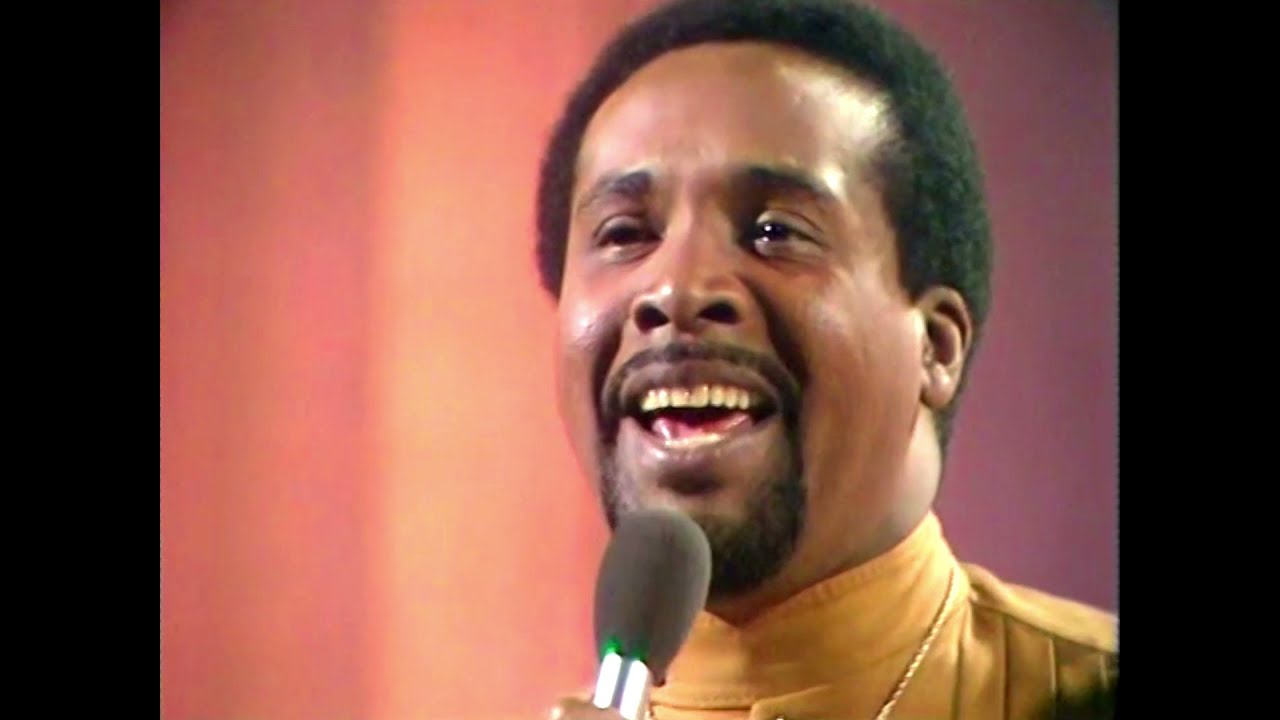
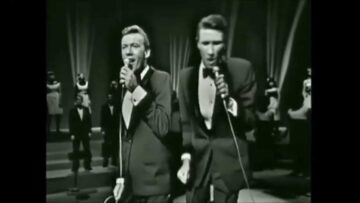
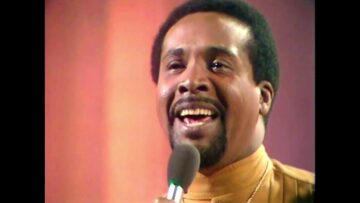
Four Tops – I Can’t Help Myself (Sugar Pie Honey Bunch)
- LUD:
274.6K
4.6K
0
The Grandfather’s Chat-Up Line That Became Motown’s Biggest Hit Of The Year
Lamont Dozier was eleven years old, sitting on his grandmother’s porch in Detroit, watching his grandfather flirt with every woman who came up the walkway to the beauty shop. “How you doin’, sugar pie? Good morning, honey bunch,” the old man would say, big smile, full charm — while Dozier’s grandmother watched through the bay window, muttering under her breath. Twenty years later, Dozier sat down at a piano at Motown, took a mind trip back to that porch, and started writing. What came out was “I Can’t Help Myself (Sugar Pie Honey Bunch)” — Motown’s biggest R&B single of 1965 and the song that turned the Four Tops from a promising act into a phenomenon.
Released on April 23, 1965, “I Can’t Help Myself” hit number one on the Billboard Hot 100 for two non-consecutive weeks — knocked off the top first by the Byrds’ “Mr. Tambourine Man,” then reclaimed before being ousted by the Rolling Stones’ “(I Can’t Get No) Satisfaction.” It also replaced the Supremes’ “Back in My Arms Again” at the top — another Holland-Dozier-Holland composition bumped by a Holland-Dozier-Holland composition. On the R&B chart it sat at number one for nine consecutive weeks, earning the title of Billboard’s biggest R&B single of the year. It was inducted into the Grammy Hall of Fame in 2018.
There is a self-referential joke buried inside the song’s creation. Dozier had written the melody using almost exactly the same chord progression as the Supremes’ 1964 hit “Where Did Our Love Go.” He realised the similarity midway through — and decided the title itself should acknowledge it. “I Can’t Help Myself” is, in part, Dozier confessing he could not resist recycling his own hit. What made it worse — or better — was that Levi Stubbs hated the finished song entirely, finding the lyrics too sugary. He cut it at the insistence of Brian Holland, who promised he could re-record the vocals the following day. That second session never happened. The take Stubbs wanted to scrap became the single.
The musicians on the recording were the Funk Brothers, Motown’s house band — James Jamerson on bass, Benny Benjamin on drums, Jack Ashford on tambourine, Mike Terry on baritone saxophone — recording in Studio A at Hitsville U.S.A. on West Grand Boulevard in Detroit. The Andantes — Jackie Hicks, Marlene Barrow, and Louvain Demps — filled out the backing vocals behind the Tops. Holland-Dozier-Holland built the track as what one critic later described as “an efficient little hook-delivery engine” — bass and piano first, strings layered in ascending waves before the vocal even starts, the whole construction designed to be irresistible before Stubbs opened his mouth.
The Four Tops had been singing together since 1953 — four Detroit high school students who started as a jazz vocal group called the Four Aims, cycled through Chess, Red Top, Riverside, and Columbia without a hit, and finally arrived at Motown in 1963. By the time “I Can’t Help Myself” landed, they had been together twelve years and were in their late twenties — considerably older than most of the acts surrounding them on the charts that summer. Levi Stubbs was a baritone who Holland-Dozier-Holland pushed into a higher register specifically to create that strained, desperate urgency. It was a calculated decision that defined an entire career.
The song never left. George Harrison gave it a namecheck in his 1976 single “This Song.” It appeared in Forrest Gump in 1994. The last surviving original member, Abdul “Duke” Fakir, retired in July 2024 and passed away two days later — closing a chapter that had opened in a Detroit high school seventy years earlier. The Grammy Hall of Fame induction came in 2018, the same year Motown turned 60, recognising what had been obvious for decades: a grandfather’s porch flirtation, a recycled chord sequence, and a lead singer who wanted it scrapped had somehow produced one of American music’s most durable recordings.
Stubbs, who spent his career weaponising that strained urgency into some of soul music’s most visceral performances, eventually came to terms with the song he had tried to abandon. “Sugar pie, honey bunch” — borrowed from an old man’s garden flirting — outlasted everything around it. Dozier’s grandfather would have been delighted.
SONG INFORMATION
Artist: Four Tops
Song: “I Can’t Help Myself (Sugar Pie Honey Bunch)”
Album:Four Tops
B-side: “Sad Souvenirs”
Released: April 23, 1965
Recorded: 1965, Hitsville U.S.A. (Studio A), West Grand Boulevard, Detroit, Michigan
Studio: Hitsville U.S.A., Detroit, Michigan
Label: Motown Records
Songwriter(s): Brian Holland, Lamont Dozier, Eddie Holland
Producer(s): Brian Holland, Lamont Dozier
Chart Performance: No.1 US Billboard Hot 100 (2 weeks), No.1 US R&B (9 weeks), No.23 UK (1965), No.10 UK (1970 re-release) — Grammy Hall of Fame 2018




![The Score – Revolution: Lyrics [Assassins Creed: Unity]](https://musicvideosclub.com/wp-content/uploads/2025/10/the-score-revolution-lyrics-assa-360x203.jpg)










![George Benson – Give Me The Night (Official Music Video) [HD Remaster]](https://musicvideosclub.com/wp-content/uploads/2026/02/george-benson-give-me-the-night-360x203.jpg)





![Bruno Mars – Risk It All [Official Music Video]](https://musicvideosclub.com/wp-content/uploads/2026/02/bruno-mars-risk-it-all-official-360x203.jpg)